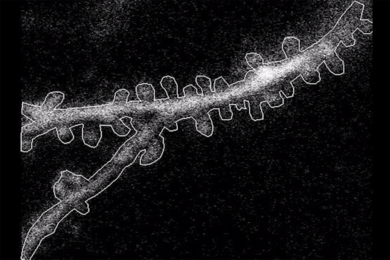
The rules neurons follow to make sense of what we see
Brain cells take in many signals through thousands of circuit connections. A new study discerns the rules that turn inputs into a functional arrangement for neurons that process vision.
Brain cells take in many signals through thousands of circuit connections. A new study discerns the rules that turn inputs into a functional arrangement for neurons that process vision.

Computational neuroscientist Sven Dorkenwald and cell biologist Whitney Henry, along with two MIT alumni, are recognized for their exceptional early-career research contributions.
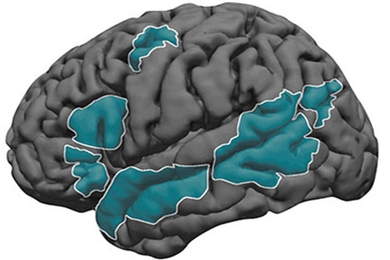
The brain’s language network is still evolving in adolescence. But by age 4, language processing is already handled by the left side of the brain, new research finds.
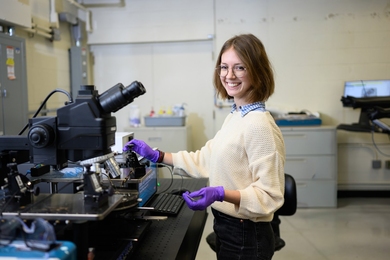
Camille Cunin PhD ’26 is transforming rigid circuitry into stretchable, signal-amplifying devices built for real-world biomedical use.

Researchers propose a challenge to the traditional view of how the brain uses its ability to categorize.

Nearly 100 MIT students participate in a buddy program that assists Boston-area residents.
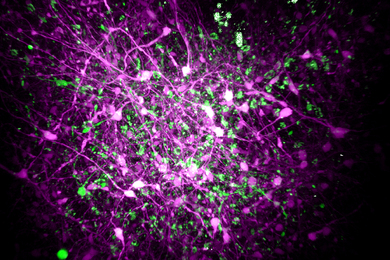
Using advanced human cell cultures, MIT researchers tracked how two different mutations alter neural circuit development, and how each could be addressed with distinct potential therapeutics.

Founded by Jake Donoghue PhD ’19 and former MIT researcher Jarrett Revels, the company is creating an AI-driven platform to help diagnose and treat disease.

Neural interaction with bacteria has important effects on animal brains. A new study investigates how neurons sense bacteria by revealing, in nematodes, the bacterial signals that a key neuron detects.

MIT scientists create a detailed map of exactly what happens in the brains of C. elegans worms when they “follow their nose” to savor attractive odors or avoid unappealing ones.
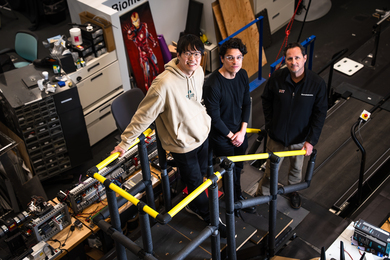
A new biohybrid system developed at MIT is the first living implant that uses rewired nerves to revive paralyzed organs.
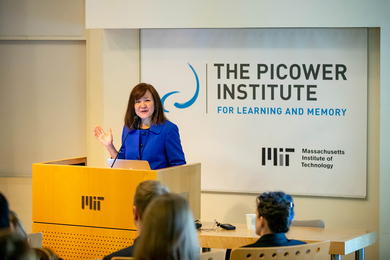
Tsai, who has grown the MIT neuroscience institute, will increase focus on research including Alzheimer’s disease and Down syndrome.
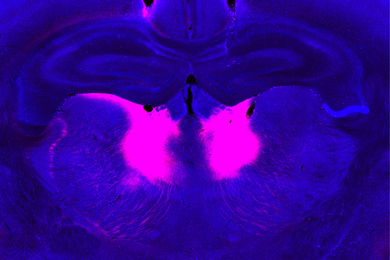
Impairments of this circuit may help to explain why some people with schizophrenia lose touch with reality.
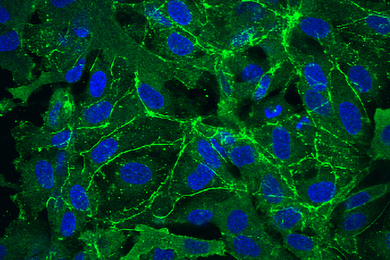
By showing the problem derives from genetic mutations that lead to overexpression of a microRNA, MIT researchers’ study points to potential treatment.

New work suggests the brain can deliver neuron-specific feedback during learning — resembling the error signals that drive machine learning.