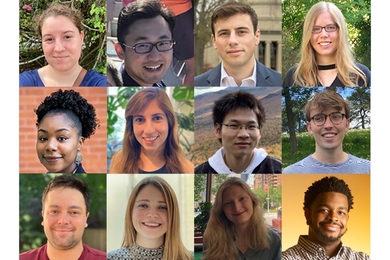
2022-23 Takeda Fellows: Leveraging AI to positively impact human health
New fellows are working on health records, robot control, pandemic preparedness, brain injuries, and more.
New fellows are working on health records, robot control, pandemic preparedness, brain injuries, and more.

Comparing models of working memory with real-world data, MIT researchers find information resides not in persistent neural activity, but in the pattern of its connections.

A new understanding of how particle shape controls grain flow could help engineers manage river restoration and coastal erosion.
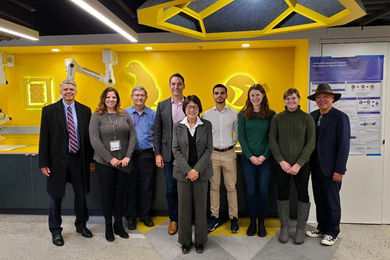
In a visit to MIT, Under Secretary of Defense for Research and Engineering Heidi Shyu talked about the DoD’s role in strengthening U.S. manufacturing.
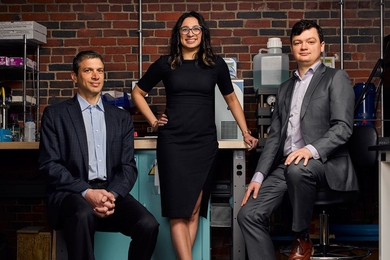
Startups founded by mechanical engineers are at the forefront of developing solutions to mitigate the environmental impact of manufacturing.
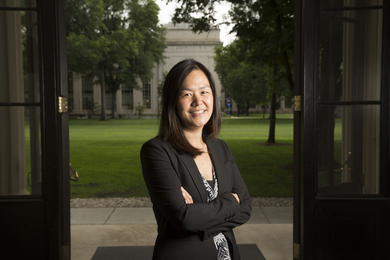
The head of MIT’s Department of Mechanical Engineering was nominated by President Biden to lead ARPA-E’s mission to support critical energy research.
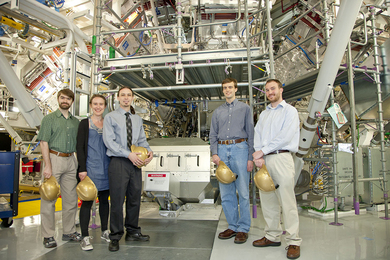
Unique PSFC-designed spectrometer provides crucial data about the implosion that yielded an historic fusion energy gain.
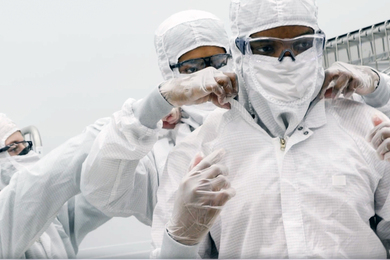
Students compete to design a compression-resistant nanoscale material — and win possibly the world’s smallest trophy.
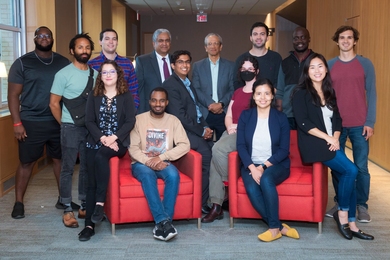
With the selection of 16 inaugural postdocs, the program seeks to develop the next generation of faculty leaders and help guide the school toward a more diverse and inclusive culture.
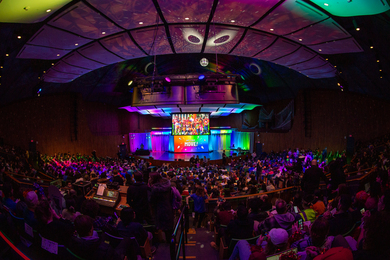
Students pitched prototypes for a sea turtle incubator, a wheelchair speed control, a self-cleaning firehose system, and more.
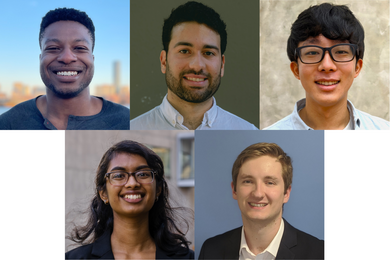
The new fellowship from the governments of Australia, India, Japan, and the United States, administered by Schmidt Futures, supports graduate education in STEM fields.
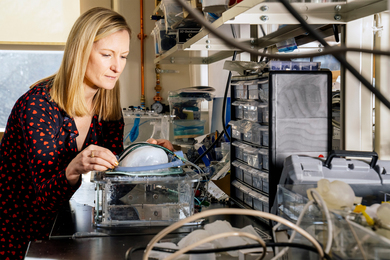
The new design works with the diaphragm to improve breathing.
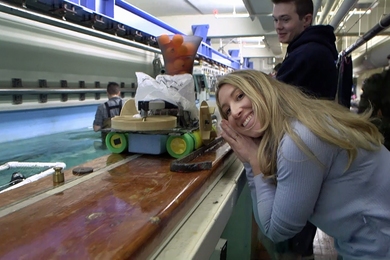
In class 2.702 (Systems Engineering and Naval Ship Design), naval officers and other graduate students get hands-on experience in project management skills that will be central to their future careers.

Recent mechanical engineering alumna Emily Satterfield ’22 pursues passions that might seem unrelated but “actually go hand-in-hand.”
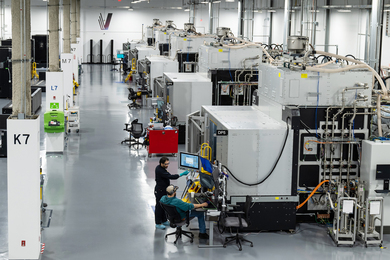
VulcanForms, founded by an MIT alumnus and professor, has created digital production systems to manufacture complex metal parts at scale.