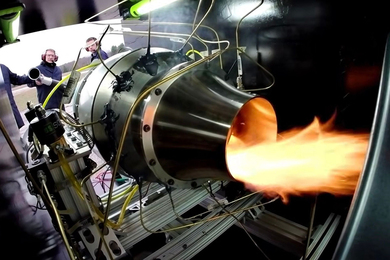
Can AI build a jet engine? JARVIS Challenge tests role of AI copilots in tough-tech engineering
MIT students designed, built, and tested a jet engine with AI copilots, assessing AI’s usefulness in developing high-performance aerospace systems.
MIT students designed, built, and tested a jet engine with AI copilots, assessing AI’s usefulness in developing high-performance aerospace systems.
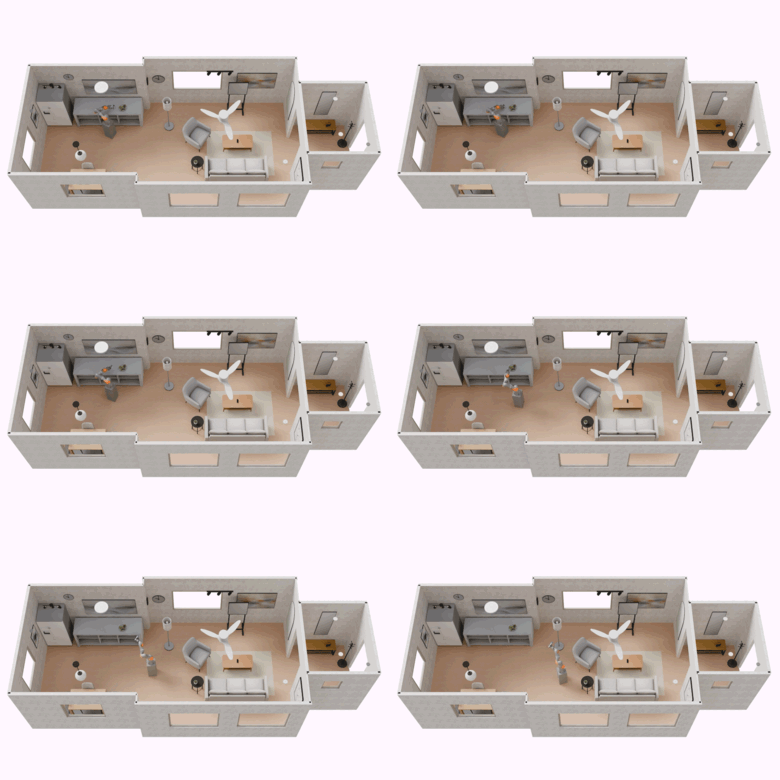
“SceneSmith” system uses collaborative AI agents to create realistic 3D environments of places like kitchens, hotels, and living rooms, where robots can simulate everyday chores.

Researchers developed an auditing technique to test generative AI models for malicious capabilities, without prompting them for illegal outputs.
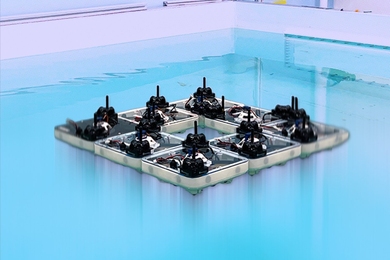
MIT researchers developed FloatForm, a swarm of small aquatic robots that snap together like ants forming a raft, assembling into reconfigurable structures on the water.
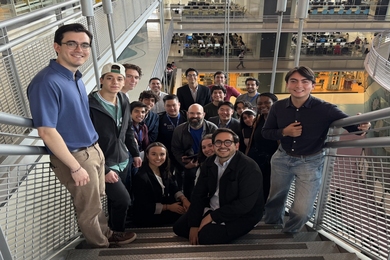
MIT and Tec de Monterrey will expand FrED curriculum to universities across Mexico.

Computer scientist Phillip Isola cuts through the hype to explain how AI agents work and what the future might hold for this rapidly advancing technology.
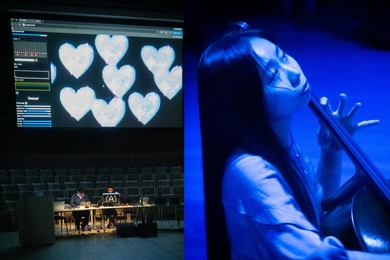
Associate Professor Anna Huang delivers the keynote address, “In Search of Human-AI Resonance,” to a capacity crowd.
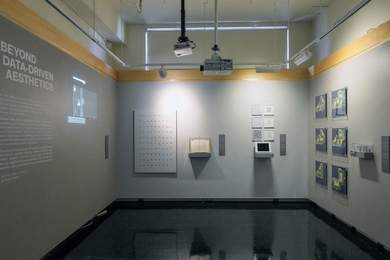
In a new Keller Gallery exhibition, Alexandros Haridis SM ’17, PhD ’22 traces centuries of ideas about aesthetic judgment and explores how design can make complex computational systems visible.
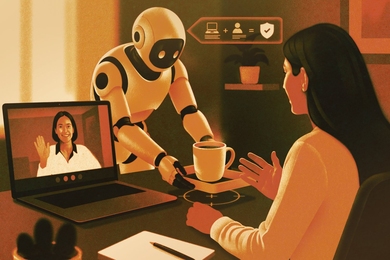
To help robots do chores in places like homes and factories, a new approach from MIT uses one language model to clarify users’ instructions, then another to ignore irrelevant info.
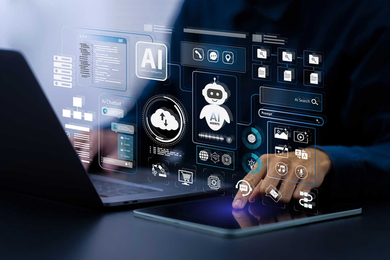
A new system, known as Murakkab, optimizes the design and deployment of multistep workflows that power AI applications.
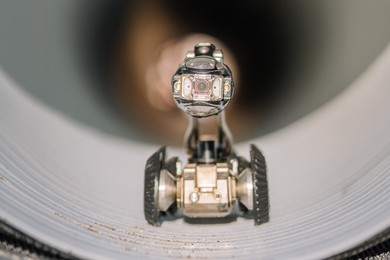
Researchers combined an efficient algorithm with dedicated hardware to rapidly generate 3D maps for navigation using minimal memory and power.
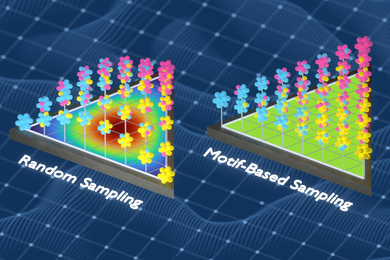
MIT researchers’ approach captures subtle atomic patterns, improving predictions of material properties.
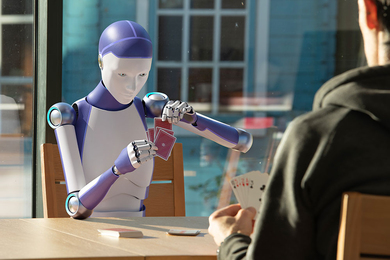
Researchers show that for certain kinds of games, an overlooked class of algorithms performs much better than expected.
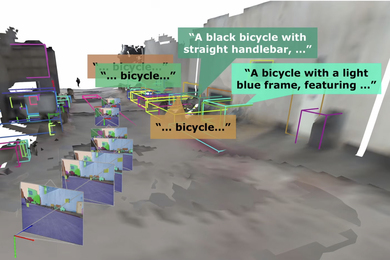
A new spatial memory system for robots efficiently captures details about the objects they see while exploring their environment.
MIT researchers provide a major upgrade to the nearly century-old idea of random utility models.