
Estimating suicide risk from text
A new language-processing tool could help identify the highest-risk individuals from natural language, enabling swifter interventions.
A new language-processing tool could help identify the highest-risk individuals from natural language, enabling swifter interventions.
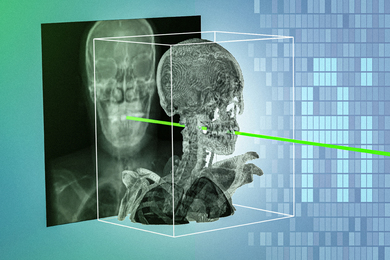
This patient-specific method, called xvr, helps doctors use X-rays for surgical navigation in fields such as orthopedics and neurosurgery.

The “HardFlow” algorithm could help generative AI models produce high-quality outputs that obey strict requirements when “pretty close” doesn’t cut it.
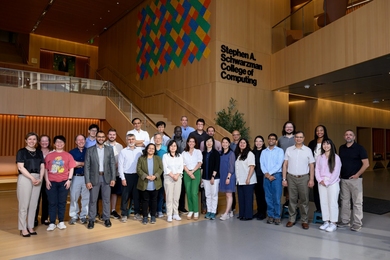
A weeklong summer workshop brought higher education faculty to campus to explore how AI and machine learning materials can be adapted for their classrooms.
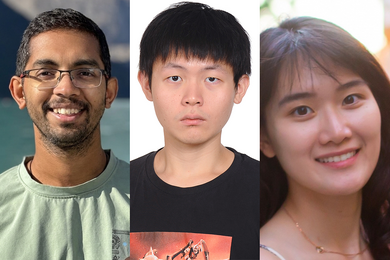
MIT affiliates engage with the MIT-IBM Computing Research Lab to bring rigorous theory to production systems.

A new method, called CW-Net, translates the reasoning process of an autonomous vehicle’s AI system into understandable concepts that explain its behavior.

The senior lecturer, already director of the degree program, will now oversee all aspects of the center’s activities and operations.
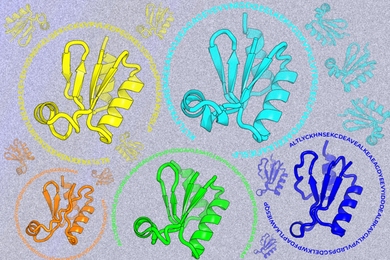
A new machine-learning framework aims to improve the success rate of computational protein design while moving away from results that reproduce sequences found in nature.

The “CrysVCD” tool developed at MIT could cut the huge amounts of time and money spent on screening out chemically unstable designs.

A new algorithm learns to anticipate the unprecedented scenarios that critical infrastructure and global supply chains are least prepared for.

New MIT research could lead to better materials for a fossil-fuel-free process for making the chemical that's essential to fertilizer and other products.

A new method for surgically removing training examples from a model reveals that as datasets grow, the link between what a model learns and what it produces dissolves.

Study finds non-experts deferred to LLM-based diagnostic assistance, even when it was wrong, while clinicians caught AI errors.

An expert in machine learning, statistics, and computation, Rakhlin succeeds Professor Ankur Moitra.
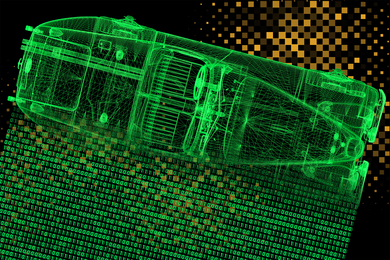
Researchers developed an automated framework that helps AI models generate CAD programs more accurately and efficiently.