
MIT senior turns waste from the fishing industry into biodegradable plastic
Jacqueline Prawira’s innovation, featured on CBS’s “The Visioneers,” tackles one of the world’s most pressing environmental challenges.
Jacqueline Prawira’s innovation, featured on CBS’s “The Visioneers,” tackles one of the world’s most pressing environmental challenges.
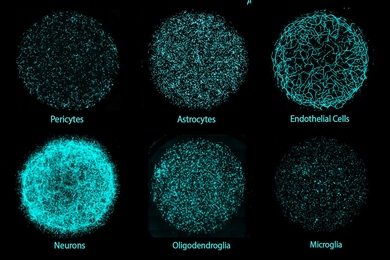
Cultured from induced pluripotent stem cells, “miBrains” integrate all major brain cell types and model brain structures, cellular interactions, activity, and pathological features.
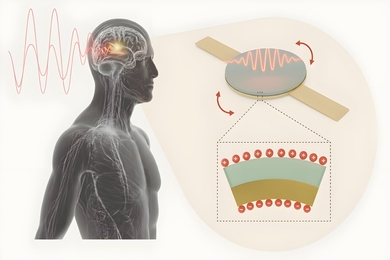
The technology would allow battery-free, minimally invasive, scalable bioelectronic implants such as pacemakers, neuromodulators, and body process monitors.

A beloved member of the Department of Mechanical Engineering for nearly 60 years, Yannas helped save the lives of thousands of burn victims through his research and innovation.
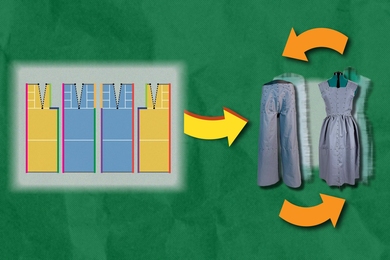
To reduce waste, the Refashion program helps users create outlines for adaptable clothing, such as pants that can be reconfigured into a dress. Each component of these pieces can be replaced, rearranged, or restyled.

A lantern created in the Design Intelligence Lab creates sustainable alternatives for consumer electronics.

The method enhances 3D bioprinting capabilities, accelerating process optimization for real-world applications in tissue engineering.

Founder Gregory B. Olson reflects on past and continuing high-impact work as the group turns 40.

Lincoln Laboratory transitioned its optical-amplifier technology to Bridger Photonics for commercialization, enhancing US energy security and efficiency.

Inventions that protect US service members, advance computing, and enhance communications are recognized among the year's most significant new products.

Popular mechanical engineering course applies machine learning and AI theory to real-world engineering design.

MIT CSAIL researchers developed SustainaPrint, a system that reinforces only the weakest zones of eco-friendly 3D prints, achieving strong results with less plastic.

System developed at MIT could provide realistic predictions for a wide variety of reactions, while maintaining real-world physical constraints.
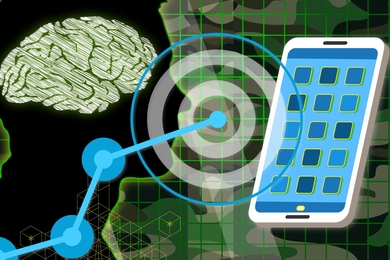
Tools build on years of research at Lincoln Laboratory to develop a rapid brain health screening capability and may also be applicable to civilian settings such as sporting events and medical offices.
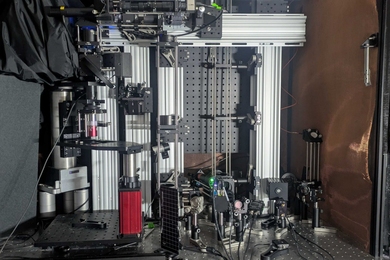
By combining several cutting-edge imaging technologies, a new microscope system could enable unprecedentedly deep and precise visualization of metabolic and neuronal activity, potentially even in humans.