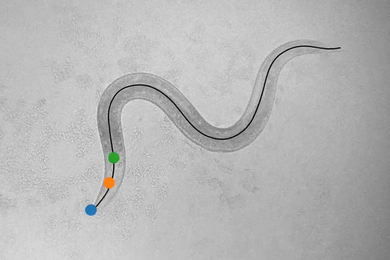
Cracking the code that relates brain and behavior in a simple animal
MIT researchers model and create an atlas for how neurons of the worm C. elegans encode its behaviors, make findings available on their “WormWideWeb.”
MIT researchers model and create an atlas for how neurons of the worm C. elegans encode its behaviors, make findings available on their “WormWideWeb.”
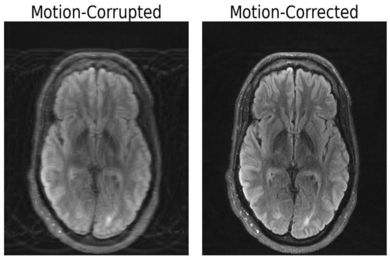
The challenge involves more than just a blurry JPEG. Fixing motion artifacts in medical imaging requires a more sophisticated approach.
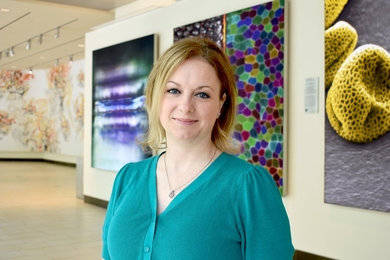
Ultrasound research specialist and 2023 MIT Excellence Award winner Nicole Henning adapts ultrasound technology for more sensitive, less invasive imaging for disease modeling.

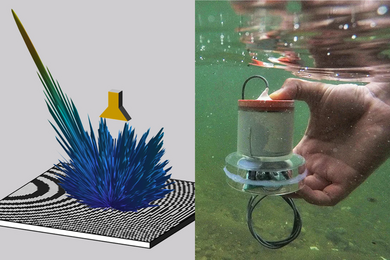
The dataset, being collected as part of a US Coast Guard science mission, will be released open source to help advance naval mission planning and climate change studies.
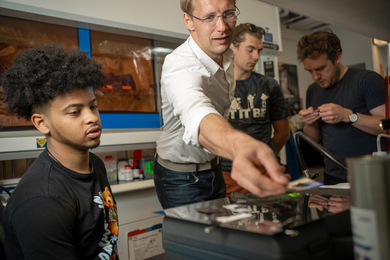
Mathias Kolle’s color-changing materials take inspiration from butterflies and mollusks.
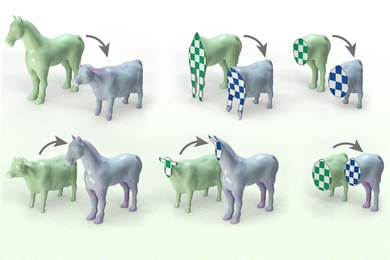
By mapping the volumes of objects, rather than their surfaces, a new technique could yield solutions to computer graphics problems in animation and CAD.
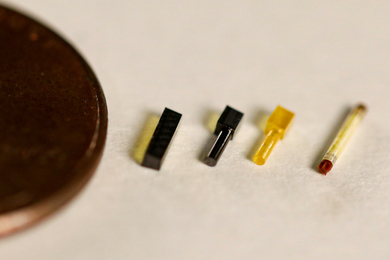
A new way of machining microscale rotors from diamond crystal can enable ultrasensitive NMR devices for probing proteins and other materials.
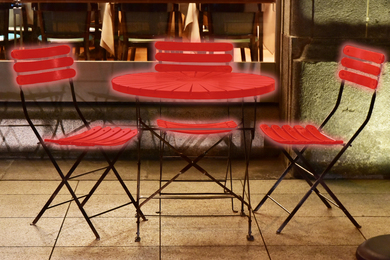
This machine-learning method could assist with robotic scene understanding, image editing, or online recommendation systems.
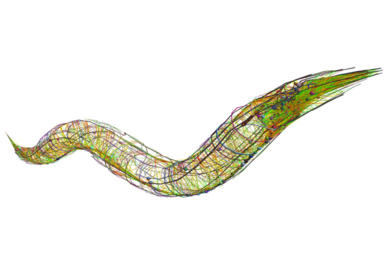
With full genetic control and visibility into neural activity and behavior, MIT scientists map out chemical’s role in behavior.
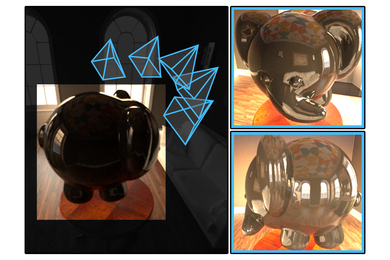
A new computer vision system turns any shiny object into a camera of sorts, enabling an observer to see around corners or beyond obstructions.

Project will develop new materials characterization tools and technologies to assign unique identifiers to individual pearls.
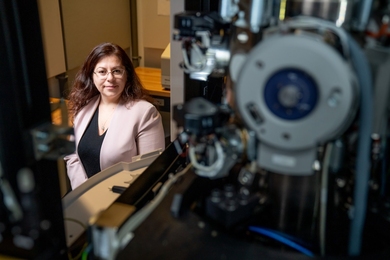
Materials scientist Anna Osherov helps researchers comprehend the nanoscale down to an atom using MIT.nano’s characterization tools.

The cap will help researchers gain new insight into how the brain functions.
Computer scientists want to know the exact limits in our ability to clean up, and reconstruct, partly blurred images.