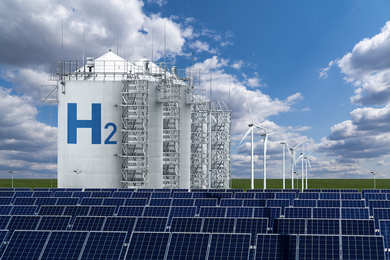
Coupling power and hydrogen sector pathways to benefit decarbonization
MIT-led team finds holistic optimization of electric power and hydrogen supply chain infrastructure is favorable for emission reductions and decreased infrastructure costs.
MIT-led team finds holistic optimization of electric power and hydrogen supply chain infrastructure is favorable for emission reductions and decreased infrastructure costs.

Modeling tool showcases emerging MIT Joint Program research focus on multi-sector dynamics.

The head of MIT’s Department of Chemical Engineering will serve on the President’s Council of Advisors on Science and Technology.

Engineers have designed a relatively low-cost, energy-efficient approach to treating water contaminated with heavy metals.

MIT researchers have analyzed greenhouse gas emissions from future buildings across America and outlined region-specific solutions.

PhD student Limiao Zhang sees surprising connections between the behavior of cars and bubbles.
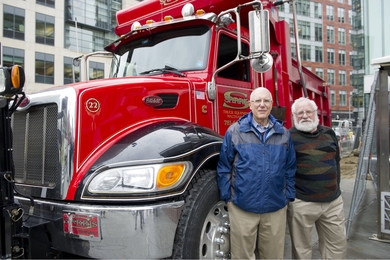
MIT researchers propose a gasoline-ethanol engine that is cleaner and more cost-effective than existing diesel engine technologies to help meet vehicle emission reduction goals.
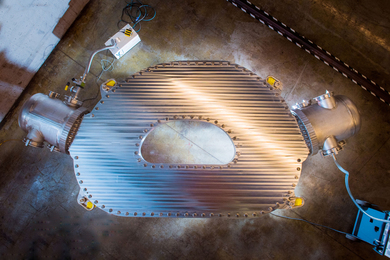
New superconducting magnet breaks magnetic field strength records, paving the way for practical, commercial, carbon-free power.
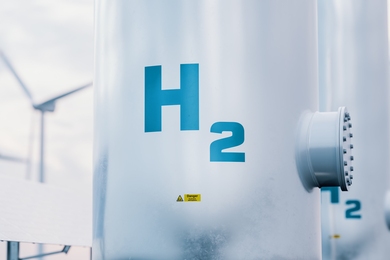
Analyzing California’s power system, MITEI researchers show that hydrogen-generated electricity is a cost-competitive candidate for backing up wind and solar.

PhD student Madhumitha Ravichandran identifies the three main factors that trigger the boiling crisis through machine learning models.

In a study that could benefit quantum computing, researchers show a superlattice embedded with nanodots may be immune from dissipating energy to the environment.

Eli Paster SM ’10, PhD '14 is the CEO of PolyJoule, a startup working to reinvent energy storage technology to increase efficiency and reduce costs.
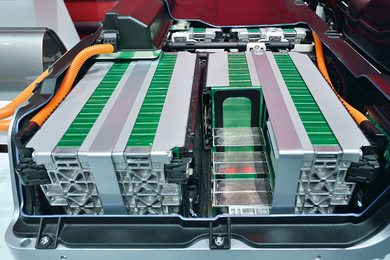
As researchers consider materials for solid-state batteries, they also may want to consider how those materials could impact large-scale manufacturing.
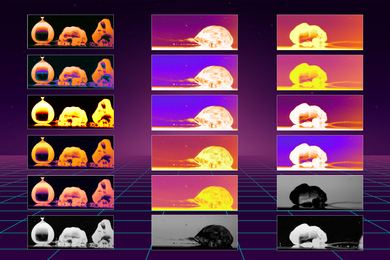
The commonplace phenomenon, now quantified for the first time, could be harnessed for many useful applications.
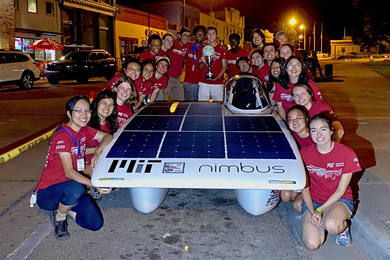
Student-designed Nimbus solar car travels 1,109 miles in five days, averaging 38.4 miles per hour.