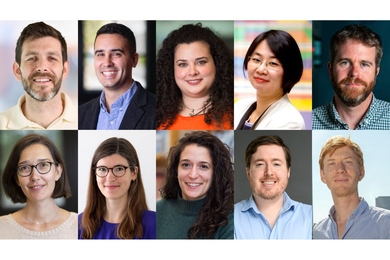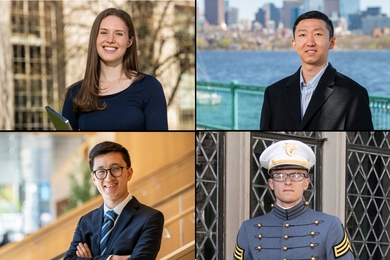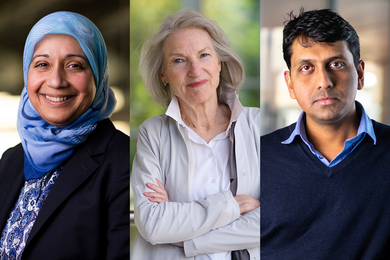
MIT Schwarzman College of Computing welcomes 11 new faculty for 2025
The faculty members occupy core computing and shared positions, bringing varied backgrounds and expertise to the MIT community.
Download RSS feed: News Articles / In the Media / Audio
The faculty members occupy core computing and shared positions, bringing varied backgrounds and expertise to the MIT community.
To reduce waste, the Refashion program helps users create outlines for adaptable clothing, such as pants that can be reconfigured into a dress. Each component of these pieces can be replaced, rearranged, or restyled.
After being trained with this technique, vision-language models can better identify a unique item in a new scene.
New tool from MIT CSAIL creates realistic virtual kitchens and living rooms where simulated robots can interact with models of real-world objects, scaling up training data for robot foundation models.
MIT CSAIL and McMaster researchers used a generative AI model to reveal how a narrow-spectrum antibiotic attacks disease-causing bacteria, speeding up a process that normally takes years.
By enabling users to easily create social apps that serve communities’ needs, the Graffiti framework aims to promote healthier online interactions.
Explosive growth of AI data centers is expected to increase greenhouse gas emissions. Researchers are now seeking solutions to reduce these environmental harms.
By enabling rapid annotation of areas of interest in medical images, the tool can help scientists study new treatments or map disease progression.
MIT is a global community whose international engagement bestows benefits well beyond the Cambridge campus.
At the inaugural MIT Generative AI Impact Consortium Symposium, researchers and business leaders discussed potential advancements centered on this powerful technology.
MIT-IBM Watson AI Lab researchers have developed a universal guide for estimating how large language models will perform based on smaller models in the same family.
MIT CSAIL researchers developed a tool that can model the shape and movements of fetuses in 3D, potentially assisting doctors in finding abnormalities and making diagnoses.
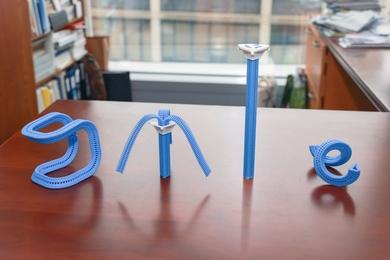
The FabObscura system helps users design and print barrier-grid animations without electronics, and can help produce dynamic household, workplace, and artistic objects.
Study of 3.5 million cells from more than 100 human brains finds Alzheimer’s progression — and resilience to disease — depends on preserving epigenomic stability.
Balancing automation and agency, Associate Professor Arvind Satyanarayan develops interactive data visualizations that amplify human creativity and cognition.