Q&A: Examining American attitudes on global climate policies
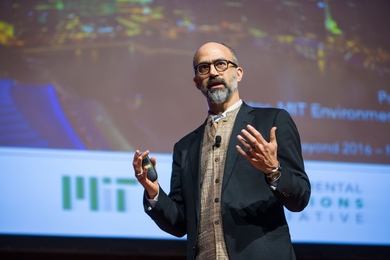
Professor Evan Lieberman describes new research in which he and colleagues find a sharp partisan divide over providing aid to poor nations.
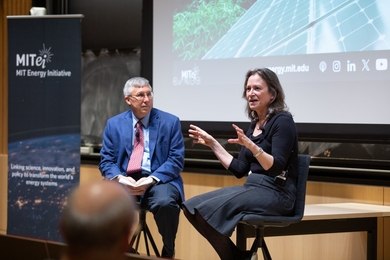
Professor Jessika Trancik’s course helps students understand energy levers for addressing climate change at the macro and micro scales.
A small fleet of autonomous surface vessels forms a large sonar array for finding submerged objects.
MIT study confirms the climate impacts of hydrogen, recommends leak prevention be a priority as infrastructure for handling this clean-burning fuel is built.
SERC Scholars from around the MIT community examine the electronic hardware waste life cycle and climate justice.
A better understanding of construction industry stakeholders’ motivations can lead to greater adoption of circular practices.
MIT engineers show how detailed mapping of weather conditions and energy demand can guide optimization for siting renewable energy installations.
First organized MIT delegation highlights the Institute's growing commitment to addressing climate change by showcasing research on biodiversity conservation, AI, and the role of local communities.
MIT chemical engineers have devised a way to capture methane, a potent greenhouse gas, and convert it into polymers.
Josephine Carstensen and David McGee discuss the value and impact that MIT Global Seed Funds, which create synergistic partnerships between faculty and peers abroad, added to their research.
Study shows how smart policies could address competing land-use needs.
MIT spinout Electrified Thermal Solutions has developed an electrically conductive firebrick that stores heat at high enough temperatures to power industrial processes.
The method could help communities visualize and prepare for approaching storms.
In a talk at MIT, White House science advisor Arati Prabhakar outlined challenges in medicine, climate, and AI, while expressing resolve to tackle hard problems.
The MIT Sloan professor has become a leading energy economist through original studies that can inform our global climate response.