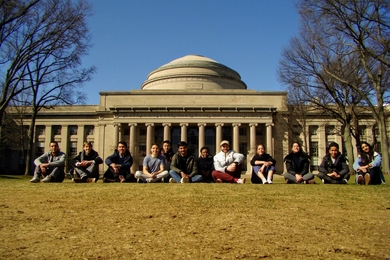
Diverse international cohort first to earn MIT master's degrees in data, economics, and development policy
Twenty-two students from 14 countries take an evidence-based approach to affecting global change.
Twenty-two students from 14 countries take an evidence-based approach to affecting global change.
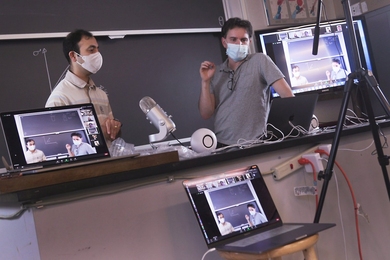
Faculty and teaching staff at MIT are piloting new methods of teaching hands-on, project-based classes this semester.
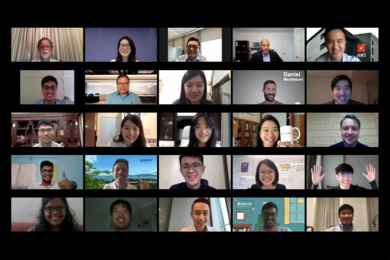
MIT students collaborate online with Hong Kong peers and industry partners to build fintech solutions.
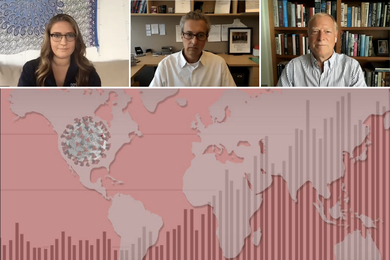
MIT course on the Covid-19 pandemic, available to the public online, brings together top experts to educate students on up-to-date science.

Thirty-one MIT instructors honored for digital teaching excellence in extraordinary circumstances.
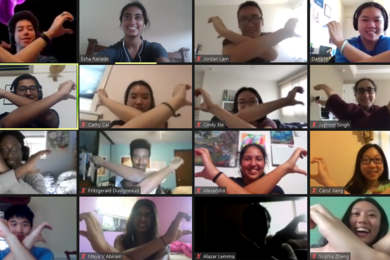
With creativity and hard work, the Institute is striving to provide the best possible experience for the Class of 2024.
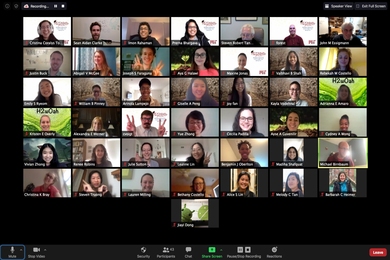
MIT students explore algal water purifiers, programmable soil bacteria, and other biological engineering approaches to food and water security.
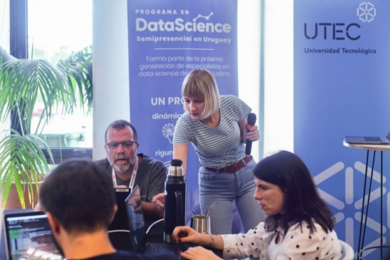
IDSS will provide support to learners who take the MicroMasters Program in Statistics and Data Science.

The science program for local high school students is remote this year, as MIT instructors create at-home lab experiences.
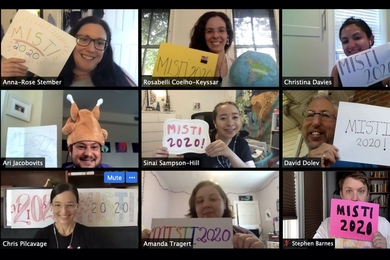
MISTI’s popular programs adapt to changing global circumstances in the wake of Covid-19.
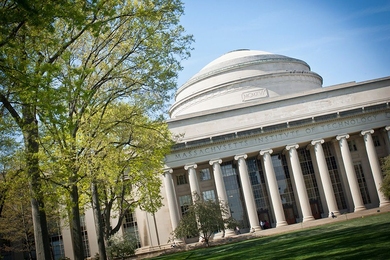
Extensive safety protocols will undergird the return of additional students and staff to campus.
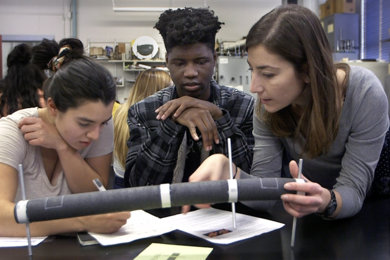
By emphasizing the process of discovery, instructors in course 2.001 (Mechanics and Materials I) provide engineering students a career-building foundation.

With the campus shut down by Covid-19, the spring D-Lab class Water, Climate Change, and Health had to adapt.
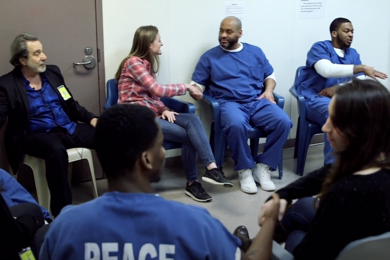
Film portrays groundbreaking initiative’s impact on MIT undergraduates and incarcerated students.