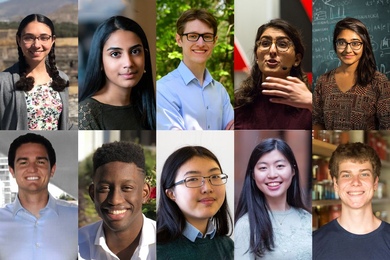
Eleven from MIT awarded 2020 Fulbright Fellowships
Graduating seniors and recent alumni will spend upcoming year abroad on Fulbright grants.
Graduating seniors and recent alumni will spend upcoming year abroad on Fulbright grants.
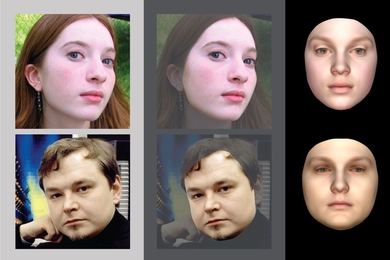
Computer model of face processing could reveal how the brain produces richly detailed visual representations so quickly.
Researchers discover that no magic is required to explain why deep networks generalize despite going against statistical intuition.
Researchers develop a more robust machine-vision architecture by studying how human vision responds to changing viewpoints of objects.
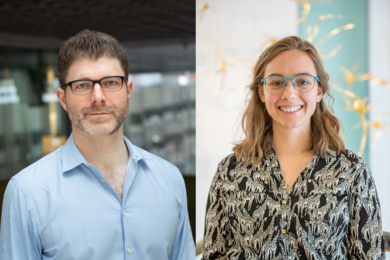
Stimuli that sound or look like gibberish to humans are indistinguishable from naturalistic stimuli to deep networks.

Objects are posed in varied positions and shot at odd angles to spur new AI techniques.

Model registers “surprise” when objects in a scene do something unexpected, which could be used to build smarter AI.
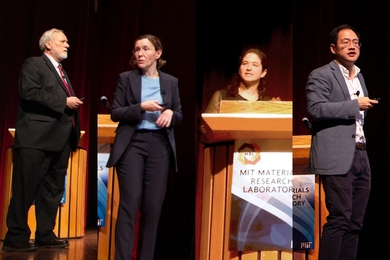
The ability to predict and make new materials faster highlights the need for safety, reliability, and accurate data.

Brain and cognitive sciences professor studies how the human mind is able to learn so rapidly.

How people interpret musical notes depends on the types of music they have listened to, researchers find.
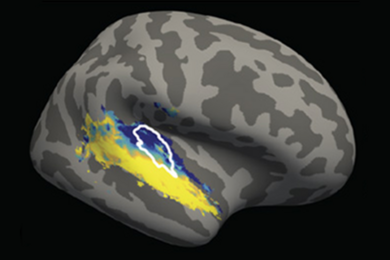
Study reveals brain regions that respond differently to the presence of background noise, suggesting the brain progressively hones in on and isolates sounds.
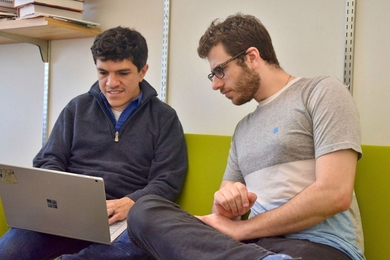
Researchers combine deep learning and symbolic reasoning for a more flexible way of teaching computers to program.

Study shows that artificial neural networks can be used to drive brain activity.
The DiCarlo lab finds that a recurrent architecture helps both artificial intelligence and our brains to better identify objects.
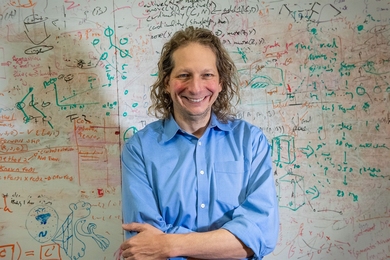
Professor honored for work on the nature and origins of intelligence in the human mind and applying that knowledge to build human-like intelligence in machines.