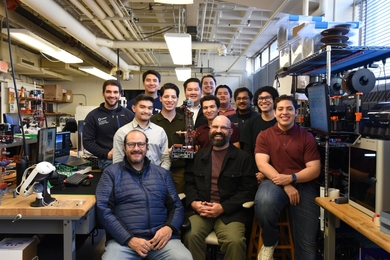
Tabletop factory-in-a-box makes hands-on manufacturing education more accessible
Inaugural cohort of Tecnológico de Monterrey undergraduates participate in immersive practicum at MIT featuring desktop fiber-extrusion devices, or FrEDs.
Inaugural cohort of Tecnológico de Monterrey undergraduates participate in immersive practicum at MIT featuring desktop fiber-extrusion devices, or FrEDs.

Researchers propose a simple fix to an existing technique that could help artists, designers, and engineers create better 3D models.

“We are adding a new layer of control between the world of computers and what your eyes see,” says Barmak Heshmat, co-founder of Brelyon and a former MIT postdoc.

Multimedia artist Jackson 2bears reimagines the Haudenosaunee longhouse and creation story.
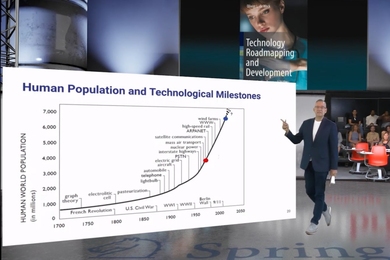
Professor Olivier de Weck's approach combines quantitative engineering analysis and strategic thinking to drive innovation.
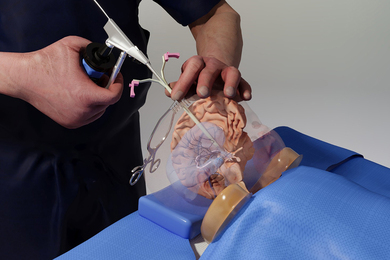
MIT.nano Immersion Lab works with AR/VR startup to create transcontinental medical instruction.
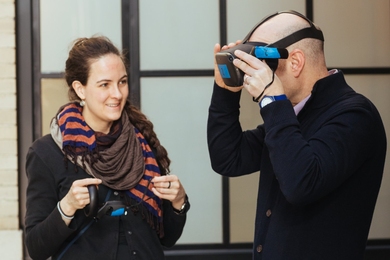
The associate producer shares how arts initiatives bring different departments together in collaboration and community.
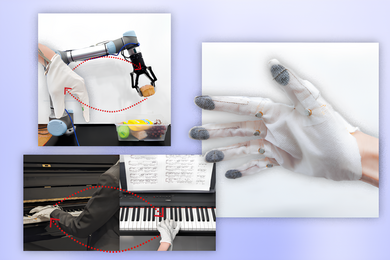
Adaptive smart glove from MIT CSAIL researchers can send tactile feedback to teach users new skills, guide robots with more precise manipulation, and help train surgeons and pilots.
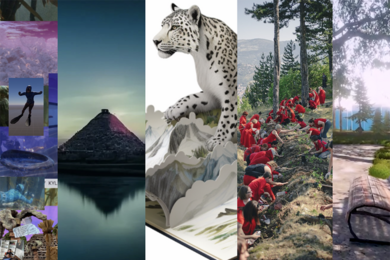
Five multimedia projects communicating climate futures selected for 2023 WORLDING program, online and at MIT.
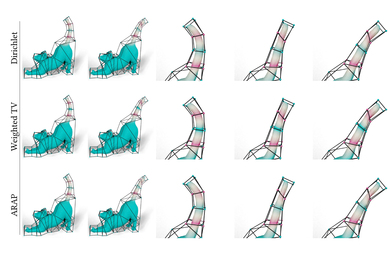
This new method draws on 200-year-old geometric foundations to give artists control over the appearance of animated characters.

StructCode, developed by MIT CSAIL researchers, encodes machine-readable data in laser-cut objects by modifying their fabrication features.
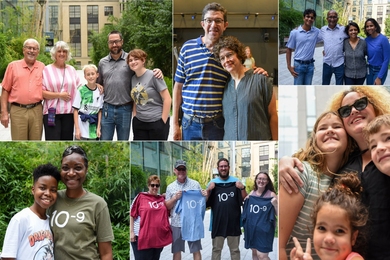
Staff share nano experience — and ice cream — with their families.

By synchronizing media streams transmitted from the cloud to two devices, researchers could improve cloud gaming and AR/VR applications.
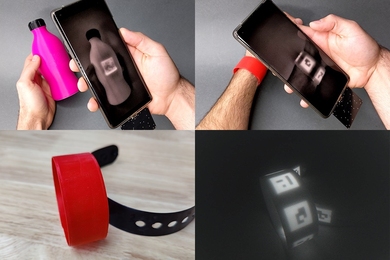
Developed by MIT researchers, BrightMarkers are invisible fluorescent tags embedded in physical objects to enhance motion tracking, virtual reality, and object detection.

TeleAbsence, a project from the MIT Media Lab, probes and imitates the way humans process feelings of belonging, love, and loss.