
Bots that talk more like people
AI platform allows chatbots to draw on robust language database to better navigate human conversation.
AI platform allows chatbots to draw on robust language database to better navigate human conversation.

Design is major stepping stone toward portable artificial-intelligence devices.

The computer scientist’s group has designed a game that gets players to reflect on sexual misconduct in the workplace.
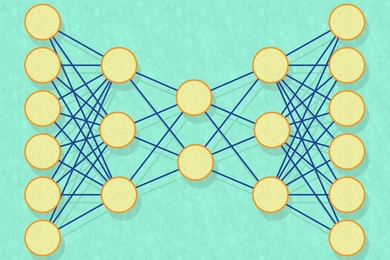
Machine-learning system finds patterns in materials “recipes,” even when training data is lacking.

Students put their AI software for underwater vehicles to the test on the Charles River.

Results may help explain how humans do the same thing.

Technique illuminates the inner workings of artificial-intelligence systems that process language.

Improved recommendation algorithm should work especially well when ratings data are “sparse.”
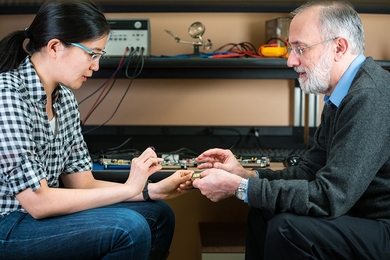
Class taught by Vivienne Sze and Joel Emer brings together traditionally separate disciplines for advances in deep learning.

Boston Globe op-ed by MIT president calls for a “whole-society effort” to address profound challenges posed by automation.

Two-day “AI and the Future of Work” summit at MIT focused on the artificial intelligence revolution and the workplace.

System could pore through millions of research papers to extract “recipes” for producing materials.

System for performing “tensor algebra” offers 100-fold speedups over previous software packages.

With Shelley, the world’s first artificial intelligence-human horror story collaboration, MIT researchers aim for goosebumps.
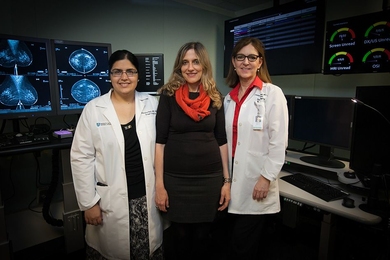
Model developed at MIT’s Computer Science and Artificial Intelligence Laboratory could reduce false positives and unnecessary surgeries.