
Using computational tools for molecule discovery
Assistant professor Connor Coley is developing tools that would be able to predict molecular behavior and learn from both successes and mistakes.
Assistant professor Connor Coley is developing tools that would be able to predict molecular behavior and learn from both successes and mistakes.

How a pair of MIT Sloan Executive Education alumni translated teachings from an MIT course to operations improvements at Mexico’s largest brewery.
Math professor Ankur Moitra seeks algorithms with provable guarantees, to pin down the mechanisms of machine learning.

Technology solutions to climate change, disaster response, and global health challenges are up for discussion in a new Lincoln Laboratory lecture series.

In a first, the digital fiber contains memory, temperature sensors, and a trained neural network program for inferring physical activity.
Yichen Shen PhD '16 is CEO of Lightelligence, an MIT spinout using photonics to reinvent computing for artificial intelligence.
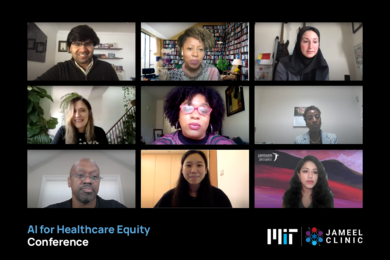
Nearly 1,400 joined the AI for Health Care Equity Conference that explored new AI technologies as a platform for change.
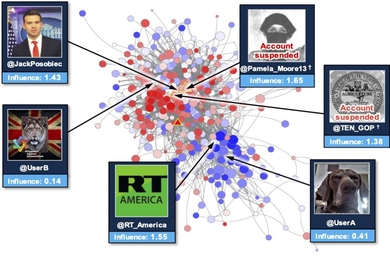
Built at MIT Lincoln Laboratory, the RIO program automatically detects and analyzes social media accounts that spread disinformation across a network.

Machine learning software advances could help anesthesiologists optimize drug dose.
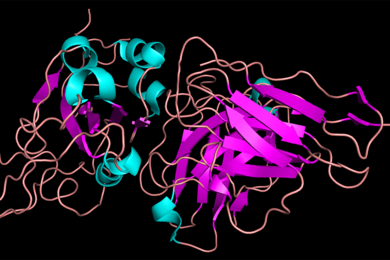
Professor Markus Buehler composed it, and a South Korean orchestra performed it; it’s the latest in a series of artistic collaborations sparked by Buehler’s exploration of the structure of SARS-CoV-2.

Society for Industrial and Applied Mathematics recognizes Kepner, a pivotal member of the team that established Lincoln Laboratory's Supercomputing Center, for his innovative work in computing.

Netra, co-founded by Shashi Kant SM ’06, uses artificial intelligence to help companies sort and manage video content.

A machine learning model developed jointly by Janssen and MIT data scientists played a key role in the clinical trial process for the Johnson & Johnson Covid-19 vaccine.
Responsible AI for Social Empowerment and Education (RAISE) seeks to empower more people to participate in, and benefit from, AI.
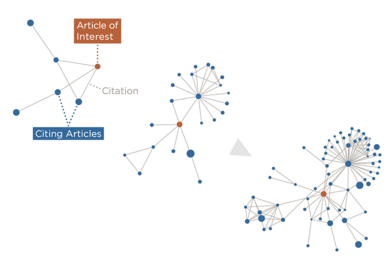
DELPHI, an artificial intelligence framework, can give an “early-alert” signal for future key technologies by learning from patterns gleaned from previous scientific publications.