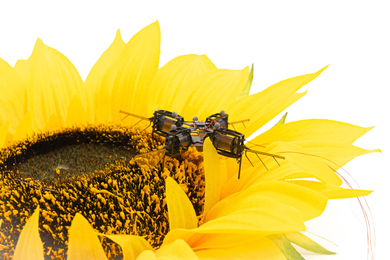
This featherweight, flying robot carries its own sensors and computers
The speedy microrobot flies without an attached motion-capture system, moving it closer to applications like agriculture or industrial surveillance.
The speedy microrobot flies without an attached motion-capture system, moving it closer to applications like agriculture or industrial surveillance.
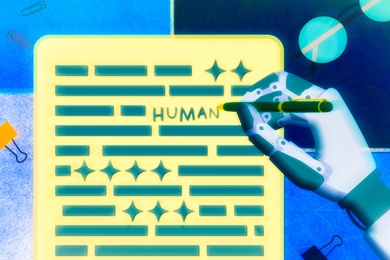
A more flexible training method can make AI text detectors more robust when new models emerge or AI-generated text is disguised to appear human.
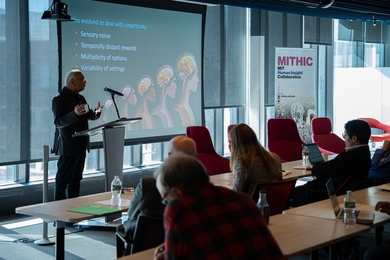
Supported by the MIT Human Insight Collaborative, scholars are exploring how AI is impacting the human experience and reshaping higher education.
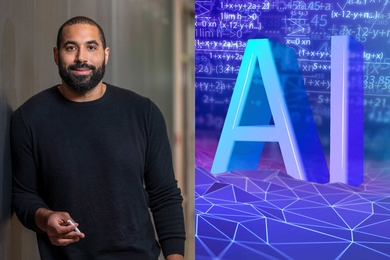
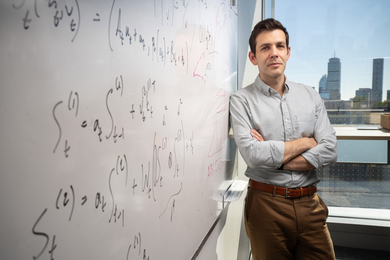
Assistant Professor John Urschel explains why learning the fundamental skills of mathematics is still essential despite the evolution of AI tools.
By studying the computational foundations of language learning, Associate Professor Jacob Andreas builds intelligent systems that can communicate effectively with humans.

The system asks humans for feedback to increase trust in machine-generated designs for buildings and bridges.
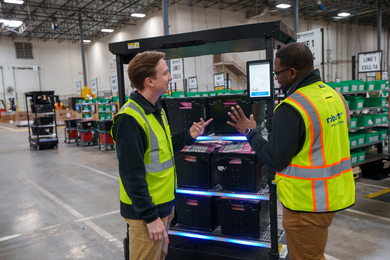
Founded by Anthony Jules ’92, SM ’92 and Professor Emeritus Rodney Brooks, Robust AI’s robots are designed to collaborate with humans in factories and warehouses.
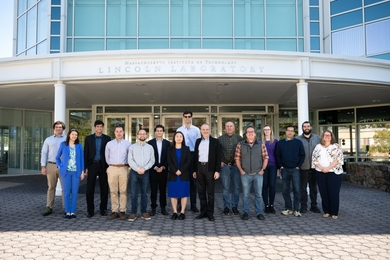
A secure operating system, a quantum microsystem platform, and a 5G interference-canceling algorithm are named among the year's most significant innovations.

MIT scientists developed a training method to generate models that simulate the effects of human activities on climate much more quickly than other approaches.

With up to $53 million from ARPA-H, the researchers will use AI to generate safer herbicides that reduce dependence on imports and improve the security of the U.S. food supply.
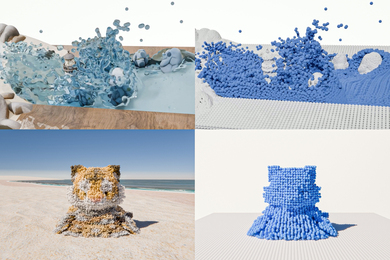
By learning how matter moves, the WorldParticle system could assist with developing soft robots, medicines, and more.
The new approach, known as FLEX, could lead to more intuitive, interactive household and assistive robots.
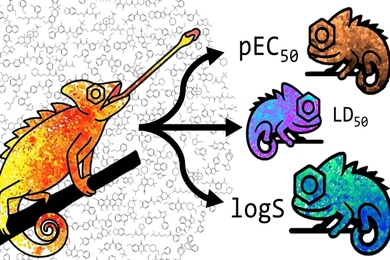
A machine-learning approach called CheMeleon provides a practical way to develop new drugs or other molecules with much less detailed, expensive experimentation.

A new system identifies and corrects unreliable object descriptions stored in a robot’s memory, improving the robot’s ability to interact with its environment.

MIT.nano and the Northeast Microelectronics Coalition gathered facility leaders and technology professionals from across the nation to explore ways to make shared-access facilities more connected.