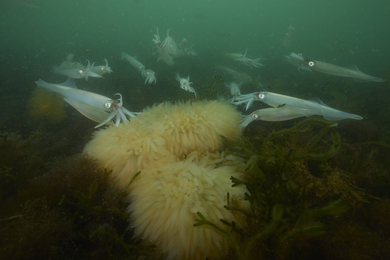
The secret love life of the longfin squid
MIT Sea Grant resident artist and acclaimed underwater photographer Keith Ellenbogen captures an intimate look at courtship and communication in a hidden spawning spectacle off Cape Cod.
MIT Sea Grant resident artist and acclaimed underwater photographer Keith Ellenbogen captures an intimate look at courtship and communication in a hidden spawning spectacle off Cape Cod.
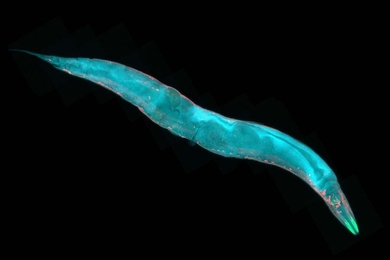
A study of worms finds a protein that helps shape the structure of the genome is critical for establishing the identity of some neurons.
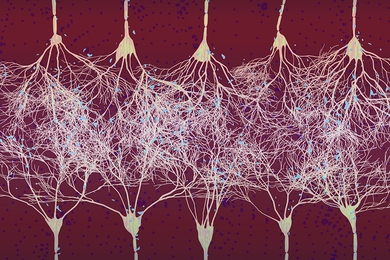
Scientists find that learning to identify a new object subtly reshapes visual processing in the brain.
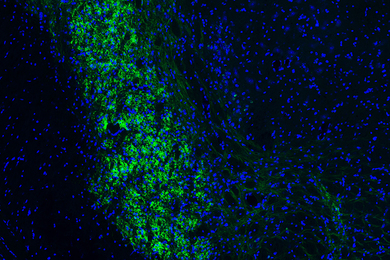
A simple brain circuit measures objects’ distance from the body using touch signals from a rodent’s whiskers, MIT scientists find.
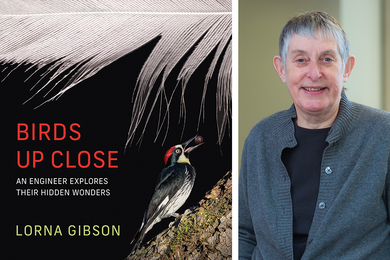
In her new book, “Birds Up Close,” MIT materials engineer Lorna Gibson explores feathers, bones, bills, eggs, and flight, and the mechanics behind birds’ extraordinary abilities.
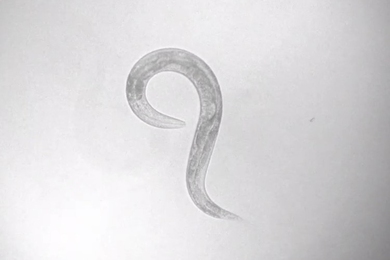
MIT scientists create a detailed map of exactly what happens in the brains of C. elegans worms when they “follow their nose” to savor attractive odors or avoid unappealing ones.
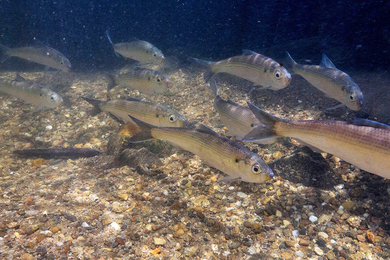
MIT Sea Grant works with the Woodwell Climate Research Center and other collaborators to demonstrate a deep learning-based system for fish monitoring.
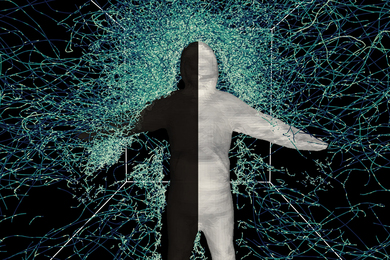
Their flight patterns change in response to different sensory cues, a new study finds. The work could lead to more effective traps and mosquito control strategies.
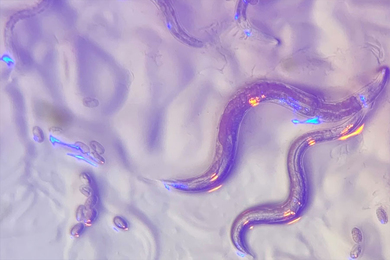
Time and again, an unassuming roundworm has illuminated aspects of biology with major consequences for human health.
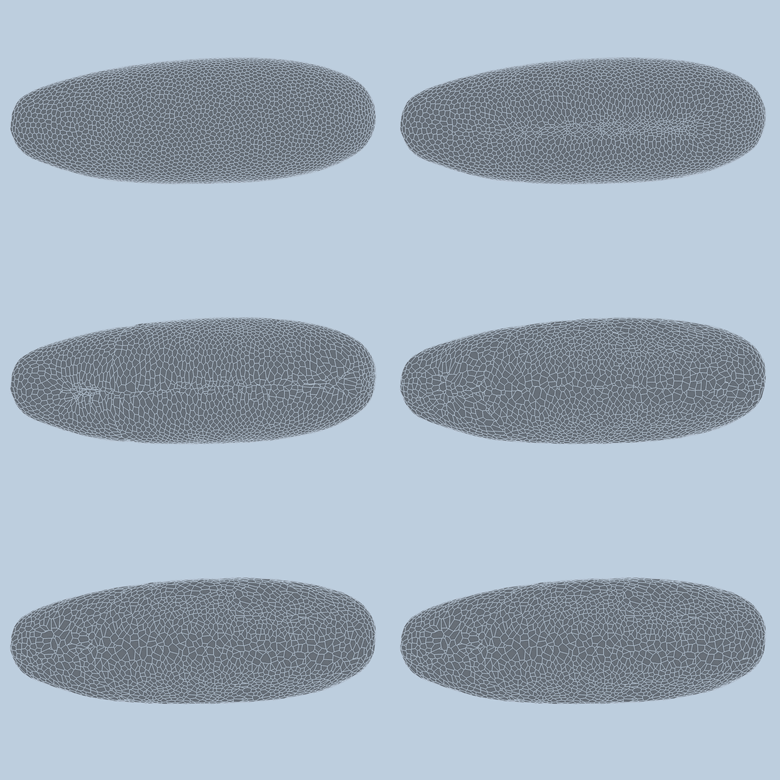
The approach could apply to more complex tissues and organs, helping researchers to identify early signs of disease.
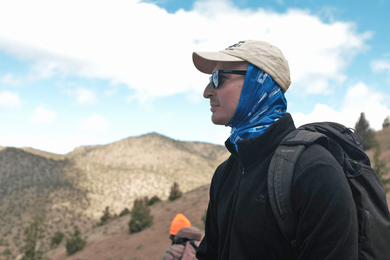
MIT PhD student and CSAIL researcher Justin Kay describes his work combining AI and computer vision systems to monitor the ecosystems that support our planet.
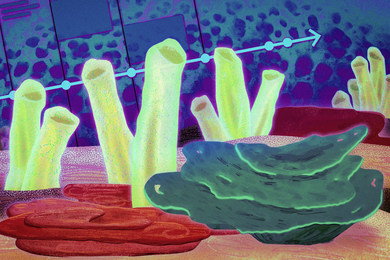
MIT researchers traced chemical fossils in ancient rocks to the ancestors of modern-day demosponges.
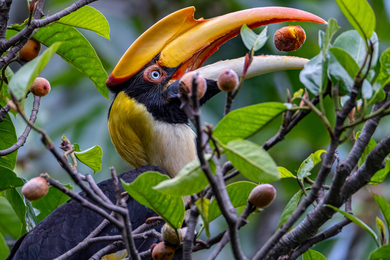
An MIT study shows decreases in seed-dispersing animals can lead to a major reduction in forest carbon absorption.
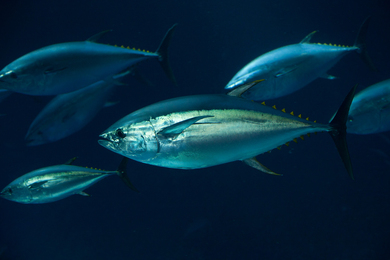
These big fish get most of their food from the ocean’s “twilight zone,” a deep, dark region the commercial fishing industry is eyeing with interest.
The research may enable the design of synthetic, light-activated cells for wound healing or drug delivery.