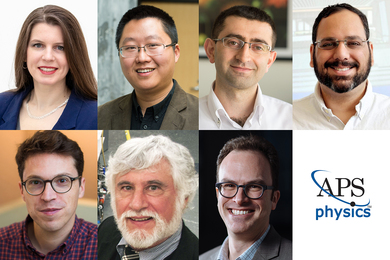
Seven from MIT named American Physical Society Fellows for 2022
APS honors Anna Frebel, Liang Fu, Nuh Gedik, Or Hen, Nuno Loureiro, Fredrick Seguin, and Jesse Thaler for research, applications, teaching, and leadership.
APS honors Anna Frebel, Liang Fu, Nuh Gedik, Or Hen, Nuno Loureiro, Fredrick Seguin, and Jesse Thaler for research, applications, teaching, and leadership.
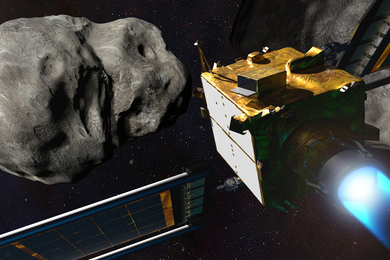
Astronomers have found a way to determine an asteroid’s interior structure based on how its spin changes during a close encounter with Earth.
Task Force 2021 and Beyond report highlights innovative teaching practices that MIT instructors have incorporated into in-person classes, informed by remote-teaching experiences.
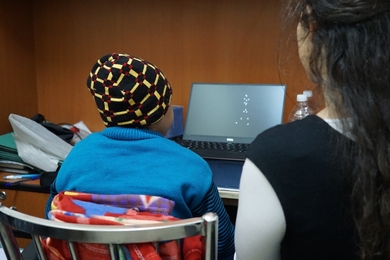
Study on blind patients who recovered their sight suggests rethinking the belief that babies learn to recognize human movement through visual exposure.
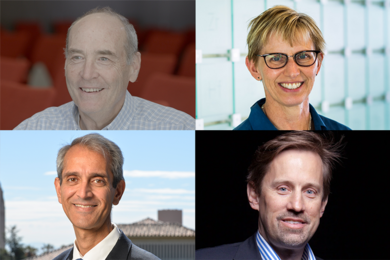
Professors Mark Bear and Laura Kiessling ’83, along with Krishna Shenoy SM ’92, PhD ’95, David Tuveson ’87, and Martin Burke are among the newly elected members.
PhD candidate Raúl Mojica Soto-Albors seeks to understand the rules of plasticity that underlie neuronal behavior.
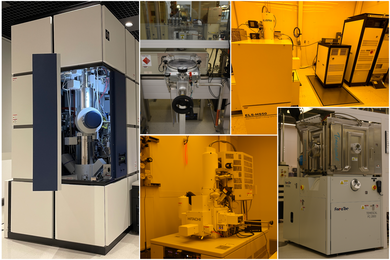
New tools can accommodate samples from small pieces up to 200 mm wafers.
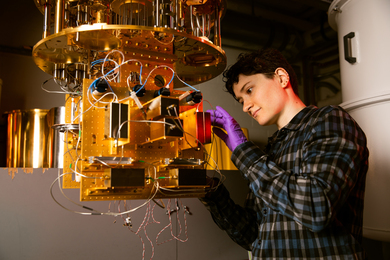
PhD student Alex Greene studies superconducting quantum computing systems while rounding out their busy schedule with water sanitation projects.
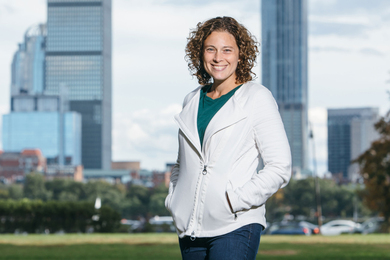
MIT chemist designs novel molecules that could be used for quantum sensing and communication; visiting scholar Moriba Jah is also awarded, for work on space sustainability.
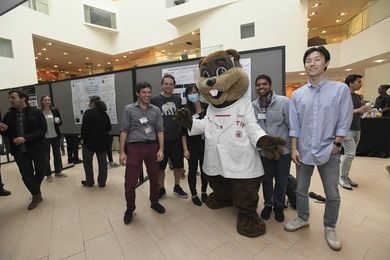
At an exhibition marking two decades since a transformative gift from the Picower Foundation, current and alumni members described research at the forefront of neuroscience and beyond.
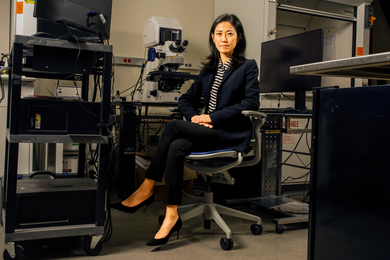
Gloria Choi’s studies of how the immune system and nervous system influence each other could yield new approaches to treating neurological disorders.

The technique could be used to fabricate computer chips that won’t get too hot while operating, or materials that can convert waste heat to energy.
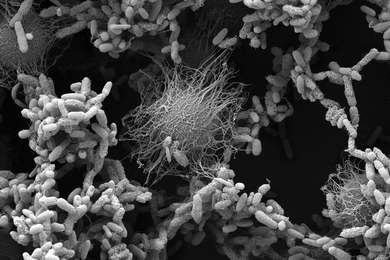
With only a little information, researchers can predict the circumstances under which an ecosystem will be stable or unstable.
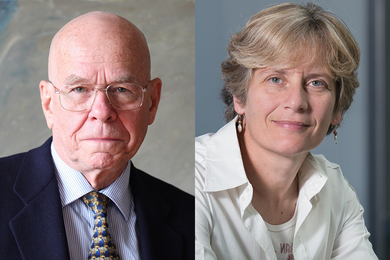
K. Barry Sharpless is a former member of the chemistry faculty, while Carolyn Bertozzi is the daughter of Physics Professor Emeritus William Bertozzi and a Lemelson-MIT Prize winner.
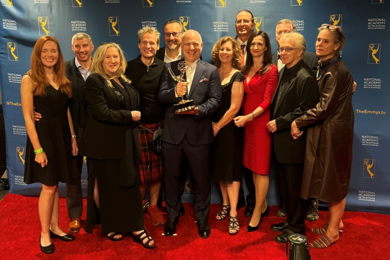
“The Hunt for Planet B” follows Seager and others on their search for extraterrestrial life; three other nominated films feature MIT affiliates.