
Denzil Streete named senior associate dean and director of the Office of Graduate Education
“Natural collaborator and advocate for students” will oversee the educational experience of the Institute’s 7,000 graduate students.
“Natural collaborator and advocate for students” will oversee the educational experience of the Institute’s 7,000 graduate students.
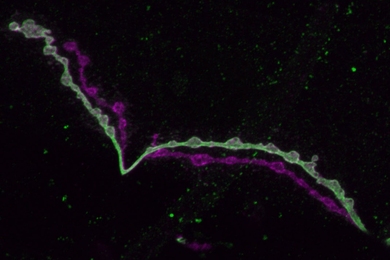
Researchers compared a pair of superficially similar motor neurons in fruit flies to examine how their differing use of the same genome produced distinctions in form and function.
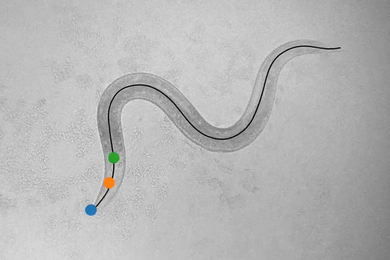
MIT researchers model and create an atlas for how neurons of the worm C. elegans encode its behaviors, make findings available on their “WormWideWeb.”

The MIT Schwarzman College of Computing awards seed grants to seven interdisciplinary projects exploring AI-augmented management.
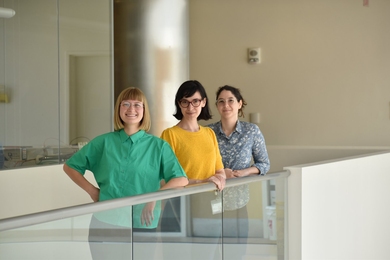
Three graduate students forged a path to the same Picower Institute lab through participating in the MIT Summer Research Program in Biology and Neuroscience.
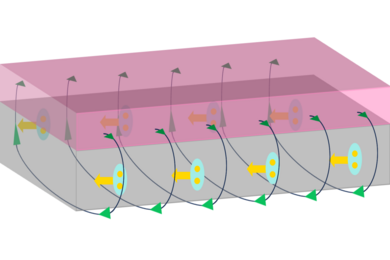
The ultrasmall “switch” could be easily scaled.

A new study bridging neuroscience and machine learning offers insights into the potential role of astrocytes in the human brain.
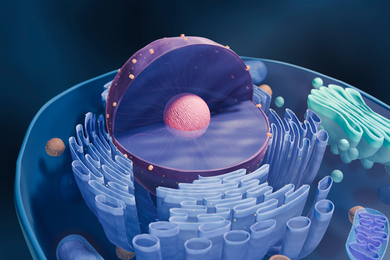
A single protein can self-assemble to build the scaffold for a biomolecular condensate that makes up a key nucleolar compartment.
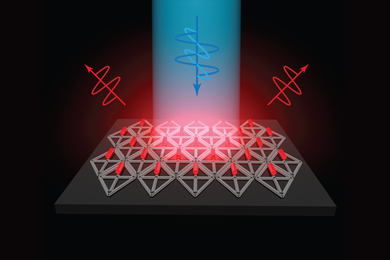
MIT engineers developed a new way to create these arrays, by scaffolding quantum rods onto patterned DNA.
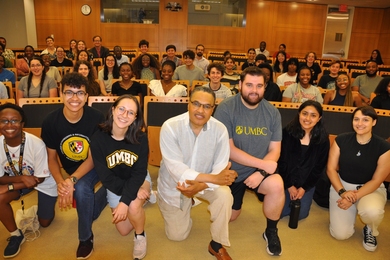
In a visit to MIT, the educator and author led a lively and inspiring Q&A with students.
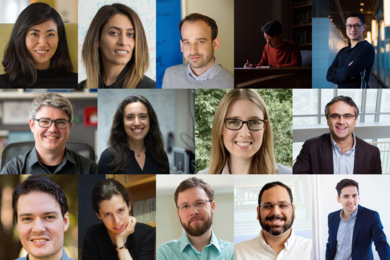
Faculty members were recently granted tenure in the departments of Biology, Brain and Cognitive Sciences, Chemistry, EAPS, and Physics.
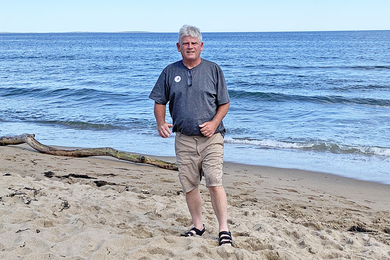
Faculty and staff recall Goldman’s unending commitment to his work for more than three decades.
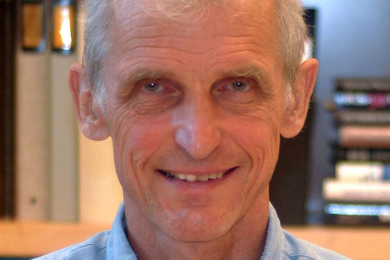
Professor of physics will use US Department of Defense fellowship to study quantum science with ultracold atoms.
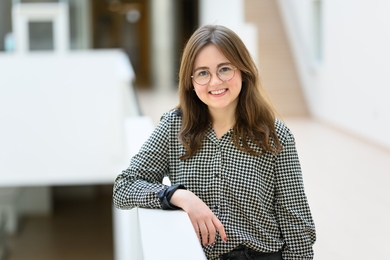
MIT PhD student Kathrin Kajderowicz is studying how hibernation-like states could pave the way for new hypothermic therapies.
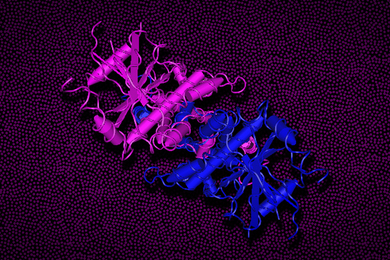
In addition to turning on genes involved in cell defense, the STING protein also acts as an ion channel, allowing it to control a wide variety of immune responses.