
“Join us in something important and new”
In her inaugural address, President Sally Kornbluth urges the MIT community to tackle pressing challenges, especially climate change, with renewed urgency.
In her inaugural address, President Sally Kornbluth urges the MIT community to tackle pressing challenges, especially climate change, with renewed urgency.

Professor Emerita Nancy Hopkins and journalist Kate Zernike discuss the past, present, and future of women at MIT and beyond.

Faculty and researchers across MIT’s School of Engineering receive many awards in recognition of their scholarship, service, and overall excellence.

Thousands packed Killian and Hockfield courts to enjoy student performances, amusement park rides, and food ahead of Inauguration Day.

A campus summit with the leader and his delegation centered around dialogue on biotechnology and innovation ecosystems.

A new method could provide detailed information about internal structures, voids, and cracks, based solely on data about exterior conditions.
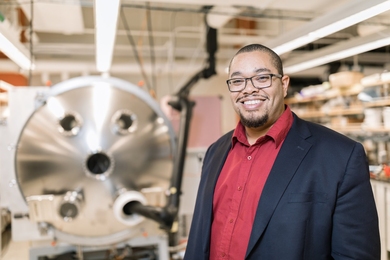
Mechanical engineering professor receives the NSF’s highest honor for an outstanding early-career scientist or engineer.
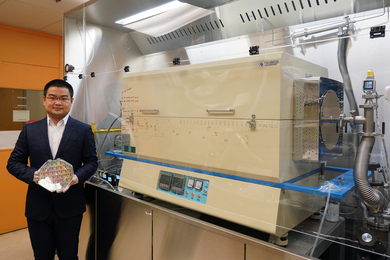
A new low-temperature growth and fabrication technology allows the integration of 2D materials directly onto a silicon circuit, which could lead to denser and more powerful chips.

The longtime professor and current MIT Energy Initiative director is set to retire after 50 years on the MIT faculty.
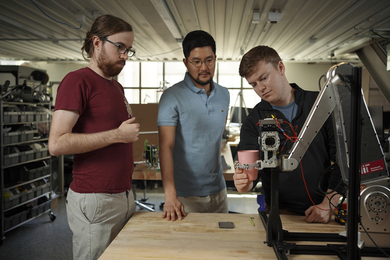
Rather than start from scratch after a failed attempt, the pick-and-place robot adapts in the moment to get a better hold.
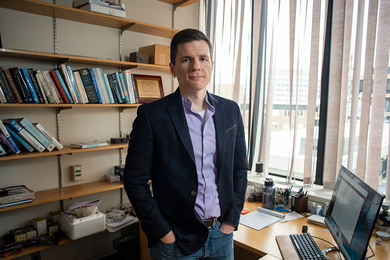
Rob Macfarlane synthesizes new composite materials by manipulating their structure at the nanometer scale.
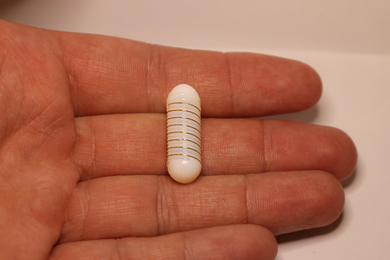
The device, which uses electricity to boost hormone production in the stomach, could help to ease nausea and counteract appetite loss.
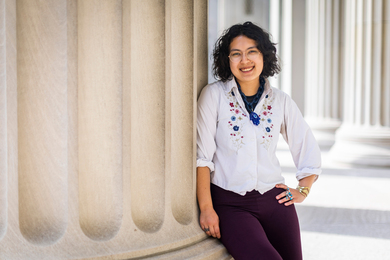
Senior Amelia Dogan brings together computer science, city planning, and American studies to work for social change.

Fellowship funds graduate studies for outstanding immigrants and children of immigrants.
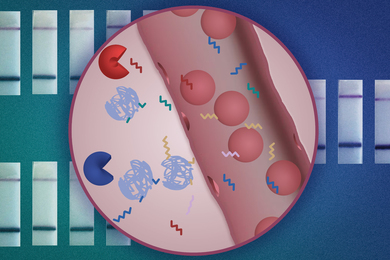
The new diagnostic, which is based on analysis of urine samples, could also be designed to reveal whether a tumor has metastasized.