
New method efficiently safeguards sensitive AI training data
The approach maintains an AI model’s accuracy while ensuring attackers can’t extract secret information.
The approach maintains an AI model’s accuracy while ensuring attackers can’t extract secret information.
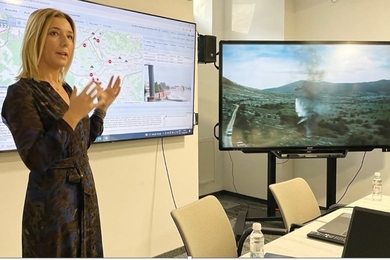
First responders worldwide adopt Lincoln Laboratory's Next-Generation Incident Command System for enhanced situational awareness and coordination during emergencies.

U.S. Air Force engineer and PhD student Randall Pietersen is using AI and next-generation imaging technology to detect pavement damage and unexploded munitions.
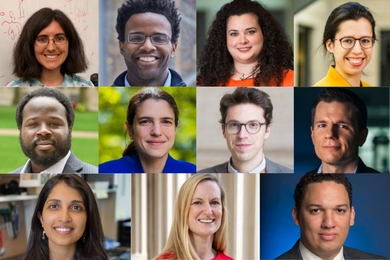
Faculty members and additional MIT alumni are among 400 scientists and engineers recognized for outstanding leadership potential.
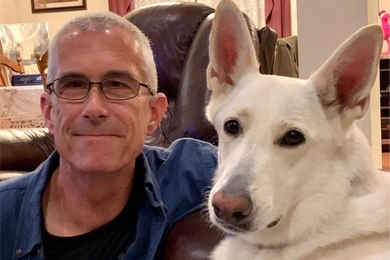
In the United States and abroad, Matthew Dolan ’81 has served as a leader in immunology and virology.
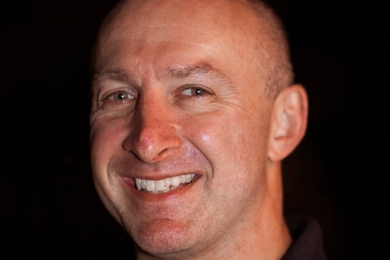
At MIT, Keselman is a lecturer, executive director, managing director, and innovator. Additionally, he is a colonel in the Air Force Reserves, board director, and startup leader.

Collaborative multi-university team will pursue new AI-enhanced design tools and high-throughput testing methods for next-generation turbomachinery.
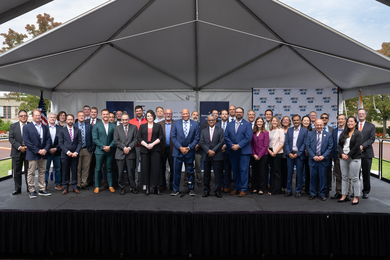
MIT and Lincoln Laboratory are among awardees of $38 million in project awards to the Northeast Microelectronics Coalition to boost U.S. chip technology innovation.
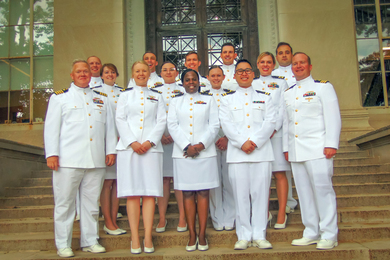
Through MIT’s 2N Program and the MIT-WHOI Joint Program, active duty naval officers gain the technical skills they need to lead projects in the Navy.
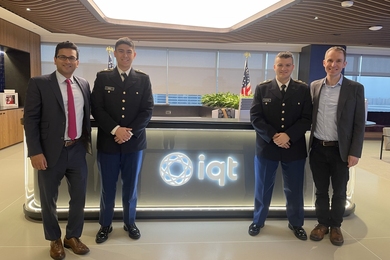
Rising senior and Army ROTC cadet Alexander Edwards and Aneal Krishnan ’02 discuss a new UROP fellowship with the Institute for Soldier Nanotechnologies.
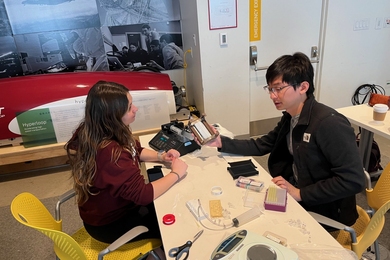
MIT students who participated in the pilot program developed tools to rapidly screen for novel biosynthetic capabilities.
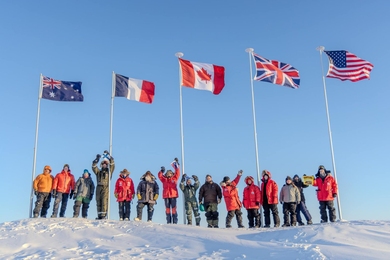
The nodes are intended to become part of a widespread sea-ice monitoring network.
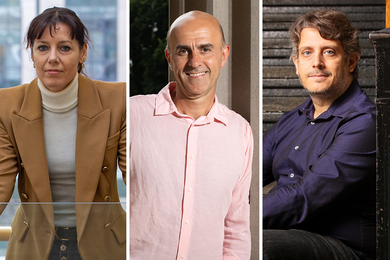
Domitilla Del Vecchio and Themis Sapsis of MechE and Mehrdad Jazayeri of BCS will each receive up to $3 million for blue-sky research.

The award recognizes his contributions as director of MIT Lincoln Laboratory and as vice chair and chair of the Defense Science Board.
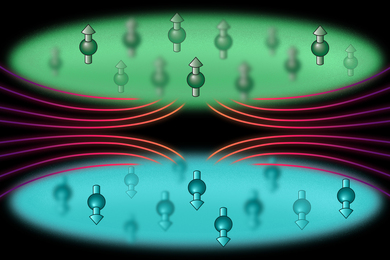
The technique opens possibilities for exploring exotic states of matter and building new quantum materials.