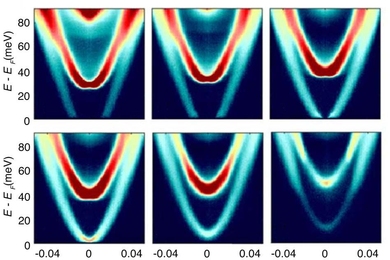
A new window into electron behavior
Scientists invent technique to map energy and momentum of electrons beneath a material’s surface.
Scientists invent technique to map energy and momentum of electrons beneath a material’s surface.
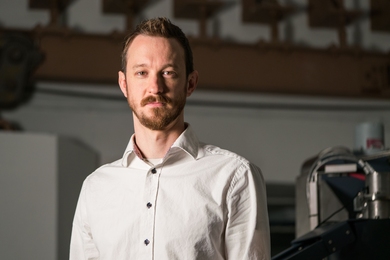
Newly-appointed Assistant Professor Zach Hartwig's mission is to use nuclear technology to benefit society and the environment.
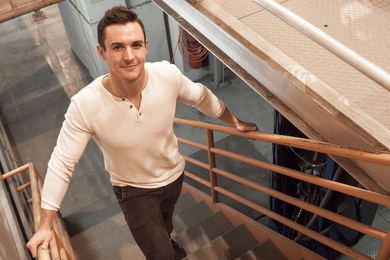
Master's candidate explores ways to cool high-temperature superconductors used in fusion research.
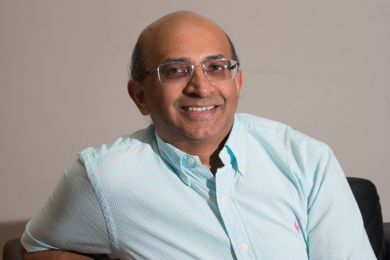
A quest to understand superconductivity leads MIT theoretical physicist Senthil Todadri to discoveries about new magnetic materials called quantum spin liquids.
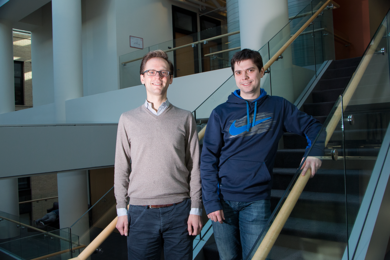
MIT researchers propose a new method for verifying the existence of a theoretical quasiparticle.

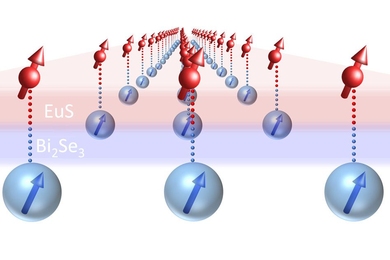
Combining two thin-film materials yields surprising room-temperature magnetism.
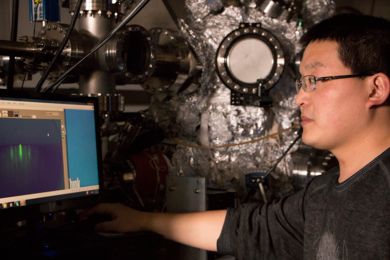
MIT postdoc Cui-Zu Chang makes a spintronic breakthrough in the Moodera group.
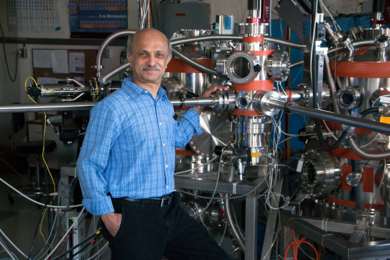
Step-by-step, the Moodera Research Group is building the essential knowledge and hardware for next-generation quantum computers.
MIT physics graduate student Sagar Vijay co-develops error correction method for quantum computing based on special electronic states called Majorana fermions.
MIT theoretical physicist’s research bridges abstract math and exotic computing materials.
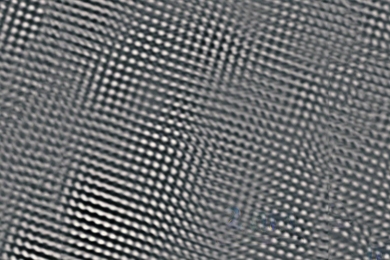
Mathematical description of relationship between thickness, temperature, and resistivity could spur advances.
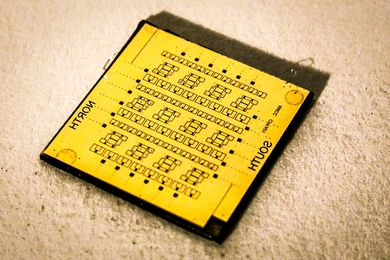
New circuit design could unlock the power of experimental superconducting computer chips.
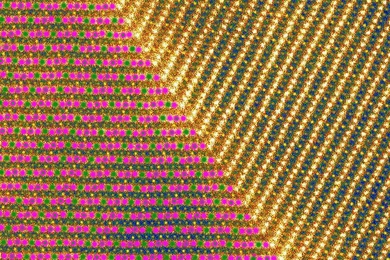
Multidisciplinary group solves mystery of how a potential battery electrode material behaves.