Magnetic neural control with nanoparticles
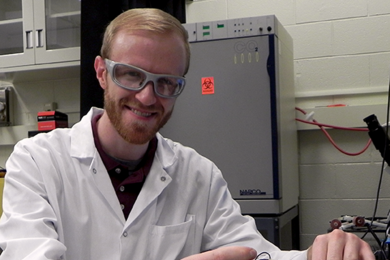
Customized arrays of iron oxide nanoparticles are possible based on their differing responses to alternating magnetic fields, MIT researchers report.
Toward optical chips
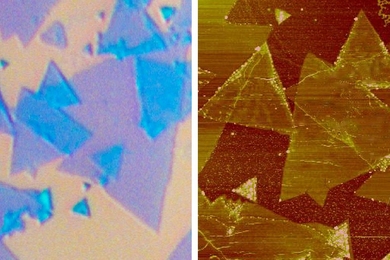
A promising light source for optoelectronic chips can be tuned to different frequencies.

Q&A: John Durant and David Kaiser on spurring public interest in science
Report on novel forms of science engagement raises new questions about outreach.
How to hide like an octopus
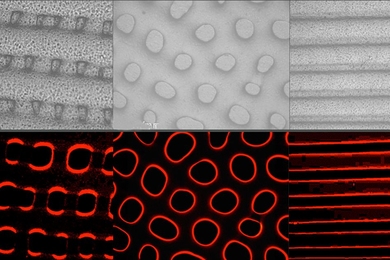
Researchers create materials that reproduce cephalopods’ ability to quickly change colors and textures.
Protecting infrastructure with smarter CPS
Saurabh Amin builds resiliency in essential infrastructure networks for transportation, energy, and water distribution.
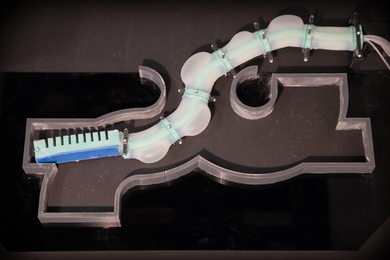
Will tomorrow’s robots move like snakes?
Made completely of rubber, CSAIL team's robotic arm can slither through “pipes.”

Neuroscientists identify key role of language gene
Mutation that arose long ago may be key to humans’ unique ability to produce and understand speech.

Reducing traffic congestion, remotely
Reducing traffic congestion with wireless system
System that would wirelessly route drivers around congested roadways wins best-paper award.

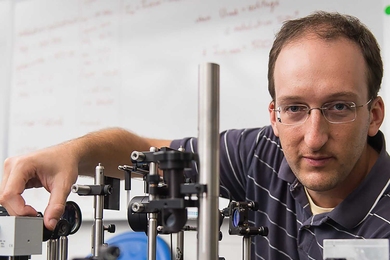

Icing ALS: MIT family reshapes research models
Professor John Heywood SM ’62, PhD ’65 and his two sons, Jamie ‘91 and Ben ’93, have used MIT thinking — in particular, systems dynamics and manufacturing management — to transform research models after losing a family member to ALS.
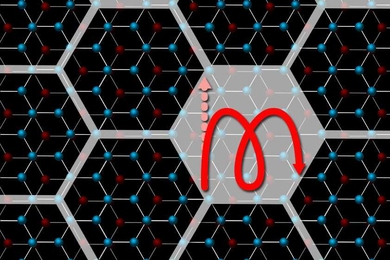
Physicists find a new way to push electrons around
Discovery might ultimately lead to new, more energy-efficient transistors and microchips.
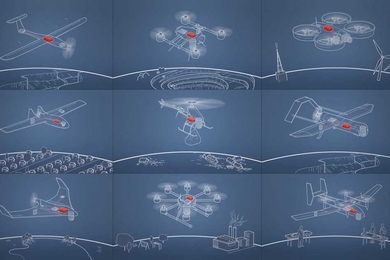
Making drones more customizable
Airware’s operating system makes drones simple to build and modify for multiple applications.
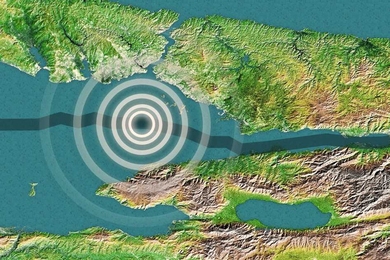
Seismic gap may be filled by an earthquake near Istanbul
After tracking seismic shifts, researchers say a major quake may occur off the coast of Istanbul.