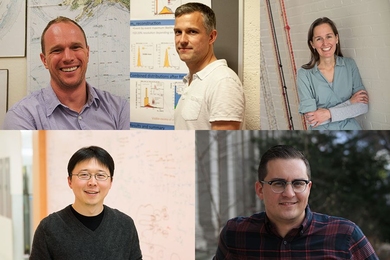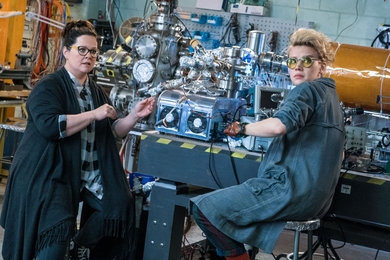
How MIT gave "Ghostbusters" its "geek cred"
From proton packs to hidden props, the 2016 blockbuster draws upon MIT personalities and scientific panache.
From proton packs to hidden props, the 2016 blockbuster draws upon MIT personalities and scientific panache.

Researchers demonstrate room-temperature ferroelectric states in ultra-thin films of tin and tellurium.
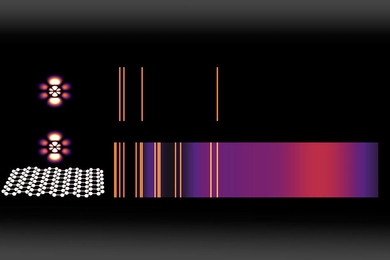
Some “forbidden” light emissions are in fact possible, could enable new sensors and light-emitting devices.
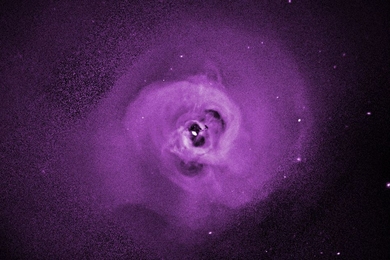
Scientists find gas at center of Perseus cluster travels much more slowly than expected.
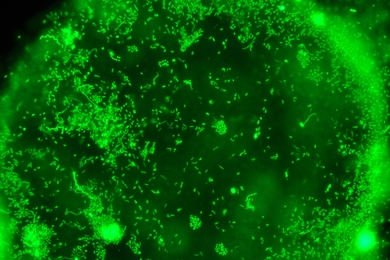
New research finds interactions between microorganisms and marine particles may have significant effects on oceanic carbon cycling.
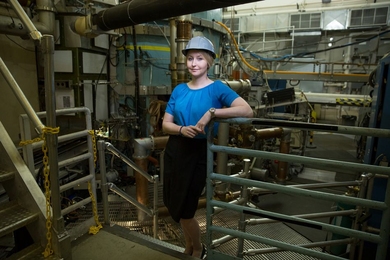
Physicist has a fascination for the complexities of turbulence, and how to reduce it in fusion reactors.
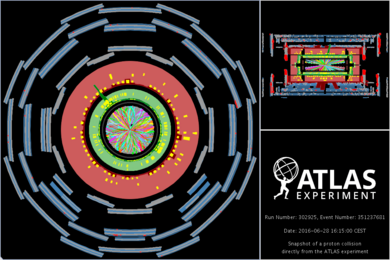
A new MIT project taps into particle collisions to generate music and forge harmony between science and art.
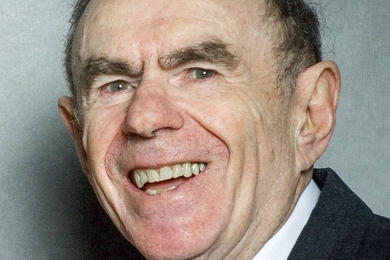
![“In about 30 seconds, we can scan a container and provide a three-dimensional map of [the materials inside the cargo]. This information clears the container or alerts you to a region that needs to be examined more carefully,” says William Bertozzi, MIT physics professor emeritus and co-founder of Passport Systems.](/sites/default/files/styles/term_page__news_article/public/images/201606/MIT-Passport-System.jpg?itok=M43U9LUQ)
Scanners more rapidly and accurately identify radioactive materials at U.S. borders, events.
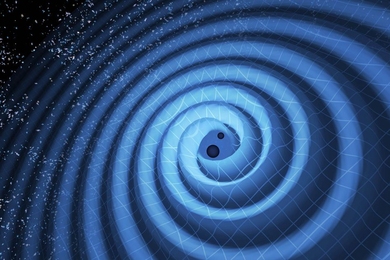
Signal was produced by two black holes colliding 1.4 billion light years away.
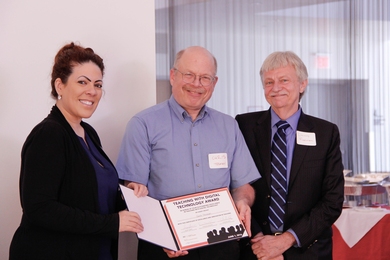
Awards honor faculty and instructors who have effectively leveraged digital technology to improve teaching and learning at MIT.
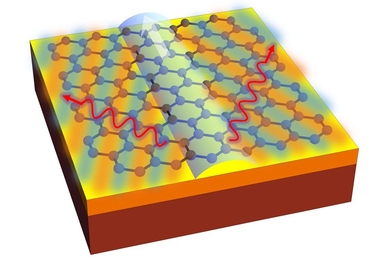
By slowing down light to a speed slower than flowing electrons, researchers create a kind of optical “sonic boom.”
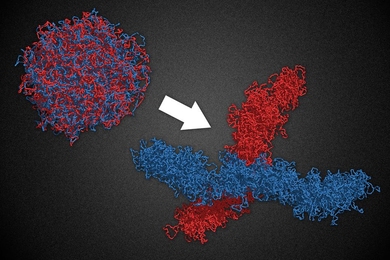
By organizing chromosomes into many tiny loops, molecular motors play key role cell division.
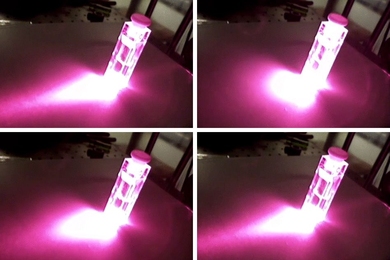
New approach can dramatically change the extent to which optical devices scatter light.