
Famous double-slit experiment holds up when stripped to its quantum essentials
MIT physicists confirm that, like Superman, light has two identities that are impossible to see at once.
MIT physicists confirm that, like Superman, light has two identities that are impossible to see at once.

Combining powerful imaging, perturbational screening, and machine learning, researchers uncover new human host factors that alter Ebola’s ability to infect.

An oft-ignored effect can be used to probe an important property of semiconductors, a new study finds.
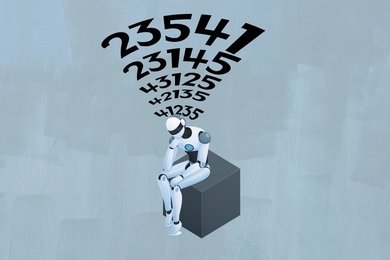
Language models follow changing situations using clever arithmetic, instead of sequential tracking. By controlling when these approaches are used, engineers could improve the systems’ capabilities.
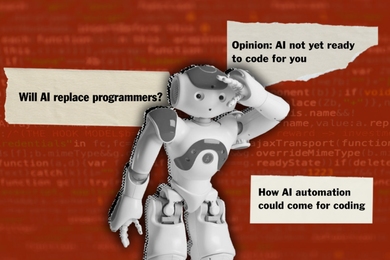
A team of researchers has mapped the challenges of AI in software development, and outlined a research agenda to move the field forward.

The molecules trigger a built-in cellular stress response and show promise as broad-spectrum antivirals against Zika, herpes, RSV, and more.
Researchers developed a way to make large language models more adaptable to challenging tasks like strategic planning or process optimization.

The enzyme, known as rubisco, helps plants and photosynthetic bacteria incorporate carbon dioxide into sugars.

Developed to analyze new semiconductors, the system could streamline the development of more powerful solar panels.

By leveraging reflections from wireless signals like Wi-Fi, the system could allow robots to find and manipulate items that are blocked from view.

In a new study, researchers discover the root cause of a type of bias in LLMs, paving the way for more accurate and reliable AI systems.

Plasma Science and Fusion Center researchers created a superconducting circuit that could one day replace semiconductor components in quantum and high-performance computing systems.

By performing deep learning at the speed of light, this chip could give edge devices new capabilities for real-time data analysis.

Study shows humans flexibly deploy different reasoning strategies to tackle challenging mental tasks — offering insights for building machines that think more like us.

Researchers developed an algorithm that lets a robot “think ahead” and consider thousands of potential motion plans simultaneously.