
Personalization features can make LLMs more agreeable
The context of long-term conversations can cause an LLM to begin mirroring the user’s viewpoints, possibly reducing accuracy or creating a virtual echo-chamber.
The context of long-term conversations can cause an LLM to begin mirroring the user’s viewpoints, possibly reducing accuracy or creating a virtual echo-chamber.
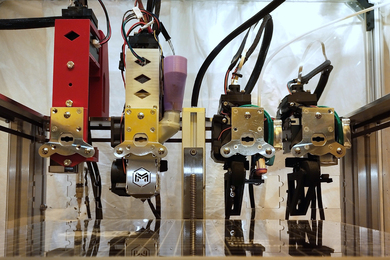
Overcoming challenges of 3D printing with multiple functional materials, MIT researchers fabricated an electric linear motor in hours.

Seven faculty members, along with 12 additional alumni, are honored for significant contributions to engineering research, practice, and education.

Removing just a tiny fraction of the crowdsourced data that informs online ranking platforms can significantly change the results.
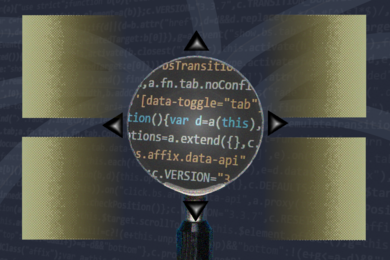
EnCompass executes AI agent programs by backtracking and making multiple attempts, finding the best set of outputs generated by an LLM. It could help coders work with AI agents more efficiently.

He joins Nikos Trichakis in guiding the cross-cutting initiative of the MIT Schwarzman College of Computing.
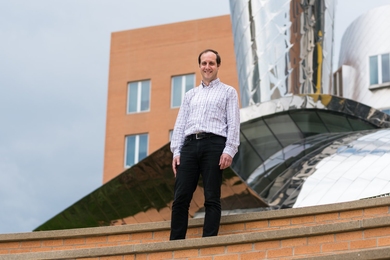
Torralba’s research focuses on computer vision, machine learning, and human visual perception.

The MIT senior will pursue a master’s degree at Cambridge University in the U.K. this fall.

As AI technology advances, a new interdisciplinary course seeks to equip students with foundational critical thinking skills in computing.

New research detects hidden evidence of mistaken correlations — and provides a method to improve accuracy.

“MorphoChrome,” developed at MIT, pairs software with a handheld device to make everyday objects iridescent.

New technique could improve the scalability of trapped-ion quantum computers, an essential step toward making them practically useful.

With support from the Siegel Family Endowment, the newly renamed MIT Siegel Family Quest for Intelligence investigates how brains produce intelligence and how it can be replicated to solve problems.
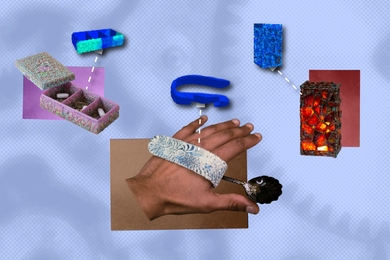
“MechStyle” allows users to personalize 3D models, while ensuring they’re physically viable after fabrication, producing unique personal items and assistive technology.

While the growing energy demands of AI are worrying, some techniques can also help make power grids cleaner and more efficient.