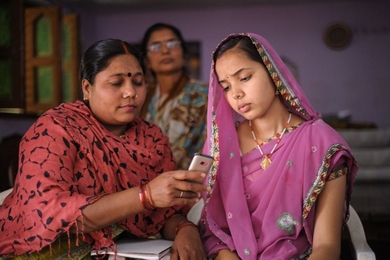
A mobile tool for global change
Dimagi’s data-collection platform has helped improve health care for hundreds of millions of people around the world.
Dimagi’s data-collection platform has helped improve health care for hundreds of millions of people around the world.

Study finds that in Liberia, volunteers limited damage from Ebola by distributing information within their own communities.

A deep-learning model identifies a powerful new drug that can kill many species of antibiotic-resistant bacteria.
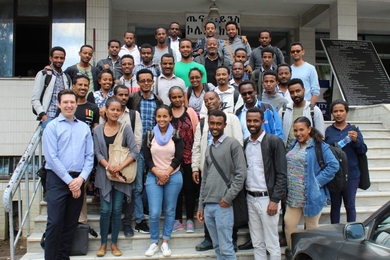
The MIT Humanitarian Supply Chain lab led a blended supply chain management course with Addis Ababa University.

Research underscores infection is not a common hospital transmission.
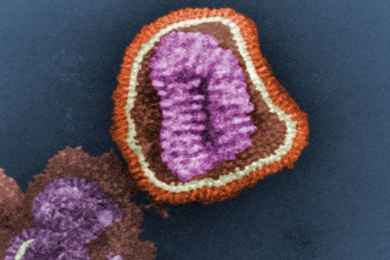
Findings could help researchers design drugs to treat influenza B infections.

After surgery to correct childhood hearing loss, Swarna Jeewajee discovered a desire to be a physician-scientist, and a love of a cappella music.

Some basic metrics do effectively diagnose care quality, according to MIT economists.
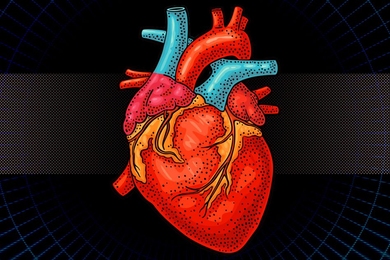
Device made of heart tissue and a robotic pumping system beats like the real thing.
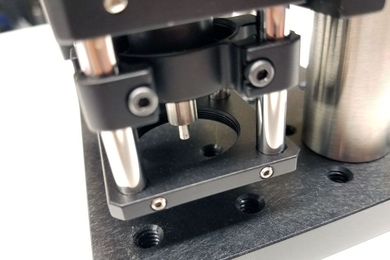
Study suggests noninvasive spectroscopy could be used to monitor blood glucose levels.

Computer scientists’ new method could help doctors avoid ineffective or unnecessarily risky treatments.
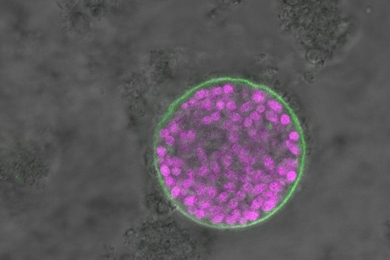
Researchers find master regulator needed for Toxoplasma gondii parasite to chronically infect host; promising step toward infection treatment, prevention.

New light-sensitive material could eliminate some of the endoscopic procedures needed to remove gastrointestinal devices.
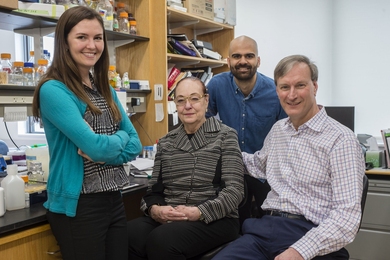
Gift establishes the Brit Jepson d’Arbeloff Center on Women's Health.

Models that map these relationships based on patient data require fine-tuning for certain conditions, study shows.