
3 Questions: Emery Brown on improving anesthesia with neuroscience
Professor describes a new research center he is working to develop where researchers will seek to improve patient care by integrating neuroscience and anesthesiology.
Professor describes a new research center he is working to develop where researchers will seek to improve patient care by integrating neuroscience and anesthesiology.
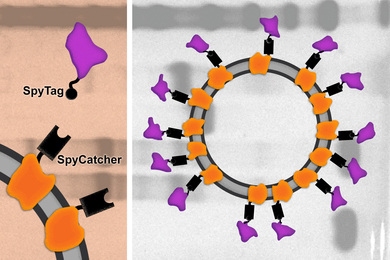
The protein subunit vaccine, which can be manufactured using engineered yeast, has shown promise in preclinical studies.
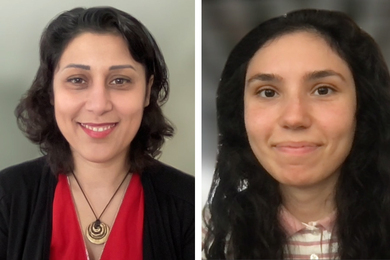
MIT Sandbox inspires highly sought health care innovations with its new Independent Activities Period program.
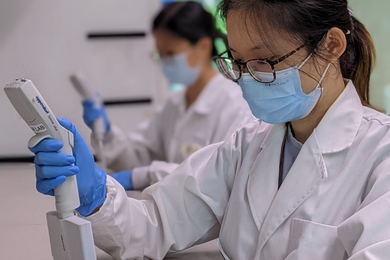
SMART researchers find explanation for why some patients might experience diarrhea after taking amoxicillin-clavulanate.

A new methodology simulates counterfactual, time-varying, and dynamic treatment strategies, allowing doctors to choose the best course of action.

MIT senior Daniel Zhang aims to provide hope for young patients and support to young students.
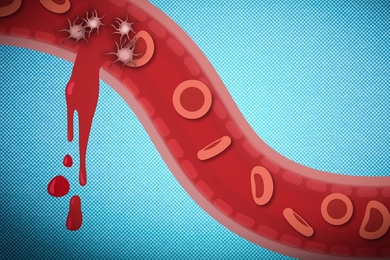
A new analysis offers guidance on the size of nanoparticles that could be most effective at stopping internal bleeding.
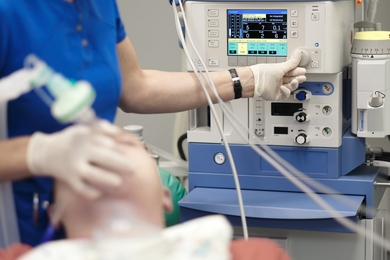
A new deep-learning algorithm trained to optimize doses of propofol to maintain unconsciousness during general anesthesia could augment patient monitoring.

In stepping down as co-director of the Harvard-MIT Program in Health Sciences and Technology, Brown will work to develop a new center for anesthesiology research.

The sticky patch could be quickly applied to repair gut leaks and tears.

Assistant Professor Marzyeh Ghassemi explores how hidden biases in medical data could compromise artificial intelligence approaches.
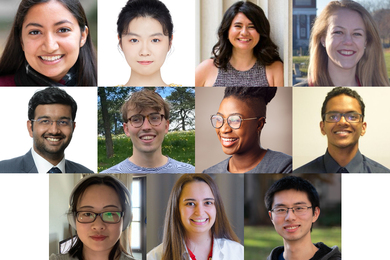
New fellows are working on electronic health record algorithms, remote sensing data related to environmental health, and neural networks for the development of antibiotics.
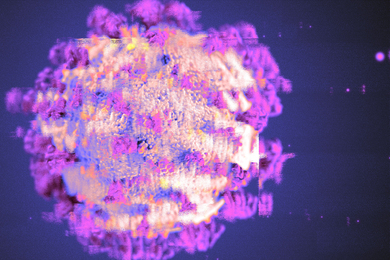
A computational study shows that dozens of mutations help the virus’ spike protein evade antibodies that target SARS-CoV-2.
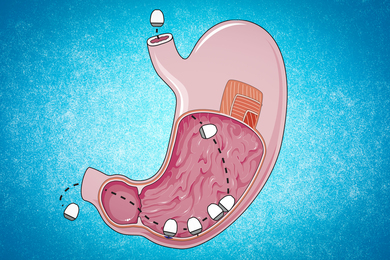
A pill that releases RNA in the stomach could offer a new way to administer vaccines, or to deliver therapies for gastrointestinal disease.
Scientists demonstrate that AI-risk models, paired with AI-designed screening policies, can offer significant and equitable improvements to cancer screening.