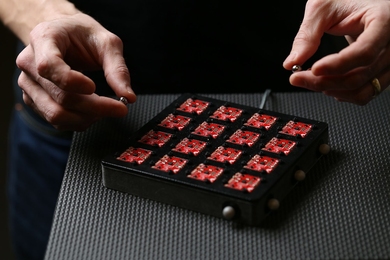
Algorithm may improve brain-controlled prostheses and exoskeletons
An improved method for magnet tracking enables high-speed wireless tracking through various materials.
An improved method for magnet tracking enables high-speed wireless tracking through various materials.
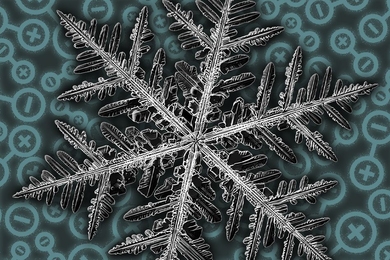
The X-ray-focusing lens used in the experiment is based on a design used in lighthouses for centuries.
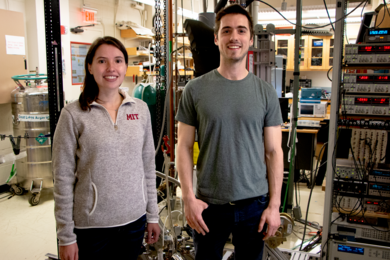
MIT researchers discover why magnetism in certain materials is different in atomically thin layers and their bulk forms.
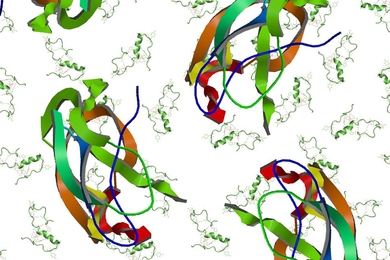
Technique could yield insights into complex proteins involved in Alzheimer’s and other diseases.
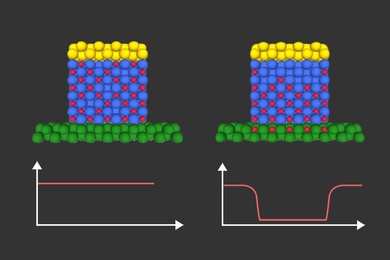
Innovative approach to controlling magnetism could lead to next-generation memory and logic devices.
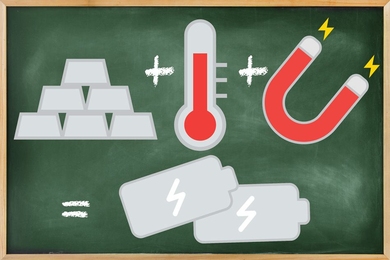
New materials, heated under high magnetic fields, could produce record levels of energy, model shows.

Griffin honored for pioneering contributions to high-resolution solid state nuclear magnetic resonance and its applications to biological systems.
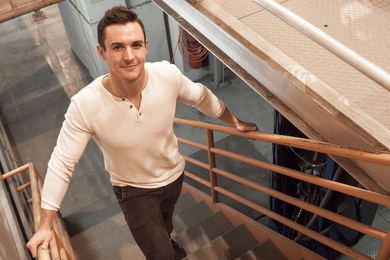
Master's candidate explores ways to cool high-temperature superconductors used in fusion research.

A quest to understand superconductivity leads MIT theoretical physicist Senthil Todadri to discoveries about new magnetic materials called quantum spin liquids.
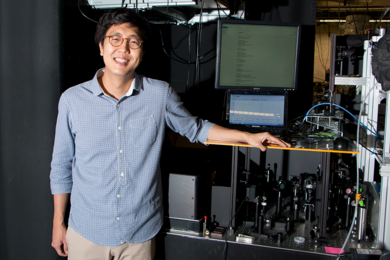
MIT researchers use an optical technique to probe magnetism at a hidden interface between two exotic thin films.
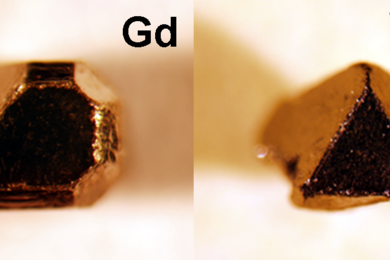
MIT-led team demonstrates paired topology and intrinsic magnetism in compound combining gadolinium, platinum, and bismuth.
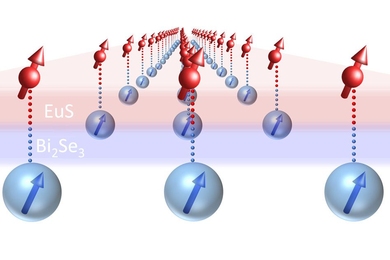
Combining two thin-film materials yields surprising room-temperature magnetism.
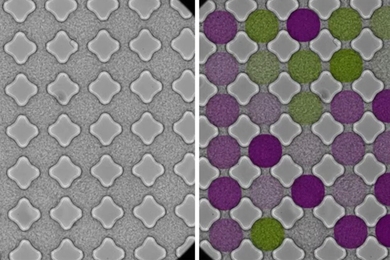
Bacteria streaming through a lattice behave like electrons in a magnetic material.

Pioneer in semiconductors created MIT's magnet laboratory and served as associate director of the MIT Lincoln Laboratory.