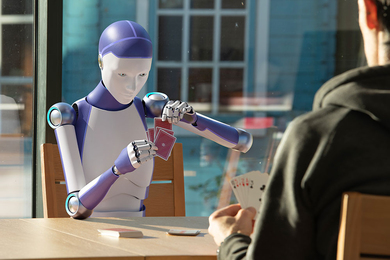
In game theory, generalists sometimes win out over specialists
Researchers show that for certain kinds of games, an overlooked class of algorithms performs much better than expected.
Researchers show that for certain kinds of games, an overlooked class of algorithms performs much better than expected.
MIT researchers provide a major upgrade to the nearly century-old idea of random utility models.
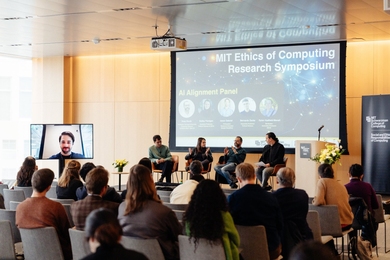
The MIT Ethics of Computing Research Symposium brought together experts and researchers working at the heart of ethical and social impact in technology.
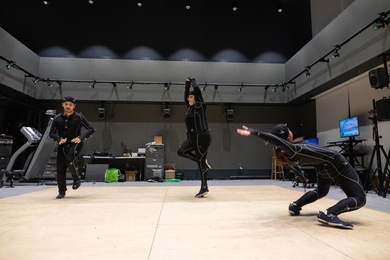
MIT.nano Immersion Lab collaborates with Emerson College students to advance the art of virtual production.
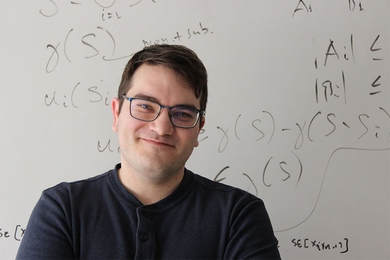
Assistant Professor Gabriele Farina mines the foundations of decision-making in complex multi-agent scenarios.
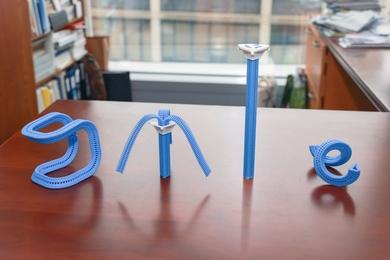
An old patent from MIT Professor Bill Freeman inspired the new “Y-zipper,” a three-sided fastener that snaps gear, robots, and art into shape at the push of a button.

Researchers are developing hardware and algorithms to improve collaboration between divers and autonomous underwater vehicles engaged in maritime missions.
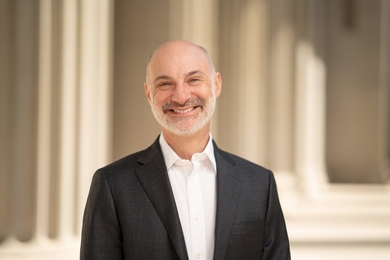
As the School of Humanities, Arts, and Social Sciences marks 75 years, Dean Agustín Rayo reflects on how AI is reshaping higher education and why SHASS disciplines continue to be central to MIT’s mission.
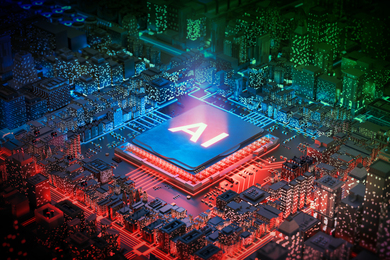
MIT researchers developed a testing framework that pinpoints situations where AI decision-support systems are not treating people and communities fairly.
A new biohybrid system developed at MIT is the first living implant that uses rewired nerves to revive paralyzed organs.
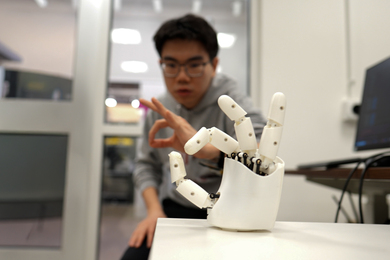
By moving their hands and fingers, users can direct a robot to play piano or shoot a basketball, or they can manipulate objects in a virtual environment.
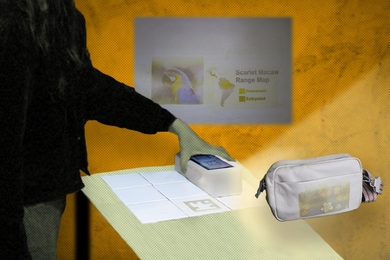
The portable “ChromoLCD” device combines LCD and LED lighting to customize high-quality designs onto things like shirts and whiteboards.
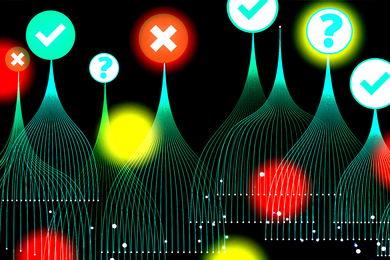
This new metric for measuring uncertainty could flag hallucinations and help users know whether to trust an AI model.
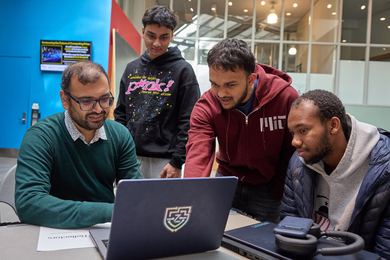
MIT computer science students design AI chatbots to help young users become more social, and socially confident.
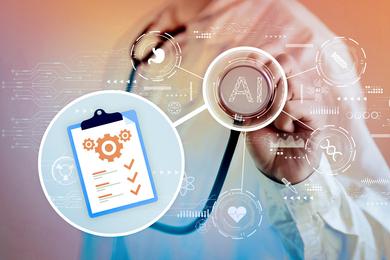
A new approach could help users know whether to trust a model’s predictions in safety-critical applications like health care and autonomous driving.