
A personalized heart implant wins MIT Sloan health care prize
Spheric Bio’s implants are designed to grow in a channel of the heart to better fit the patient’s anatomy and prevent strokes.
Spheric Bio’s implants are designed to grow in a channel of the heart to better fit the patient’s anatomy and prevent strokes.
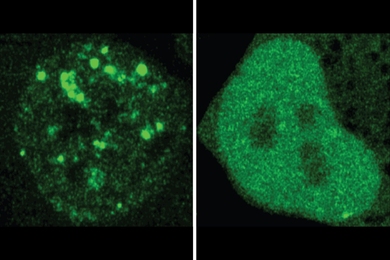
Whitehead Institute and CSAIL researchers created a machine-learning model to predict and generate protein localization, with implications for understanding and remedying disease.

A deep neural network called CHAIS may soon replace invasive procedures like catheterization as the new gold standard for monitoring heart health.

When his son received a devastating diagnosis, Fernando Goldsztein MBA ’03 founded an initiative to help him and others.
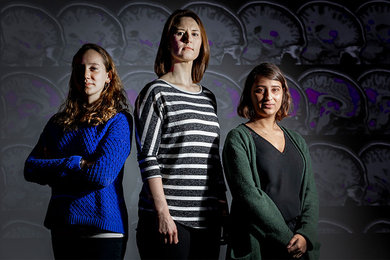
McGovern Institute neuroscientists use children’s interests to probe language in the brain.

Researchers at MIT, NYU, and UCLA develop an approach to help evaluate whether large language models like GPT-4 are equitable enough to be clinically viable for mental health support.

In a recent commentary, a team from MIT, Equality AI, and Boston University highlights the gaps in regulation for AI models and non-AI algorithms in health care.

Chronic diseases like diabetes are prevalent, costly, and challenging to treat. A common denominator driving them may be a promising new therapeutic target.

MIT and Sierra Leone’s Ministry of Health launch specialized program to train future clinicians on the fabrication of artificial limbs and braces for people with disabilities.
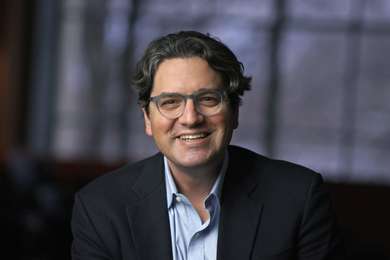
Physician and engineer Giovanni Traverso found an early passion for molecular genetics, leading to an interdisciplinary career helping others.

By examining antigen architectures, MIT researchers built a therapeutic cancer vaccine that may improve tumor response to immune checkpoint blockade treatments.

Marzyeh Ghassemi works to ensure health-care models are trained to be robust and fair.

Thomas Heldt, associate director of IMES, describes how he collaborates closely with MIT colleagues and others at Boston-area hospitals.
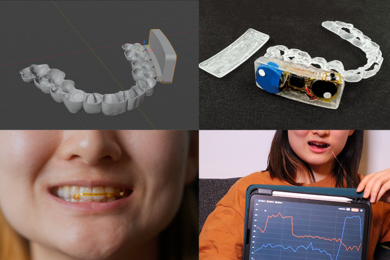
“MouthIO” is an in-mouth device that users can digitally design and 3D print with integrated sensors and actuators to capture health data and interact with a computer or phone.
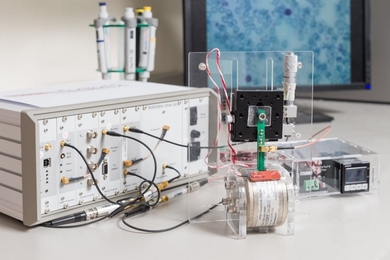
SMART researchers find mesenchymal stromal cells are an attractive alternative to current costly, time-intensive treatments.