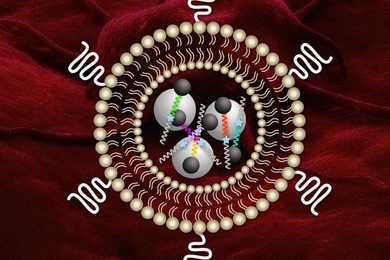
Nanosensors could help determine tumors’ ability to remodel tissue
Measuring enzyme levels could help doctors select appropriate treatments.
Measuring enzyme levels could help doctors select appropriate treatments.

Computer system could help identify subtle speech, language disorders in time for early intervention.
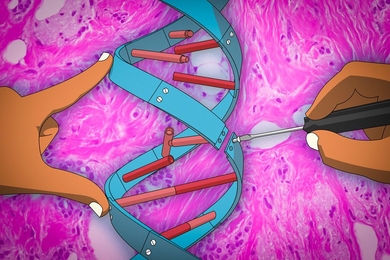
Gene-regulating RNA molecules could help treat early-stage breast cancer tumors before they spread.
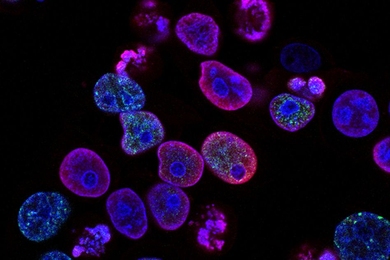
Particles that carry three or more drugs hold potential for targeted cancer therapy.

Method that transports microbes through the stomach to the intestine may benefit human health.

New technique offers precise manipulation of when and where genes are targeted.
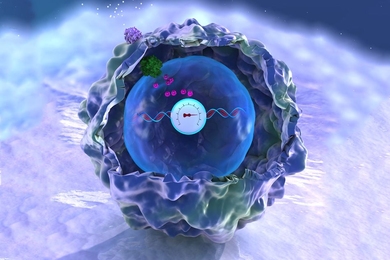
Engineers program human cells to store complex histories in their DNA.
![“There's a lot of role models here [at MIT], and sometimes, in Chile or in Mexico or in Costa Rica, [girls] don't know that there's a graduate student or an undergrad doing these cool things at MIT,” says grad student Alicia Chong Rodriguez. “I think it's a matter of just connecting the dots.”](/sites/default/files/styles/term_page__news_article/public/images/201608/MIT-Alicia-Chong-1.jpg?itok=SHyICvo7)
Graduate student Alicia Chong Rodriguez uses her engineering skills to empower women.
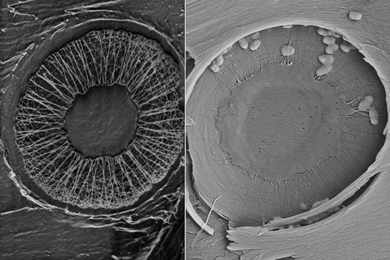
Four new projects and one renewal receive $150,000 in funding for 2016-2017.
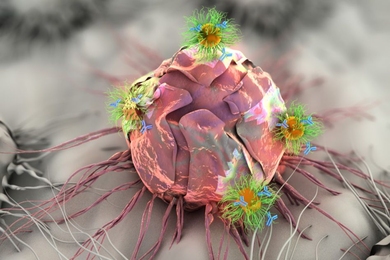
In mice, device destroyed colorectal tumors and prevented remission after surgery.

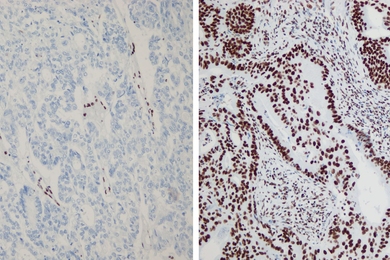
Researchers identify genes that mutate in endometrial cancer, create a family tree describing the evolutionary history of the disease.

Associate Professor Ernest Fraenkel uses biological network modeling to identify new targets for disease.

Low-intensity fields keep malignant cells from spreading, while preserving healthy cells.
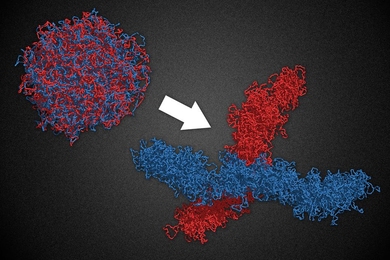
By organizing chromosomes into many tiny loops, molecular motors play key role cell division.