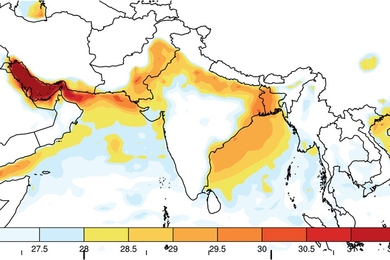
Deadly heat waves could hit South Asia this century
Without action, climate change could devastate a region home to one-fifth of humanity, study finds.
Without action, climate change could devastate a region home to one-fifth of humanity, study finds.
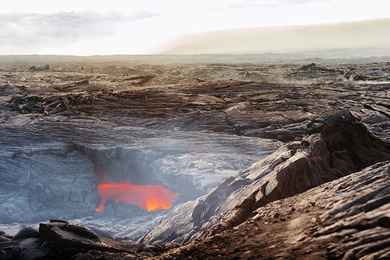
Study ties specific interval during an extended period of volcanism to Earth’s most severe mass extinction.

MIT Energy Initiative Director of Research Francis O’Sullivan reflects on current trends in the utility industry, as well as potential solutions to current challenges.
By 2050, the Southwest will produce significantly less cotton and forage, researchers report.
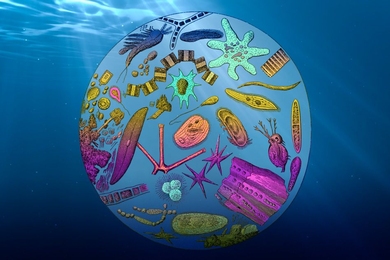
Study finds large amounts of carbon dioxide, equivalent to yearly U.K. emissions, remain in surface waters.
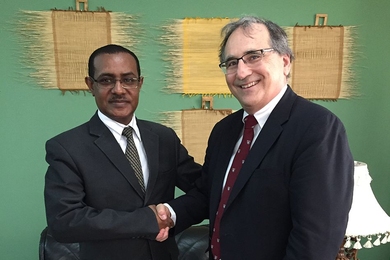
Kenneth Strzepek applies models to help decision makers advance food security and sustainable development in a climate-compromised continent.

Climate change could damage the fragile zones, causing major carbon emissions.
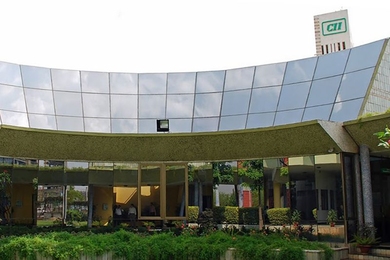
Award-winning paper by Arun Singh shows how one of the world’s fastest-growing economies can expand its energy consumption while limiting emissions.
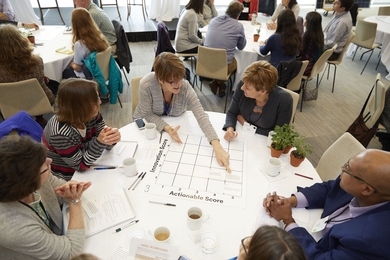
Third annual conference explores innovation, social justice, and the Institute as a living lab for sustainability.
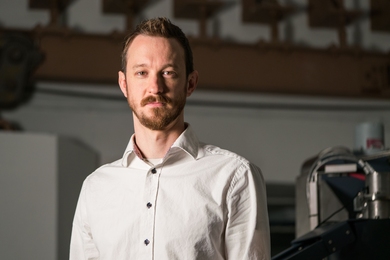
Newly-appointed Assistant Professor Zach Hartwig's mission is to use nuclear technology to benefit society and the environment.
![“The observations are telling us there will be increases [in extreme rainfall] at almost all latitudes, but if you want to know what’s going to happen at the scale of a continent or smaller, it’s a much more difficult question,” Paul O’Gorman says.](/sites/default/files/styles/term_page__news_article/public/images/201705/mit-extreme-rain.jpg?itok=3RZFd0k3)
Intensification of extreme rainfall varies from region to region, study shows.

Principal investigators will receive grants of up to $200,000 per year for two years, overhead free, for innovative research on food and water challenges.
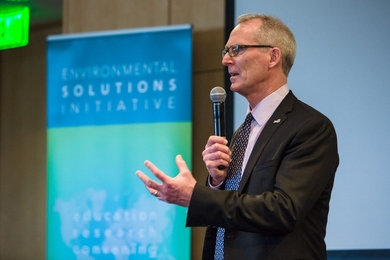
At MIT, former Congressman Bob Inglis speaks about climate and free enterprise.