
Even if the Paris Agreement is implemented, food and water supplies remain at risk
Report projects impacts of 2015 Paris climate agreement, identifies emissions paths/technology advances needed to limit global warming to 2 degrees Celsius.
Report projects impacts of 2015 Paris climate agreement, identifies emissions paths/technology advances needed to limit global warming to 2 degrees Celsius.
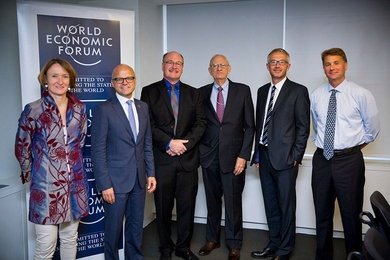
At Climate Week conference, MIT Joint Program lays out the 2 degree Celsius challenge for oil and gas producers.
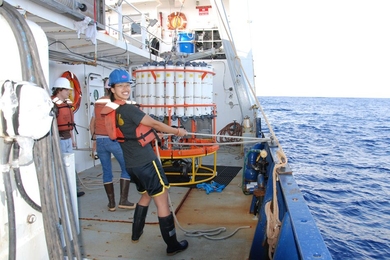
More anthropogenic carbon in the northeast Pacific means weaker shells for many marine species.

Exposed in step-like formation, layers of new photovoltaic cell harvest more of sun’s energy.
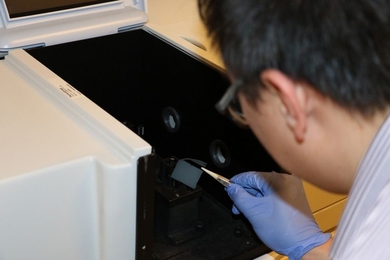
Masdar Institute-MIT team develops device that harnesses more sunlight, enhancing efficiency of heat production.
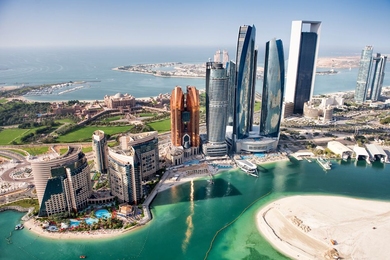
Tool will help urban planners reduce Abu Dhabi’s heat island and carbon footprint.
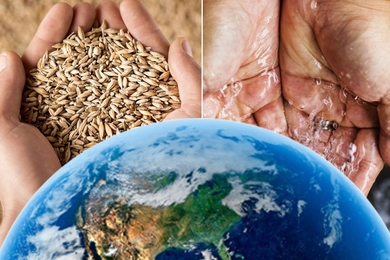
Program will feature advances in technologies at the nexus of food, water, and the environment.
Working with the Tata Center, two MIT economics students are testing projects to reduce industrial pollution in India.
"2015 Energy and Climate Outlook" sees international COP21 climate conference as progress, with more work ahead.
"2015 Energy and Climate Outlook" projects likely impacts of current policies and pledges on global climate, emissions, and energy mix.

In Compton Lecture, Nobel laureate debunks three climate change myths, suggests reframing risks.
MIT faculty members discuss the history and science behind Earth’s warming climate, and whether anything can be done to mitigate a rising global temperature.
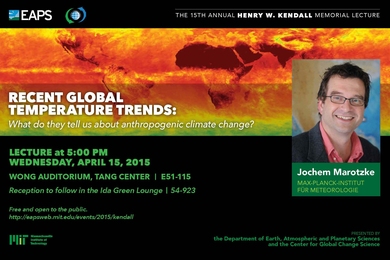
Director of the Max Planck Institute for Meteorology will deliver the 15th annual Henry W. Kendall Lecture.
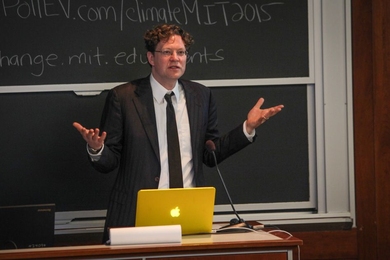
MIT Climate Change Conversation gets underway with brainstorming session on how to catalyze change.
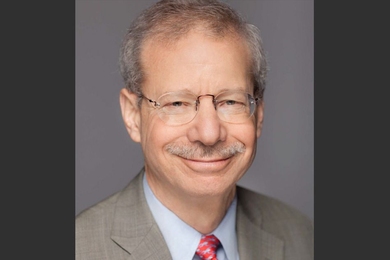
Founder of Linden Trust for Conservation to speak at MIT this week.