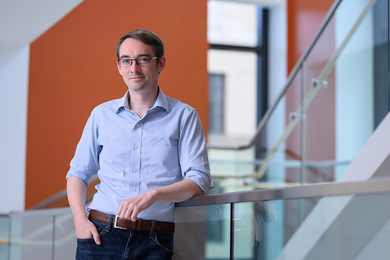
Addressing nuclear challenges, from radiation detection to power in space
Assistant Professor Jake Hecla is developing tools to cool space-based reactors, detect the presence of nuclear weapons, and better understand emerging nuclear technologies.
Assistant Professor Jake Hecla is developing tools to cool space-based reactors, detect the presence of nuclear weapons, and better understand emerging nuclear technologies.
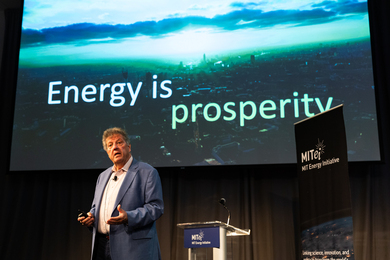
Eric Toone, CTO of Breakthrough Energy, assessed global decarbonization, and the opportunities and challenges that remain, at MITEI’s annual research conference.
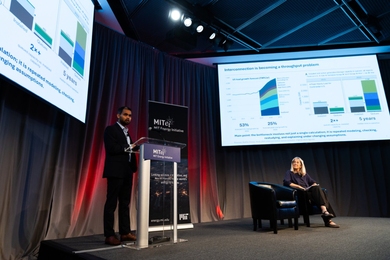
From a nuclear revival to qubits, the MIT Energy Initiative’s annual research conference tracked deployment of today’s technologies to discovery of tomorrow’s breakthroughs.

Professor Ali Jadbabaie describes how AI, digital transformation, climate change, and complex geopolitics are forcing engineers and policymakers to rethink how infrastructure is designed, built, and managed.
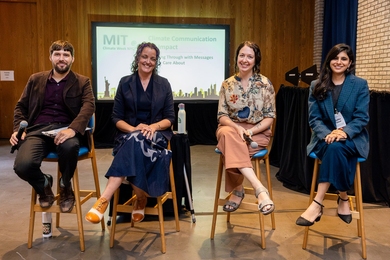
A cross-section of the MIT community convened discussions on topics ranging from data centers and super pollutants to agriculture and education.

Founded by Jake Jurewicz ’14, SM ’15, Blue Energy aims to manufacture giant pieces of nuclear reactors at shipyards and ship them on barges for final assembly.
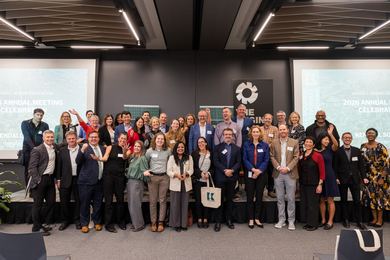
The 18th annual Kendall Square Association Annual Meeting explored how new technologies could be a force for shared prosperity in society.

A new machine-learning approach broke records for weather forecasting for an important time frame in emergency planning.
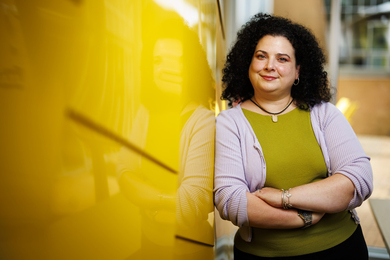
By rethinking how large cloud computing systems operate, Associate Professor Christina Delimitrou seeks to make data centers more energy efficient.

J-PAL North America’s Learning Lab supported a second cohort of U.S. government and nonprofit organizations in building and using rigorous evidence to advance effective decarbonization and adaptation strategies.

A new way of simulating wind turbines in the field shows how tweaking turbine operation could unlock tens of thousands of dollars per turbine every year.
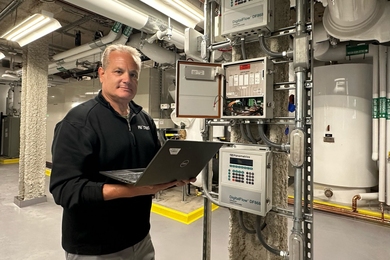
Innovative strategies, technologies, and collaborations are helping MIT advance solutions on campus and beyond.
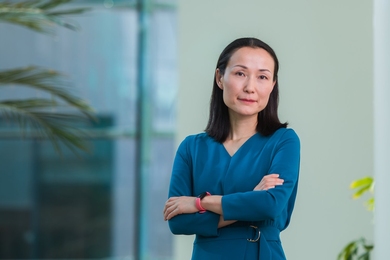
Professor Haruko Wainwright believes the risks posed by radioactive wastes cannot be properly assessed without also considering the hazards of chemical wastes.
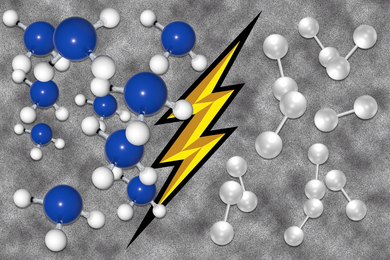
An MIT team has demonstrated a more efficient way to extract pure hydrogen gas from hydrogen carrier molecules.

In some regions of the world, the poorest people may spend about 50 percent of their income on food, while the richest spend about 5 percent.