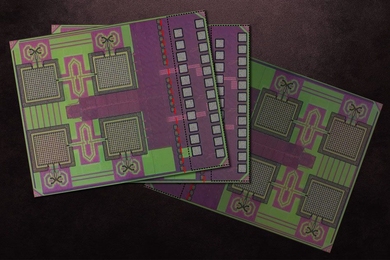
Cryptographic “tag of everything” could protect the supply chain
Tiny, battery-free ID chip can authenticate nearly any product to help combat losses to counterfeiting.
Download RSS feed: News Articles / In the Media / Audio
Tiny, battery-free ID chip can authenticate nearly any product to help combat losses to counterfeiting.

Introduced to the Institute through MITx and MIT Bootcamps, Jakub Chudik is now a senior in EECS and CTO of his own startup.

Through the Undergraduate Research Opportunities Program, students work to build AI tools with impact.

The mission of SENSE.nano is to foster the development and use of novel sensors, sensing systems, and sensing solutions.

Mobile voting application could allow hackers to alter individual votes and may pose privacy issues for users.
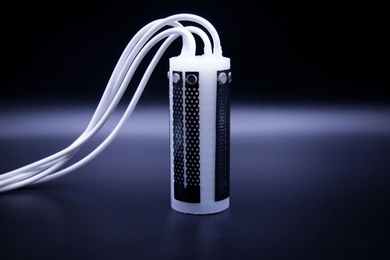
Flexible sensors and an artificial intelligence model tell deformable robots how their bodies are positioned in a 3D environment.
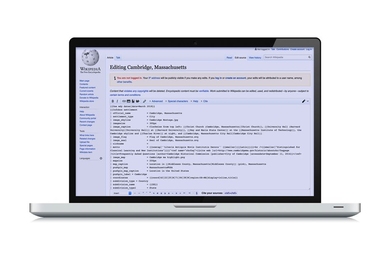
Text-generating tool pinpoints and replaces specific information in sentences while retaining humanlike grammar and style.
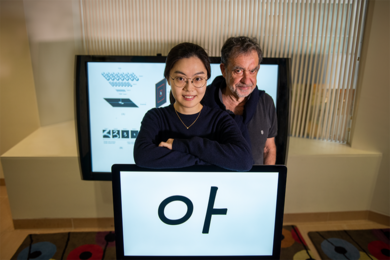
Researchers develop a more robust machine-vision architecture by studying how human vision responds to changing viewpoints of objects.
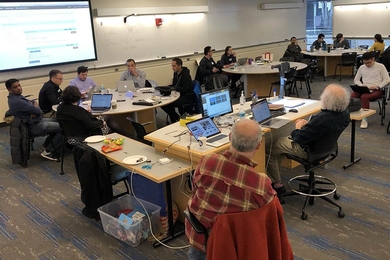
Three-day hackathon explores methods for making artificial intelligence faster and more sustainable.

Chalk of the Day, an MIT student group, draws beautiful daily works of art on the chalk wall in Building 32.

The EECS emeritus professor is recognized for groundbreaking contributions in information and coding theory.

MIT’s new system TextFooler can trick the types of natural-language-processing systems that Google uses to help power its search results, including audio for Google Home.

With the initial organizational structure in place, the MIT Schwarzman College of Computing moves forward with implementation.
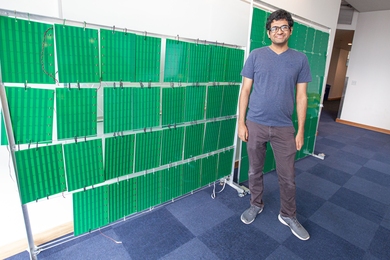
External system improves phones’ signal strength 1,000 percent, without requiring extra antennas.

Routing scheme boosts efficiency in networks that help speed up blockchain transactions.