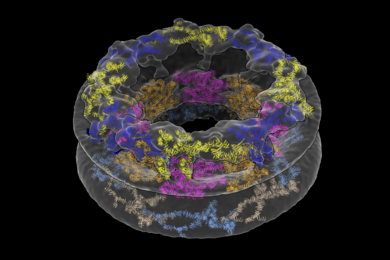
Cellular environments shape molecular architecture
Researchers glean a more complete picture of a structure called the nuclear pore complex by studying it directly inside cells.
Researchers glean a more complete picture of a structure called the nuclear pore complex by studying it directly inside cells.

Exploring diversity among bacterial immune systems, McGovern Institute scientists uncovere a programmable system for precisely targeting and modifying RNA.

Researchers find RNA-guided enzymes are more diverse and widespread than previously believed.

At the MIT Edgerton Center, educators are quietly transforming the way biology is taught in schools.

Made of components found in the human body, the programmable system is a step toward safer, targeted delivery of gene editing and other molecular therapeutics.

MiniPCR bio has sold thousands of its inexpensive polymerase chain reaction machines to researchers and schools around the world.

To quickly express learning and memory genes, brain cells snap both strands of DNA in many more places and cell types than previously realized, a new study shows.
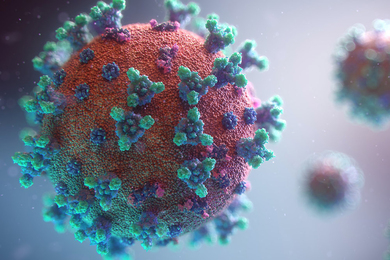
Four times faster than conventional PCR methods, new RADICA approach is highly specific, sensitive, and resistant to inhibitors.

A technique for labeling and retrieving DNA data files from a large pool could help make DNA data storage feasible.
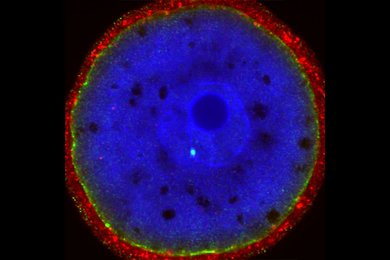
Novel method, developed by McGovern Institute researchers, may lead to safer, more efficient gene therapies.

MIT researchers have determined the virus’ protein-coding gene set and analyzed new mutations’ likelihood of helping the virus adapt.
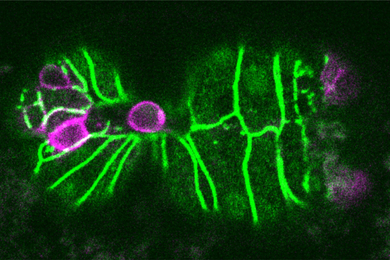
Study suggests this process for eliminating unneeded cells may also protect against cancer.

New, reversible CRISPR method can control gene expression while leaving underlying DNA sequence unchanged.

Varying levels of a DNA repair enzyme can lead to very different outcomes after exposure to NDMA.

Kano Therapeutics was one of eight finalists to pitch at the virtual competition.