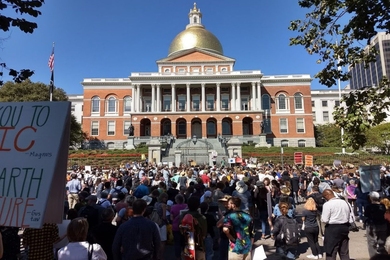
D-Lab moves online, without compromising on impact
With the campus shut down by Covid-19, the spring D-Lab class Water, Climate Change, and Health had to adapt.
With the campus shut down by Covid-19, the spring D-Lab class Water, Climate Change, and Health had to adapt.
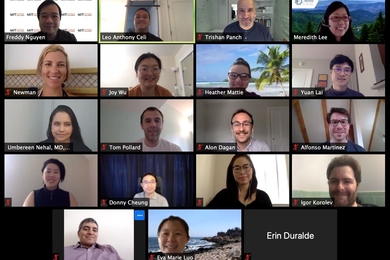
A global team of researchers searches for insights during a weeklong virtual “datathon.”
The new open access, rapid-review overlay journal aims to combat misinformation in Covid-19 research.
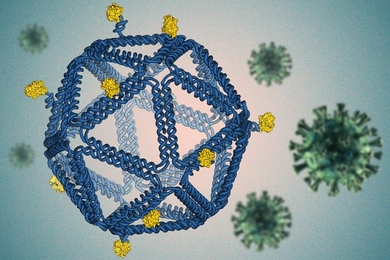
In lab tests, virus-like DNA structures coated with viral proteins provoke a strong immune response in human B cells.
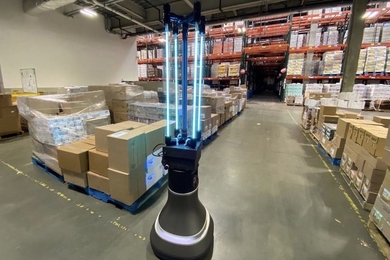
Using UV-C light, the system can disinfect a warehouse floor in half an hour — and could one day be employed in grocery stores, schools, and other spaces.
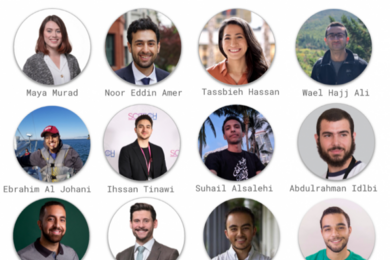
Online event aimed to develop high-impact ideas to improve educational outcomes in the Middle East and North Africa.

MIT panelists examine the roles of social norms in countries’ differing responses to the coronavirus pandemic.

“Quantitative easing” program let households spend more during the last recession. Could it work again?
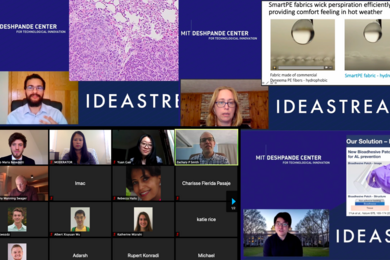
From machine learning to devices to Covid-19 testing, Deshpande Center projects aim to make a positive impact on the world.
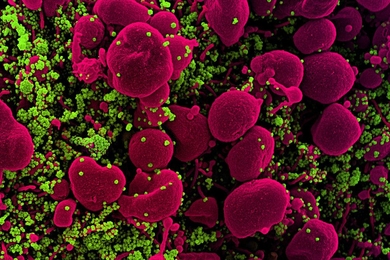
Computational modeling yields a protein fragment that could bind to coronavirus spike proteins and destroy them.

Inorganic chemist and MIT professor for over 40 years was “a bedrock of the organometallic community.”
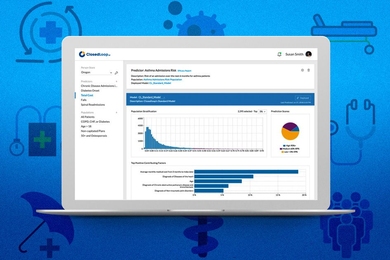
The startup ClosedLoop has created a platform of predictive models to help organizations improve patient care.
More than 100 experts identify four scenarios that could shape people’s health between now and 2040.
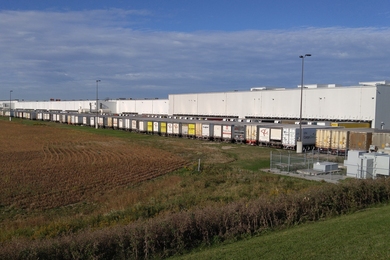
The MIT Humanitarian Supply Chain Lab implements a rapid assessment process to inform policy.
