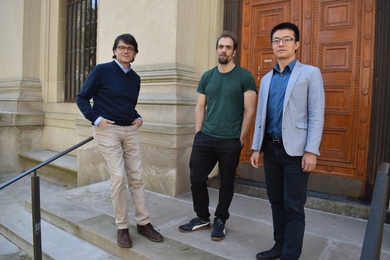
Taming the data deluge
A National Science Foundation-funded team will use artificial intelligence to speed up discoveries in physics, astronomy, and neuroscience.
A National Science Foundation-funded team will use artificial intelligence to speed up discoveries in physics, astronomy, and neuroscience.
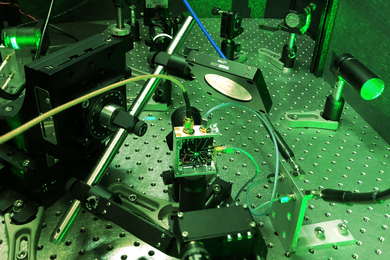
MIT researchers develop a new way to control and measure energy levels in a diamond crystal; could improve qubits in quantum computers.

Neuroscientists find the internal workings of next-word prediction models resemble those of language-processing centers in the brain.
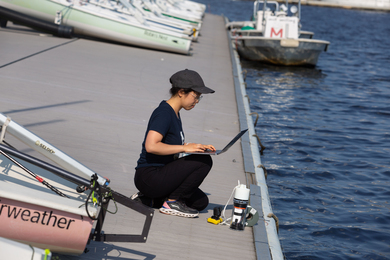
PhD candidate Charlene Xia is developing a low-cost system to monitor the microbiome of seaweed farms and identify diseases before they spread.
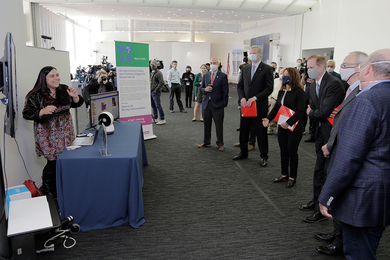
Artificial intelligence is top-of-mind as Governor Baker, President Reif encourage students to “see yourself in STEM.”

A certain type of artificial intelligence agent can learn the cause-and-effect basis of a navigation task during training.
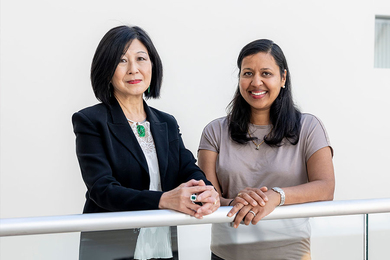
The K. Lisa Yang Integrative Computational Neuroscience (ICoN) Center will use mathematical tools to transform data into a deep understanding of the brain.
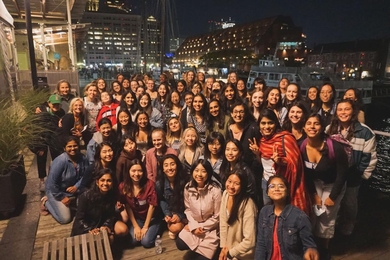
MIT EECS unveils a new effort to encourage and support women on their journey to — and through — graduate study in computing and information technologies.

MIT Refugee Action Hub celebrates the graduation of its third and largest cohort yet.
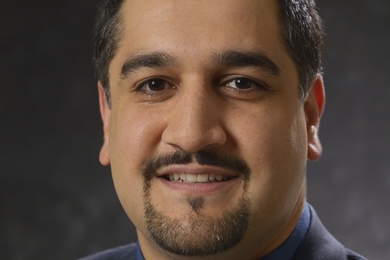
A cyber systems expert at Lincoln Laboratory, Okhravi will help investigate bold solutions to fundamental cyber vulnerabilities.
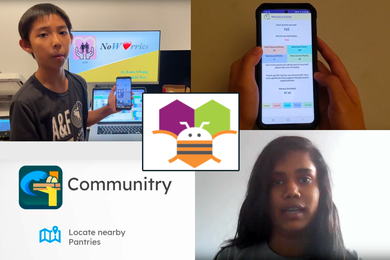
MIT App Inventor’s “Appathon” joins programmers from around the world to imagine a better future and start building it one app at a time.

Preparing for a career advancing the science and policy of climate issues, junior Ryan Conti focuses on math, computer science, and the philosophy of language.
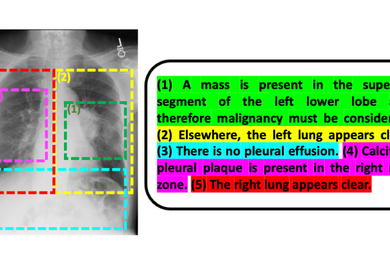
Scientists employ an underused resource — radiology reports that accompany medical images — to improve the interpretive abilities of machine learning algorithms.
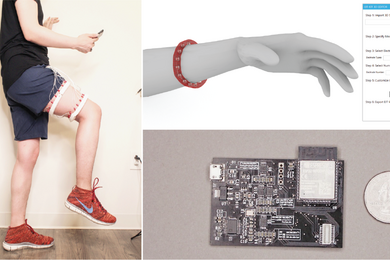
An electrical impedance tomography toolkit lets users design and fabricate health and motion sensing devices.

MIT scientists show how fast algorithms are improving across a broad range of examples, demonstrating their critical importance in advancing computing.