

Covid-19 shutdown led to increased solar power output
As the air cleared after lockdowns, solar installations in Delhi produced 8 percent more power, study shows.

Building a more sustainable MIT — from home
MIT’s Office of Sustainability puts lessons of resiliency into practice.
Decarbonize and diversify
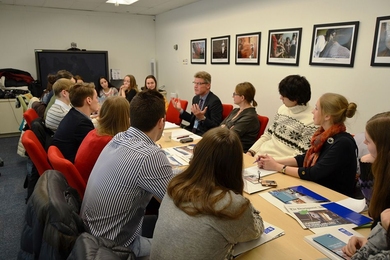
How energy-intensive economies can survive and thrive as the globe ramps up climate action.

D-Lab moves online, without compromising on impact
With the campus shut down by Covid-19, the spring D-Lab class Water, Climate Change, and Health had to adapt.
Researchers find benefits of solar photovoltaics outweigh costs
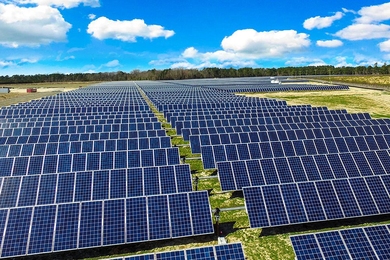
Over a seven-year period, decline in PV costs outpaced decline in value; by 2017, market, health, and climate benefits outweighed the cost of PV systems.

Ice, ice, maybe
EAPS graduate student Meghana Ranganathan zooms into the microstructure of ice streams to better understand the impacts of climate change.

Why the Mediterranean is a climate change hotspot
MIT analysis uncovers the basis of the severe rainfall declines predicted by many models.

What moves people?
Associate Professor Jinhua Zhao, who will direct the new MIT Mobility Initiative, brings behavioral science to urban transportation.

Unlocking the secrets of a plastic-eater
Graduate student Linda Zhong and professor of biology Anthony Sinskey are studying the plastic-devouring enzyme PETase as a way to improve recycling.
Peatland drainage in Southeast Asia adds to climate change
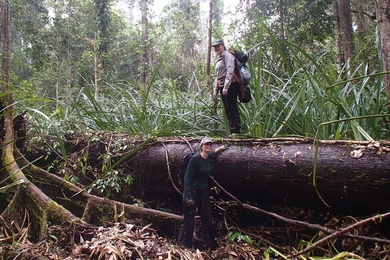
Study reveals drainage, deforestation of the region’s peatlands, which leads to fires, greenhouse emissions, land subsidence.

Study: Reflecting sunlight to cool the planet will cause other global changes
Solar geoengineering proposals will weaken extratropical storm tracks in both hemispheres, scientists find.

Machine learning helps map global ocean communities
An MIT-developed technique could aid in tracking the ocean’s health and productivity.

Making nuclear energy cost-competitive
Three MIT teams to explore novel ways to reduce operations and maintenance costs of advanced nuclear reactors.

Solar energy farms could offer second life for electric vehicle batteries
Modeling study shows battery reuse systems could be profitable for both electric vehicle companies and grid-scale solar operations.