Over the river and do some good
The Bridge Project collaboration accelerates new, highly original, and powerful approaches to defeating cancer.

Cell-weighing method could help doctors choose cancer drugs
Technique may predict which therapies a patient is most sensitive or resistant to.
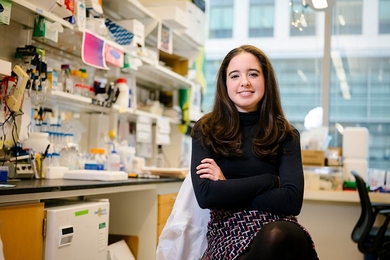
Mary Clare Beytagh: Finding poetry in medicine
MIT senior and aspiring physician aims to tell stories that humanize the patients behind medical statistics.
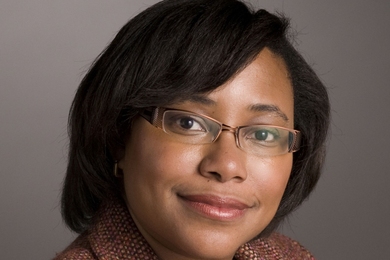
Fighting a giant foe at a tiny scale
Professor Paula Hammond uses nanoscale biomaterials to craft anti-cancer treatments tiny enough to get through the bloodstream and enter tumors.
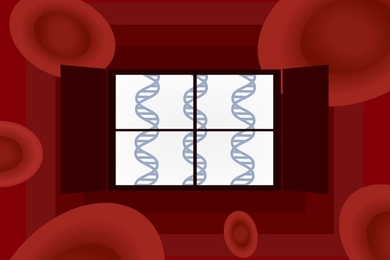
New techniques give blood biopsies greater promise
Improved methods validate the use of blood samples for studying patients’ cancer genomes.
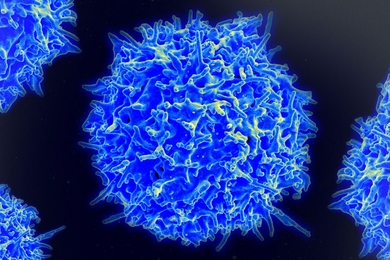
Gene circuit switches on inside cancer cells, triggers immune attack
Advance may open new pathways for cancer immunotherapy.
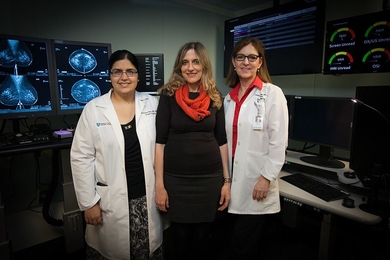
Using artificial intelligence to improve early breast cancer detection
Model developed at MIT’s Computer Science and Artificial Intelligence Laboratory could reduce false positives and unnecessary surgeries.

New target for treating “undruggable” lung cancer
Drug already in clinical trials may be effective on some aggressive adenocarcinomas.
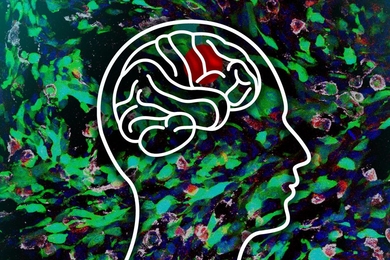
Biologists identify possible new strategy for halting brain tumors
Cutting off a process that cancerous cells rely on can force them to stop growing.
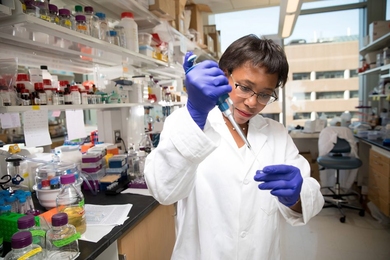
Bio-inspired approach to RNA delivery
New technique could make it easier to use mRNA to treat disease or deliver vaccines.
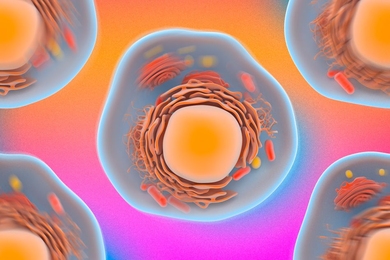
Fast, noninvasive technique for probing cells may reveal disease
Researchers gauge a cell’s stiffness, which can reflect cancer or other conditions, simply by watching it.
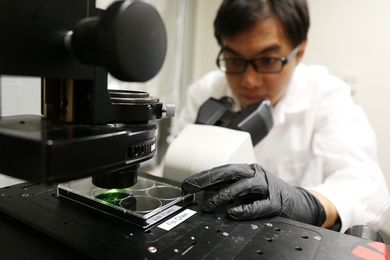
Microscopy technique could enable more informative biopsies
Expanding tissue samples before imaging offers detailed information about disease.
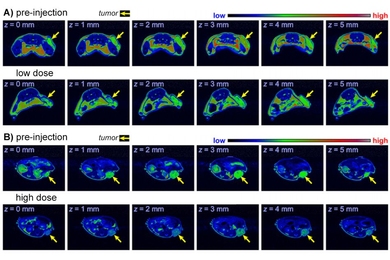
Metal-free MRI contrast agent could be safer for some patients
New agent could be used for certain high-risk groups and may enable longer-term tumor imaging.
Converging on cancer at the nanoscale
Marking its first anniversary, the Koch Institute’s Marble Center for Cancer Nanomedicine goes full steam ahead.