
El Niño cycle has a big effect on a major greenhouse gas
Nitrous oxide emissions decrease during El Niño, increase during La Niña.

New approach to global health challenges
MIT’s Institute for Medical Engineering and Science brings many tools to the quest for new disease treatments and diagnostic devices.
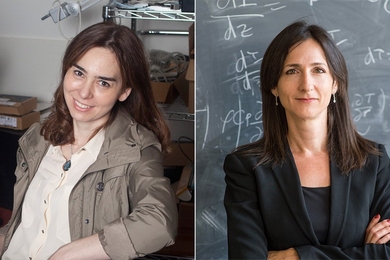
Dina Katabi and Sara Seager win MacArthur ‘genius grants’
Two MIT professors are among 24 recipients nationwide of this year’s unrestricted $625,000 prizes from the MacArthur Foundation.
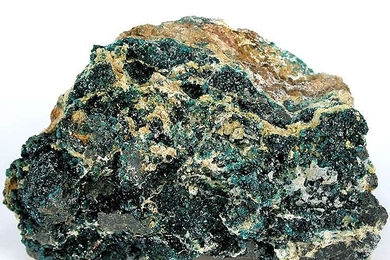
Understanding a new kind of magnetism
Researchers use low-frequency laser pulses to probe the properties of a kind of fluctuating magnetism known as a spin-liquid state.
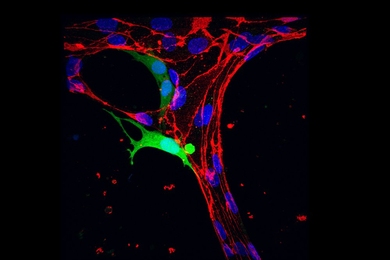
Watching tumors burst through a blood vessel
A microfluidic platform provides a high-resolution view of a crucial step in cancer metastasis.
MIT team receives $10.4 million biomanufacturing grant from DARPA
With the grant, MIT’s Biomanufacturing Research Program aims to develop new technologies that can rapidly manufacture biologic drugs on the battlefield.

How old memories fade away
Discovery of a gene essential for memory extinction could lead to new PTSD treatments.
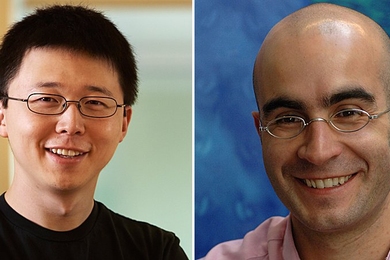
Two from MIT named to Popular Science's Brilliant 10 list
Pedro Reis and Feng Zhang recognized as young stars in science and technology.
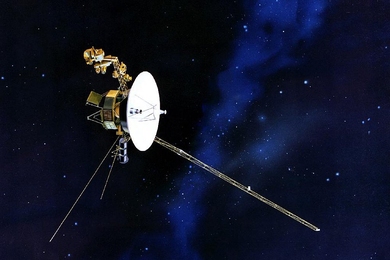
Q&A: John Richardson and John Belcher on Voyager 1’s crossing and interstellar exploration
Beyond the solar system, a probe launched in 1977 is likely to find a cold, dense sea of cosmic rays.
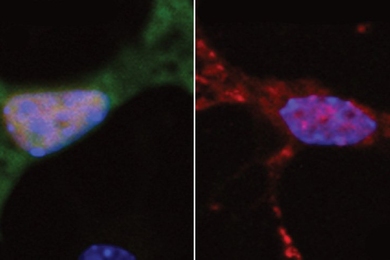
DNA damage may cause ALS
New study finds link between neurons’ inability to repair DNA and neurodegeneration.

Artificial-intelligence research revives its old ambitions
A new interdisciplinary research center at MIT, funded by the National Science Foundation, aims at nothing less than unraveling the mystery of intelligence.

An answer to why our galaxy’s black hole is a finicky eater
Researchers find material ejects itself before black hole can devour it.

Poster session showcases UROP projects
Students presented the results of their summer UROP projects at the MIT Simons Center.

How quickly can a bacterium grow?
Physicist finds that E. coli replicate close to thermodynamic limits of efficiency.