
Controlling our internal world
Design principles from robotics help researchers decipher elements controlling mental processes in the brain.
Design principles from robotics help researchers decipher elements controlling mental processes in the brain.
The MIT Department of Biology and Whitehead Institute are producing a podcast featuring young scientists and why they chose to study biology.
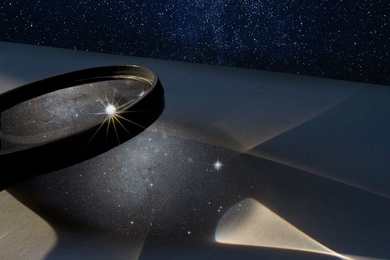
New lens technique spots tiny dwarf galaxy in the first, super-energetic stages of star formation.
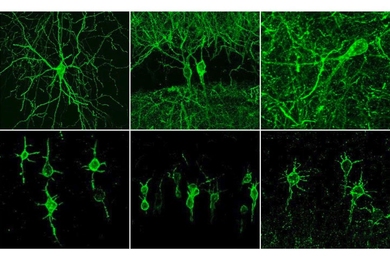
Fluorescent probe could allow scientists to watch circuits within the brain and link their activity to specific behaviors.

Six scholars and professors are spending this academic year in engagement with the MIT community.
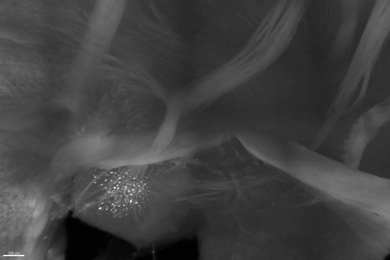
Clumps of amyloid protein emerge early in deep regions, such as the mammillary body, and march outward in the brain along specific circuits.
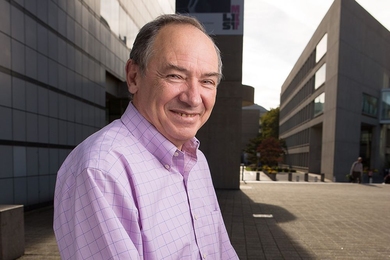
Victor Kac elected to the Accademia Nationale dei Lincei Mathematics professor will join Galileo and Einstein as a member of the world's oldest science academy.
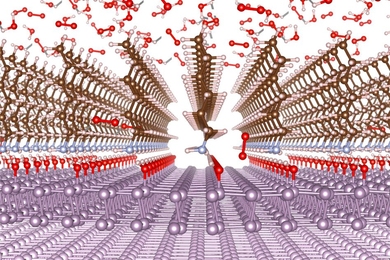
Ultrathin coating could protect 2D materials from corrosion, enabling their use in optics and electronics.
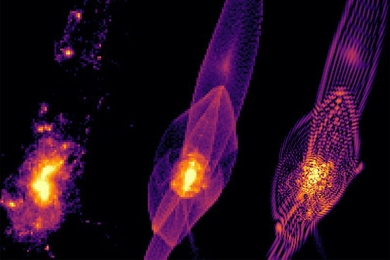
Scientists simulate early galaxy formation in a universe of dark matter that is ultralight, or “fuzzy,” rather than cold or warm.
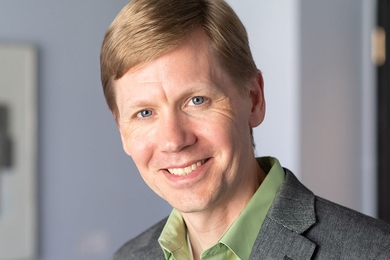
Faculty member since 2003 is known for physical chemistry research, as well as contributions to education and the department’s climate.

Data on MIT students underscore the importance of getting enough sleep; bedtime also matters.
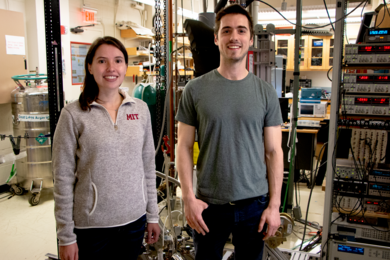
MIT researchers discover why magnetism in certain materials is different in atomically thin layers and their bulk forms.

MIT welcomed the Class of 2023 with an initiative to reduce the impact of water consumption through reusable water bottles and other sustainable habits.
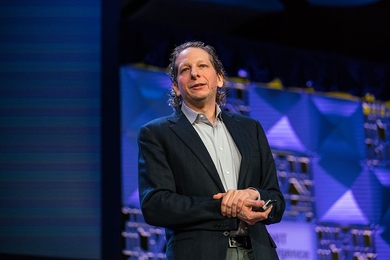
Brain and cognitive sciences professor studies how the human mind is able to learn so rapidly.

Recent improvements aim to ease the transition to life at MIT, from day one and beyond.