
Q&A: Composer Tod Machover presents “Philadelphia Voices”
Ambitious new piece in his “City Symphony” series features the birthplace of American democracy.
Ambitious new piece in his “City Symphony” series features the birthplace of American democracy.
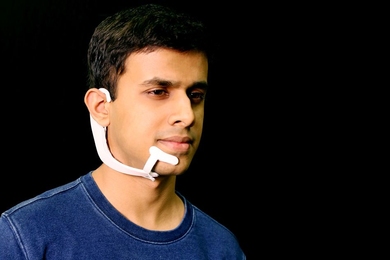
Electrodes on the face and jaw pick up otherwise undetectable neuromuscular signals triggered by internal verbalizations.
Startup’s platform crunches anonymized smartphone GPS data to understand how people shop, work, and live.
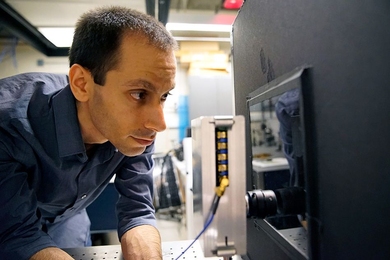
Computational photography could solve a problem that bedevils self-driving cars.

Alumni’s video-capturing drone tracks moving subjects while freely navigating any environment.
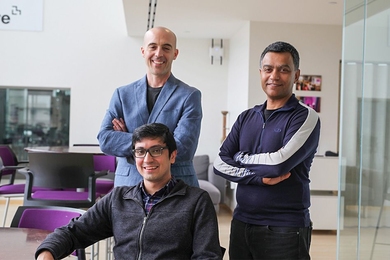
Research project finds humans, not bots, are primarily responsible for spread of misleading information.
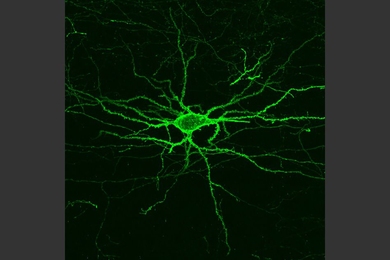
Fluorescent sensor allows imaging of neurons' electrical communications, without electrodes.
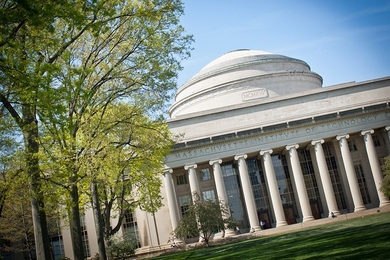
Faculty from six MIT departments among 126 selected from across the U.S. and Canada.

Smart furniture transforms spaces in tiny apartments into bedrooms, work spaces, or closets.

Platform connects individual pieces of lab equipment, compiles data in the cloud for speedier, more accurate research.

AI platform allows chatbots to draw on robust language database to better navigate human conversation.
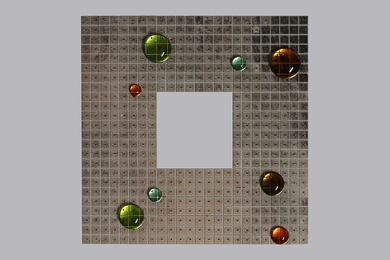
Using electric fields to manipulate droplets on a surface could enable high-volume, low-cost biology experiments.
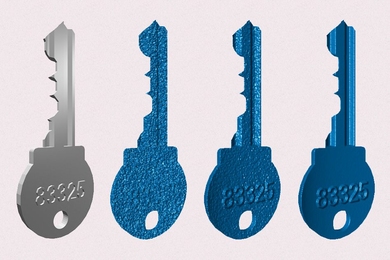
Computational method improves the resolution of time-of-flight depth sensors 1,000-fold.

Platform analyzes big data to answer plain-language business queries in minutes instead of months.

Startup’s system captures particle matter from diesel exhaust and turns it into inks and paints.