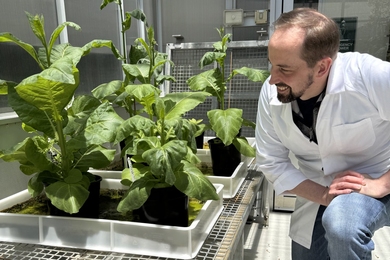
Q&A: From seed funding to scientific breakthroughs
How the MIT Global Seed Funds helped Professor Matt Shoulders and his team build international collaborations that continue to shape his research more than a decade later.
How the MIT Global Seed Funds helped Professor Matt Shoulders and his team build international collaborations that continue to shape his research more than a decade later.
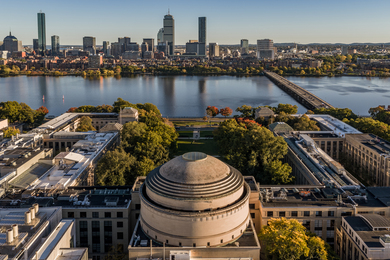
Awarded up to $38 million from ARPA-H, the team aims to create a low-power, noninvasive sensor patch that measures heart failure and sepsis biomarkers in real-time.
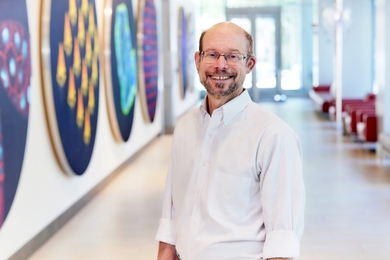
Professor Michael Yaffe and six MIT alumni are honored for their outstanding professional achievement and commitment to service.
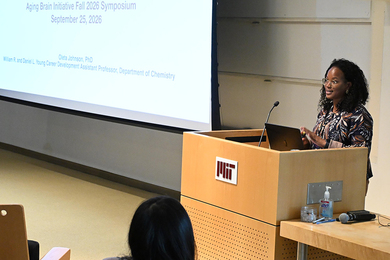
In six talks, researchers from across MIT described projects aimed at advancing the understanding of and interventions against neurodegenerative diseases such as Alzheimer’s, Parkinson’s, and ALS.
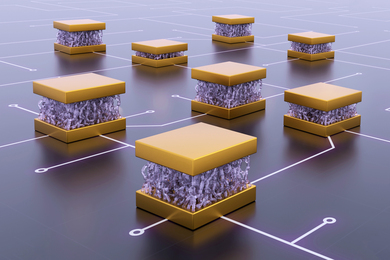
A new device uses reconfigurable motion to mimic the firing behavior of a neuron, which could lead to more efficient computing.
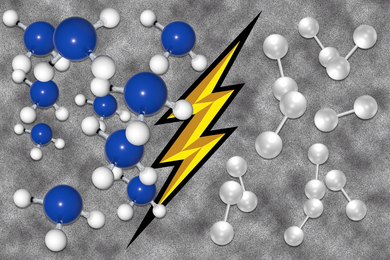
An MIT team has demonstrated a more efficient way to extract pure hydrogen gas from hydrogen carrier molecules.
The Institute welcomes its first cohort of QMIT Fellows this fall to advance interdisciplinary quantum research.
The “CrysVCD” tool developed at MIT could cut the huge amounts of time and money spent on screening out chemically unstable designs.

New MIT research could lead to better materials for a fossil-fuel-free process for making the chemical that's essential to fertilizer and other products.
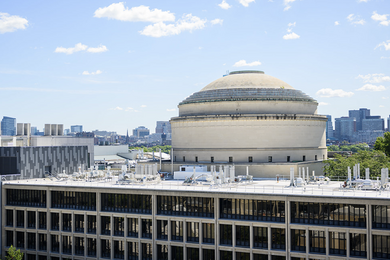
The Materials Research Science and Engineering Center unites researchers across disciplines to develop technologies for medical imaging, sustainable metals production, and next-generation electronics.
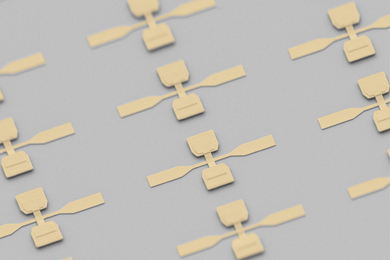
A new fabrication platform integrates molecules into electronic devices, opening the door to emerging computing technologies.
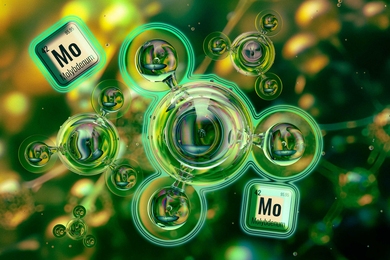
New findings could help researchers design synthetic catalysts that convert nitrogen gas to ammonia, a key step in fertilizer production.
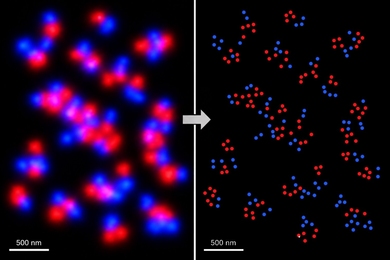
New U-STORM imaging technology lets scientists view molecular structures in subatomic detail — about 1,000 times clearer than traditional dyes — while making the microscope process much simpler.
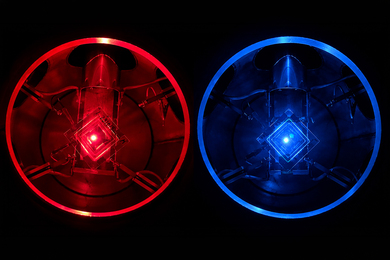
Researchers found a simple solution for extending the lifespans of LEDs made from glowing microscopic particles called quantum dots.
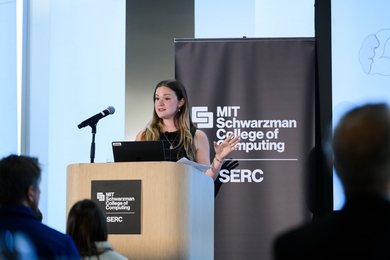
PhD student Rachel Sava, winner of the Envisioning the Future of Computing Prize, explores transformative improvements and dystopian risks of neural technology.