
Detecting early-stage malarial infection
New prototype device recognizes electrical properties of infected cells as signatures of disease.
New prototype device recognizes electrical properties of infected cells as signatures of disease.

New hardware could lead to wireless devices that identify and exploit unused transmission frequencies, using radio spectrum much more efficiently.

Ceramic forms of hydrophobic materials could be far more durable than existing coatings or surface treatments.
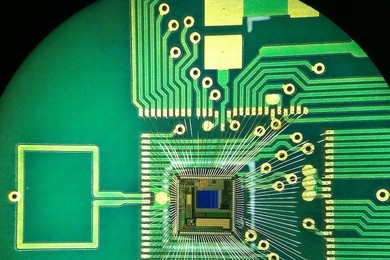
For the first time, researchers power an implantable electronic device using an electrical potential — a natural battery — deep in the inner ear.

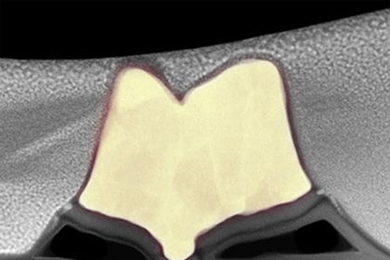
Research could affect U.S. manufacturing indirectly, by helping introduce products difficult to build elsewhere, and directly, by reducing production costs.
Project Angstrom selected by magazine's editors; featured in December issue



Harvesting electricity from small temperature differences could enable a new generation of electronic devices that don’t need batteries
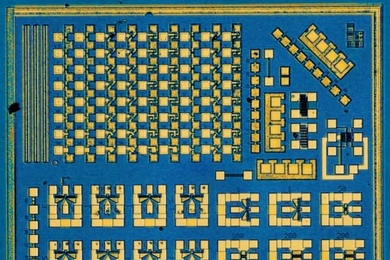
Researchers in MIT’s Microsystems Technology Laboratories are making the case for using exotic materials to help microchips keep improving.