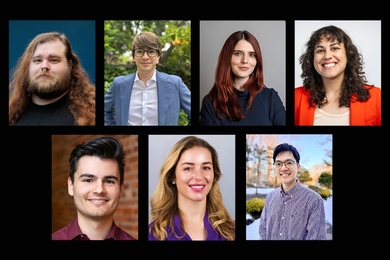
MIT Schwarzman College of Computing welcomes seven new faculty for 2026
Faculty members serve in core computing and shared roles, bringing a wide range of experiences and areas of expertise to the MIT community.
Faculty members serve in core computing and shared roles, bringing a wide range of experiences and areas of expertise to the MIT community.

A new system identifies and corrects unreliable object descriptions stored in a robot’s memory, improving the robot’s ability to interact with its environment.
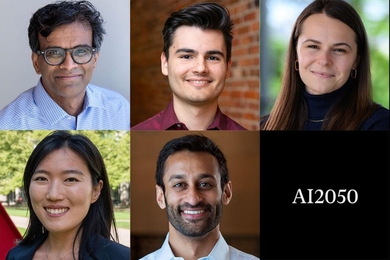
Five MIT faculty members and two additional alumni are honored with fellowships to advance research on beneficial AI.

MIT professors Adam Berinsky and Chara Podimata discuss a new project to track how AI chatbots are responding to questions about the 2026 U.S. midterm elections.
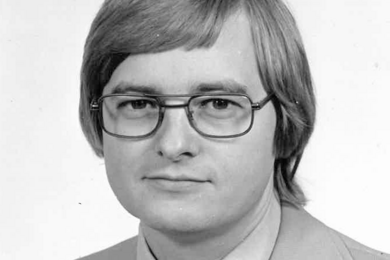
Longtime EECS adjunct professor and LIDS researcher was known for an influential essay on the need for engineers to “respect the unstable.”
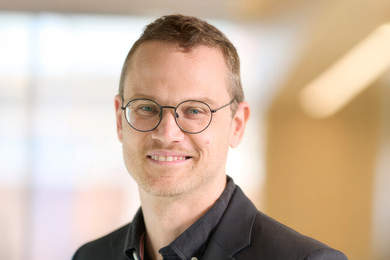
Assistant Professor Benjamin Lindquist studies how engineers deliberately injected randomness into early AI, giving rise to deep-learning models that sometimes hallucinate.
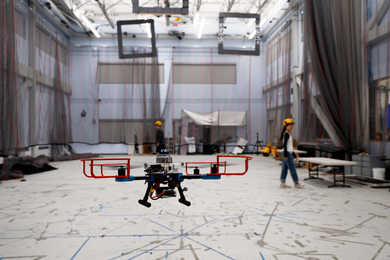
This new method, called “SANDO,” could help disaster-response robots navigate dangerous, unknown environments.

Associate Professor Cathy Wu uses reinforcement learning to help map out improvements to transportation and other multifaceted systems.

Able to defeat top-ranked human players and more efficient than other models, the new system could help decision-makers in military maneuvers or business negotiations.
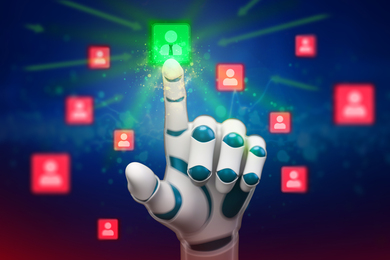
In a study focusing on hiring decisions, MIT researchers found the use of a single algorithm by many firms could benefit job seekers in certain situations.

The “HardFlow” algorithm could help generative AI models produce high-quality outputs that obey strict requirements when “pretty close” doesn’t cut it.

The new framework could streamline the design process of robotic grippers or aerospace components that exhibit complex behaviors found in nature.

Study finds non-experts deferred to LLM-based diagnostic assistance, even when it was wrong, while clinicians caught AI errors.
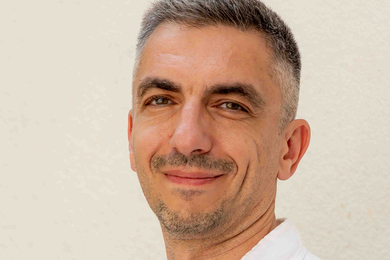
An expert in machine learning, statistics, and computation, Rakhlin succeeds Professor Ankur Moitra.
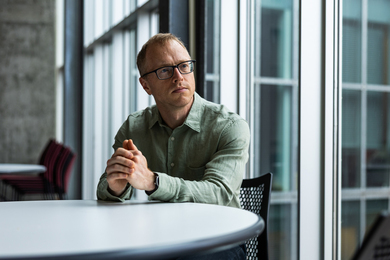
Philosopher Brian Hedden studies decision-making over time — and recently chose to return to alma mater MIT, where he is now connecting ethics and computing.