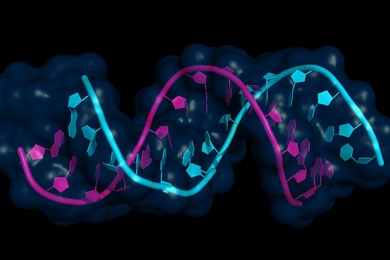
Delivery system can make RNA vaccines more powerful
Vaccines packaged in novel nanoparticles could offer a new way to fight cancer and infectious diseases.
Vaccines packaged in novel nanoparticles could offer a new way to fight cancer and infectious diseases.

Discovery could enable longer-lasting and better-functioning devices — including pacemakers, breast implants, biosensors, and drug delivery devices.
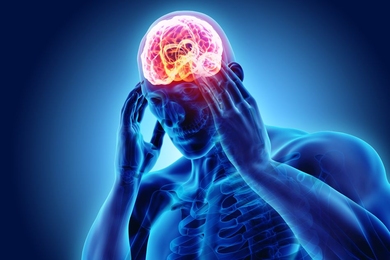
New technique could help doctors determine whether patients are at risk from elevated pressure.
Smart materials change properties in response to specific DNA sequences; could be used in a variety of devices.
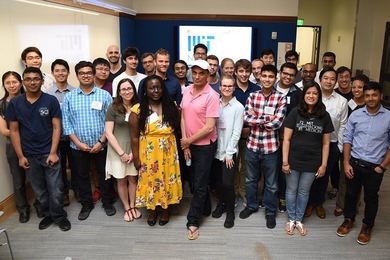
Hacking Nanomedicine kicks off a series of events to develop an idea over time.
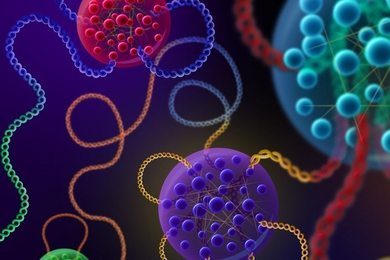
Along the genome, proteins form liquid-like droplets that appear to boost the expression of particular genes.

Faculty members recognized for excellence via a diverse array of honors, grants, and prizes over the past quarter.

A course that combines machine learning and health care explores the promise of applying artificial intelligence to medicine.

Crystallized drug prevents immune system rejection of transplanted pancreatic islet cells.
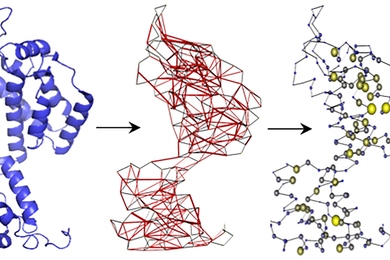
Researchers apply network theory to HIV protein structure, uncovering a vital link between connectivity and protective immune response.
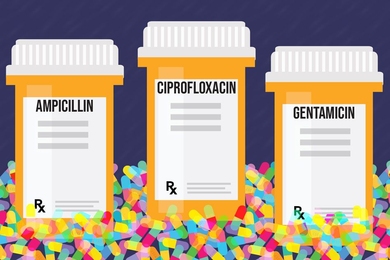
Machine learning reveals metabolic pathways disrupted by the drugs, offering new targets to combat resistance.

Faculty members recognized for excellence via a diverse array of honors, grants, and prizes over the last quarter.

Tiny robots powered by magnetic fields could help drug-delivery nanoparticles reach their targets.
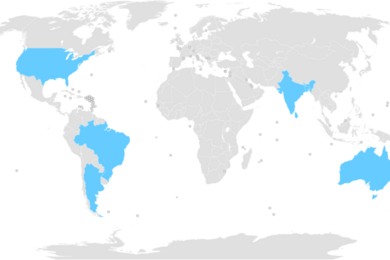
The GOSSIS algorithm was developed using data from hospitals around the world to spur greater multi-center collaboration and improved benchmarking.
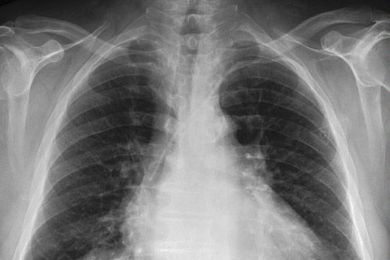
A new database of images could pave a path for algorithmic models that ensure accurate diagnoses of conditions like pneumonia.