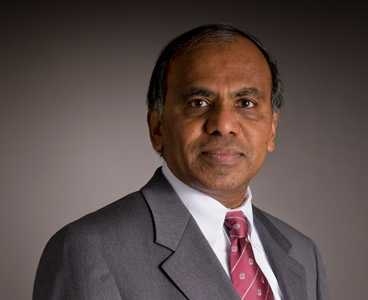
Today, Carnegie Mellon University announced that Subra Suresh will be its ninth president, assuming the post on July 1, 2013. Suresh succeeds Jared Cohon, who is stepping down after 16 years as president.
Suresh, who served as MIT’s Dean of Engineering from 2007 to 2010 and who joined the MIT faculty in 1993, was appointed in 2010 as director of the National Science Foundation, a $7 billion independent federal science agency charged with advancing all fields of fundamental science and engineering research and related education.
“I am truly honored to have the opportunity to lead Carnegie Mellon University as its ninth president,” Dr. Suresh said in Carnegie Mellon’s announcement. “The extraordinary ability of the CMU faculty and students in bringing together cutting-edge research and education across multiple disciplines positions CMU uniquely to address national and global challenges. I look forward to working with the CMU community to further our global impact.”
"I am very happy for Professor Suresh and for Carnegie Mellon," said MIT President L. Rafael Reif. "Professor Suresh will bring Carnegie Mellon exceptional experience and a proven ability to get important things done."
Details of the appointment, and full biographical information for Suresh, can be found in Carnegie Mellon’s announcement.
The National Science Foundation has also issued an announcement about Suresh’s appointment.
Suresh, who served as MIT’s Dean of Engineering from 2007 to 2010 and who joined the MIT faculty in 1993, was appointed in 2010 as director of the National Science Foundation, a $7 billion independent federal science agency charged with advancing all fields of fundamental science and engineering research and related education.
“I am truly honored to have the opportunity to lead Carnegie Mellon University as its ninth president,” Dr. Suresh said in Carnegie Mellon’s announcement. “The extraordinary ability of the CMU faculty and students in bringing together cutting-edge research and education across multiple disciplines positions CMU uniquely to address national and global challenges. I look forward to working with the CMU community to further our global impact.”
"I am very happy for Professor Suresh and for Carnegie Mellon," said MIT President L. Rafael Reif. "Professor Suresh will bring Carnegie Mellon exceptional experience and a proven ability to get important things done."
Details of the appointment, and full biographical information for Suresh, can be found in Carnegie Mellon’s announcement.
The National Science Foundation has also issued an announcement about Suresh’s appointment.