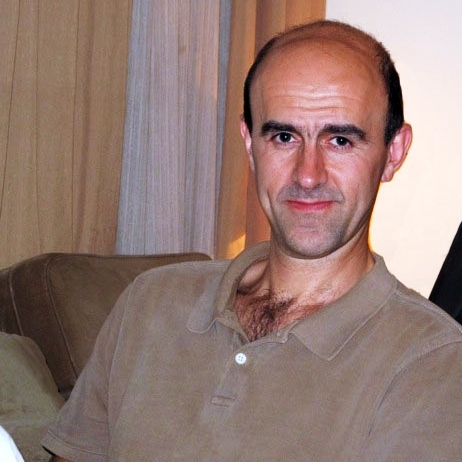
The McGovern Institute for Brain Research has appointed a new faculty member, Mehrdad Jazayeri, who will join the institute in January 2013. Jazayeri will also be an assistant professor in MIT’s Department of Brain and Cognitive Sciences.
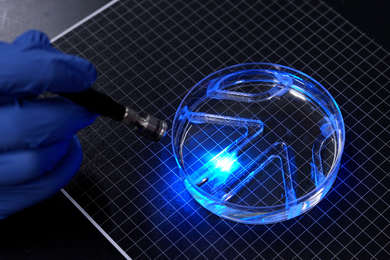
Jazayeri is currently a postdoctoral researcher at the University of Washington, Seattle, where he studies the neurobiology of interval timing and how temporal regularities in the environment influence the brain’s estimate of elapsed time. His research exploits multiple techniques including human psychophysics, computational modeling and monkey physiology. His most recent work combines electrophysiology with optogenetics in order to analyze neural function in the primate brain.
Jazayeri will pursue two long-term research themes at MIT. One line of research will examine how neurons track time, an ability that is crucial for mental capacities such as anticipating events, inferring causes and sequencing thoughts and actions. The other line of research will exploit timing tasks to understand the neural basis of sensorimotor integration, a key component of cognitive functions such as deliberation and probabilistic reasoning.
Originally from Iran, Jazayeri obtained his BSc in electrical engineering from Sharif University of Technology in Tehran. He received his PhD from New York University, where he studied with J. Anthony Movshon, winning the dean’s award for the most outstanding dissertation in the university. After graduating, he was awarded a Helen Hay Whitney fellowship to join the laboratory of Michael Shadlen at the University of Washington, where he has been since 2007.
Jazayeri is currently a postdoctoral researcher at the University of Washington, Seattle, where he studies the neurobiology of interval timing and how temporal regularities in the environment influence the brain’s estimate of elapsed time. His research exploits multiple techniques including human psychophysics, computational modeling and monkey physiology. His most recent work combines electrophysiology with optogenetics in order to analyze neural function in the primate brain.
Jazayeri will pursue two long-term research themes at MIT. One line of research will examine how neurons track time, an ability that is crucial for mental capacities such as anticipating events, inferring causes and sequencing thoughts and actions. The other line of research will exploit timing tasks to understand the neural basis of sensorimotor integration, a key component of cognitive functions such as deliberation and probabilistic reasoning.
Originally from Iran, Jazayeri obtained his BSc in electrical engineering from Sharif University of Technology in Tehran. He received his PhD from New York University, where he studied with J. Anthony Movshon, winning the dean’s award for the most outstanding dissertation in the university. After graduating, he was awarded a Helen Hay Whitney fellowship to join the laboratory of Michael Shadlen at the University of Washington, where he has been since 2007.