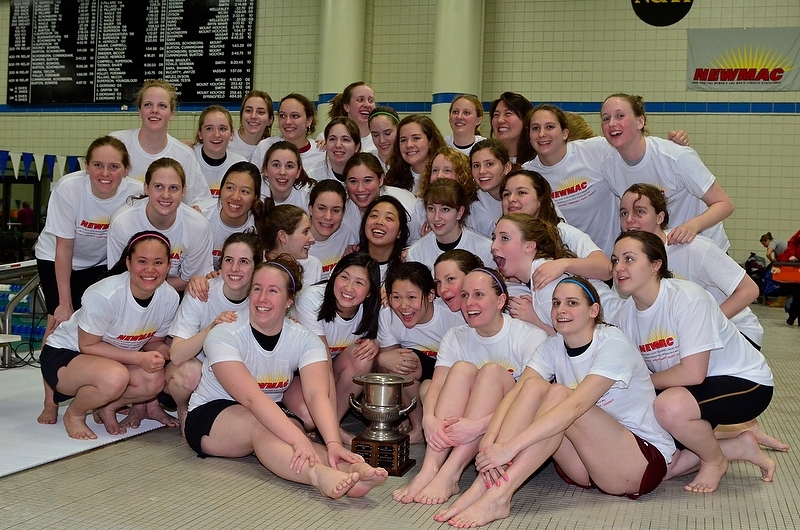
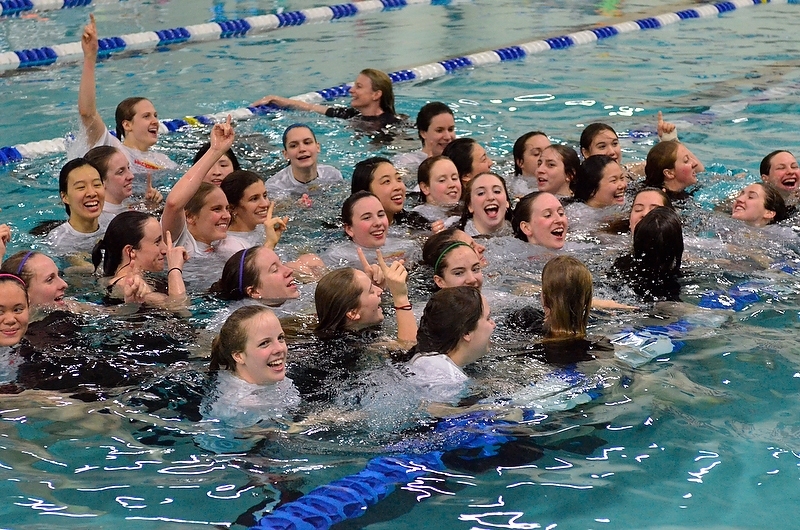
SOUTH HADLEY, Mass. — For the first time in school history, MIT took home top honors Feb. 20 at the NEWMAC Women's Swimming and Diving Championships. With their win, the Engineers put an end to Springfield College's 10-year reign as league champions. Over the course of the weekend, nine NEWMAC Championship records fell at the Mount Holyoke College Natatorium.
MIT touched the wall first nine times throughout the weekend en route to 917.5 points. The Engineers were followed by Springfield (894.5), the Coast Guard Academy (446), Wheaton College (359.5), Wellesley College (340), Clark University (299.5), WPI (202), Smith College (188), Babson College (115) and Mount Holyoke (113).
To learn more, to see final team standings, and to see the 2011 NEWMAC Women's Swimming and Diving All-Conference Teams, please visit the MIT Athletics website.
MIT touched the wall first nine times throughout the weekend en route to 917.5 points. The Engineers were followed by Springfield (894.5), the Coast Guard Academy (446), Wheaton College (359.5), Wellesley College (340), Clark University (299.5), WPI (202), Smith College (188), Babson College (115) and Mount Holyoke (113).
To learn more, to see final team standings, and to see the 2011 NEWMAC Women's Swimming and Diving All-Conference Teams, please visit the MIT Athletics website.